
Wordless Wednesday – Long & Winding Road

Wordless Wednesday – Long & Winding Road Read Post »

(A completely unglamorous, highly relatable guide to getting my butt in gear)
Okay, so let’s be honest here. There are days when I feel like a soggy piece of toast. Not even toasted. Just… bread. Floppy, uninspired, and aggressively unmotivated. I stare at my to-do list like it personally insulted my family. And the idea of doing anything—writing, cleaning, working out, even putting on real pants—feels absolutely impossible.
But somehow, stuff still gets done. Not always well, mind you, but it gets done.
So here’s how I fake motivation until it sort of becomes real. Sometimes. Kind of. Let’s not aim too high.
This one’s basically Jedi mind-trickery. I tell myself I’ll just start—nothing big. Just open the laptop. Or write one sentence. Or move that one dish from the sink to the dishwasher. That’s it.
What usually happens next is my brain’s like, “Well, I already started… might as well keep going.” And suddenly I’ve written 500 words or cleaned the whole kitchen while angrily singing 80s power ballads. (Highly recommend.)
On days when I’m really dragging, I’ll even say, “I only have to do this for 5 minutes.” If it still sucks after 5 minutes, I can stop. But 9 times out of 10, I don’t. Momentum is a sneaky beast.
If I write two chapters, I get fancy coffee. If I answer all my emails, I can binge that paranormal mystery show with the hot demon and the sarcastic witch. (You know the one.)
I’m not above making deals with myself. “Finish your morning tasks and you can take a nap like a cat in a sunbeam.” That kind of motivation is weirdly effective. Apparently, I’m just a toddler who wants a cookie.
Sometimes, sitting in the same chair staring at the same wall makes me feel like I’ve been cursed by a productivity goblin. So I’ll move. Even if it’s just shifting from my desk to the couch, or taking my journal to a coffee shop where someone’s always vaping and playing sad indie music.
One time I sat on my porch with a cup of tea and ended up plotting an entire short story. Something about being in a different spot makes my brain stop sulking.
I don’t always stick to the rules, but I’ll do 25-minute “sprints” with a timer and see how much I can get done. Sometimes I race myself. Sometimes I scream “GO!” like I’m on a cooking competition show. It’s dumb. I love it.
And then after that, I do something dumb or mindless for 5–10 minutes. I watch raccoon rescue videos. I water my plants. I text a friend nonsense emojis. Then I go again.
Somehow that little chunking trick makes the day feel less like a mountain and more like a series of oddly shaped stepping stones.
If I need to feel powerful, I blast epic orchestral scores. If I need to feel mysterious, I go full synthwave or dark jazz. If I need to feel like I can write a romantic scene without cringing, I play instrumental versions of 90s love songs. Don’t ask. It works.
Basically, I create a soundtrack for my mood—or the mood I want to have. It’s like a costume change for the soul.
This one’s more serious, but when I’m really struggling, I ask myself: Why do I want to do this? Not in the existential “what is life” kind of way. More like, what’s the payoff here?
Sometimes I remember that I want to finish this book because I believe in it, even if I’m having doubts today. Or that I want to move my body because it helps me sleep and not scream at pigeons. That little reminder can yank me out of the funk spiral. (Sometimes. Not always. Let’s not give it too much credit.)
This one? Game changer.
I remind myself that I can do something badly and still be proud of doing it. I don’t have to write the best scene ever. I don’t have to be a laundry-folding goddess. I just have to do the thing. Imperfectly. Awkwardly. Occasionally while crying and eating peanut butter out of the jar.
Because done is better than nothing. And sometimes, the doing is what brings the motivation—not the other way around.
No shame here. I’ve said things like, “I’ll only open this document to look at it” or “I’ll just walk for five minutes” or “I’m not working, I’m playing with ideas.”
Do I believe myself? Not really. But it tricks me into taking action. And once I’m in motion, it’s easier to keep going. (I think Newton said that. Or maybe it was Oprah.)
Some days still suck. Some days I don’t get motivated at all and everything feels like it’s made of wet cement. And that’s okay. I try again tomorrow. Or the day after.
Staying motivated isn’t about being perfect or productive all the time. It’s about finding little hacks that work for you, especially when your brain feels like a deflated beach ball.
Anyway, I hope this helped in a “yes, it’s not just me” kind of way. You’re not lazy. You’re human. And humans are weird.
Go do your thing. Or just put on pants. That counts too.
How I Stay Motivated When I Don’t Feel Like Doing Anything Read Post »

So I’ve been binge-watching shows again instead of doing literally anything productive, and it got me thinking about time travel stories. You know how most of them make your brain hurt in the worst possible way? Like, you’re sitting there trying to figure out if the protagonist just created a paradox or if the writers just gave up halfway through.
But here’s the thing – when time travel is done right, it’s absolutely incredible. I’m talking about stories that make you lie awake at night questioning everything you thought you knew about cause and effect. And those of you who know me or have followed me for awhile know that I’m a huge fan of time travel stories (I even wrote one: A Touch of Cedar). I’ll mention a few below to pique your interest…
Back to the Future is obviously the gold standard here. I mean, come on. Marty accidentally prevents his parents from falling in love and starts disappearing from a photograph? That’s both terrifying and brilliant. Plus, the DeLorean is just cool as hell. I remember being a kid and genuinely believing that if I could just get one up to 88 mph, I’d be set. The sequels get progressively weirder, but that first movie? Perfect.
Now, Groundhog Day might not seem like traditional time travel, but Phil Connors living the same day over and over again is basically the ultimate time loop story. Bill Murray’s gradual transformation from selfish jerk to someone who actually cares about other people hits different every time I watch it. The movie never explains why it’s happening, which somehow makes it better. Sometimes the mystery is more interesting than the answer.
Primer is the movie that makes you feel like you need a physics degree just to follow along. These guys build a time machine in their garage and the whole thing spirals into this complex web of multiple timelines and versions of themselves. I’ve watched it three times and I’m still not entirely sure what happened, but that’s kind of the point. It treats time travel like actual science instead of magic, which is both refreshing and completely exhausting.
TV shows have gotten really creative with this concept too. Dark on Netflix is this German series that starts with a missing child and becomes this intricate family saga spanning multiple generations. The way it weaves together past, present, and future is mind-blowing. Every character is connected in ways you don’t see coming, and by the end, you realize the whole thing is this beautiful, tragic loop. Fair warning though – you’ll need a family tree chart to keep track of who’s related to whom across different time periods.
The Butterfly Effect with Ashton Kutcher gets a lot of hate, but I actually think it’s underrated. The idea that changing small things in the past creates massive consequences in the present is genuinely unsettling. Sure, some of the execution is questionable, but the core concept of unintended consequences really stuck with me.
Then there’s Looper, which takes the whole “meeting your future self” thing and makes it incredibly personal. Joseph Gordon-Levitt has to kill his older self, played by Bruce Willis, and the makeup to make them look similar is honestly distracting. But the emotional weight of the story works. It’s about sacrifice and breaking cycles of violence, wrapped up in a sci-fi premise.
Russian Doll deserves a mention here too. Natasha Lyonne’s character keeps dying and resetting to the same bathroom at a party, but it’s not just about escaping the loop. It becomes this deeper exploration of trauma and how we repeat destructive patterns in our lives. The second season gets weird with generational trauma and time travel, but that first season is gold.
I have to admit, Predestination with Ethan Hawke completely broke my brain. I can’t even explain the plot without spoiling it, but it’s one of those stories where everything connects in ways that are both inevitable and impossible. You’ll spend days thinking about it afterward.
About Time takes a completely different approach – the main character can travel back in time to improve moments in his life, but the focus isn’t on changing the world or preventing disasters. It’s about appreciating ordinary moments and the people you love. It made me cry, which I wasn’t expecting from a time travel movie.
The thing about great time travel stories is they’re never really about the time travel itself. They’re about regret, second chances, the weight of our choices, and how we’re all connected across time. The best ones make you think about your own life and the moments you’d want to revisit or change.
What’s your favorite time travel story? Hit me up in the comments – I’m always looking for new ones to mess with my head.
Time Travel Stories That Actually Don’t Suck (And Some That Totally Do) Read Post »
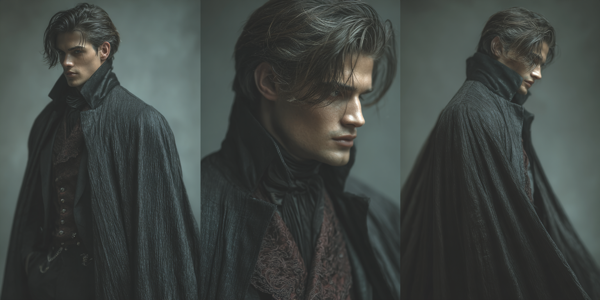
Today, we’re talking vampires. You know, those eternally stylish bloodsuckers who haunt crypts, castles, and occasionally high school cafeterias. I’ve had an obsession with vampires ever since I was a kid watching the old Hammer films starring Christopher Lee as Dracula. Then there was The Lost Boys on a too-small TV in my cousin’s basement, stuffing popcorn in my face while trying not to scream (and totally failing). And wow, have vampires changed over the years.
They’ve gone from terrifying monsters lurking in moonlit shadows to tortured romantics writing bad poetry under the stars. Somewhere along the way, they even picked up six-packs, sparkles, and teenage fan clubs. But let’s rewind and take a bite—uh, I mean look—at how they’ve evolved.
So, let’s kick things off with the granddaddy of them all: Count Dracula. Bram Stoker’s 1897 novel gave us the ultimate vampire blueprint. Dracula wasn’t just scary—he was extra. Tall, pale, charming in a “this guy probably owns a dungeon” kind of way, and could turn into mist, bats, or a wolf depending on the vibe.
What made Dracula terrifying was how alien he was. He represented the fear of the unknown, of foreign threats, of Victorian-era repressed everything. He wasn’t meant to be hot. He was meant to invade—your home, your body, your culture. Total nightmare fuel.
Also, let’s not forget that Stoker’s Dracula slept in boxes of dirt and had three feral brides who absolutely did not go to brunch. Not exactly romance material.
Fast forward a few decades, and suddenly vampires start getting hot. Like, disturbingly hot. Anne Rice’s Interview with the Vampire (1976) kicked open the door with Lestat and Louis—the drama queens of the undead world. These vampires were philosophical, tragic, sensual. They wore ruffled shirts and cried blood. Louis, bless him, was basically the emo poster boy of the 18th century.
This era of vampire lit leaned hard into moral conflict. Should I eat people? Do I deserve love? What even is humanity? You know, light dinner conversation. And this is the moment where a lot of folks started swooning over vamps instead of just hiding from them.
Bonus points for The Hunger (1983), where Catherine Deneuve and David Bowie play glamorous, bisexual vampires with an art-deco apartment and a serious goth vibe. It’s slow, it’s weird, it’s beautiful, and it’s absolutely worth watching with wine and dramatic eyeliner.
Then the ’90s and 2000s happened, and things got real weird.
Enter Buffy the Vampire Slayer. I was obsessed. Like, stayed-up-all-night-writing-fanfiction levels of obsessed. Buffy_gave us vampires with _layers. Spike was snarky, Angel was tortured, and everyone had amazing hair. Suddenly, vampires were metaphors for addiction, bad exes, and growing up.
And then came Twilight.
Okay, I’m just gonna say it: Twilight changed the game, whether you loved it or wanted to set it on fire. Stephenie Meyer gave us Edward Cullen—a sparkling, brooding, vegetarian vampire who moped through high school and played classical piano like it was his job. He wasn’t dangerous; he was dreamy. Like a moody Abercrombie model with fangs.
And I get it. Edward represented a fantasy: a beautiful immortal who will literally watch you sleep because he thinks you’re that special. Creepy? A little. But millions of teens were into it, and it ushered in a whole new wave of paranormal romance.
But just when it looked like vampires had gone full YA heartthrob, the pendulum started swinging back toward the dark side.
We got gritty, violent vamps again in things like Let the Right One In, True Blood, and 30 Days of Night. These weren’t your glittering boyfriends. These were monsters. Sexy, sure, but they also ripped people’s throats out. Balance, right?
Midnight Mass (if you haven’t watched it, stop everything and go do that) took vampire lore and mixed it with religious horror in a way that made me yell at the screen. It was creepy, gut-wrenching, and thoughtful. That’s the sweet spot for me—vampires who make you feel something and maybe also ruin your sleep schedule.
Honestly? I think we’re in a golden age of vampire reinvention. You want slow-burn queer vampire romance? It’s out there. You want dystopian vampire hunters? Done. You want historical vampire drag queens who feed on corrupt politicians? Give me a minute, I’ll write it.
Vampires are basically literary shapeshifters. We reinvent them to reflect our current fears, desires, and anxieties. In the 1800s, they were foreign invaders. In the ’90s, they were brooding metaphors. In the 2000s, they were your immortal high school crush. And now? They’re everything. All at once. And I kind of love that.
So here’s to the bloodsuckers—past, present, and future. May they always be a little tragic, a little sexy, and totally unpredictable.
Bloodsuckers Through the Ages: How Vampires Went from Creepy to Sparkly (and Back Again) Read Post »

Big News, Bookworms! My Store Is OPEN!
So something super exciting happened this week, and I had to pop in and tell you all about it before I explode into confetti.
I finally launched my own store on my website! That’s right — Roger’s little bookstore corner of the internet is officially OPEN FOR BUSINESS. You can now grab all my books directly from rogerhyttinen.com without having to go through a dozen clicks or wander the digital aisles of that big nameless river site. 😏
Right now, I’ve got ebooks, paperbacks, and (drumroll please)… large print paperbacks available! I’ve heard from a bunch of folks who love and need that extra bit of accessibility, and I wanted to make sure you were taken care of.
Thinking about adding hardcovers, too. Not gonna lie — I’m kind of tempted. There’s something sexy about a matte hardcover on a haunted detective story or an urban fantasy shifter romance, right? But I’m still on the fence. If enough of you raise your hand and yell, “YES, PLEASE GIVE ME A HARDCOVER,” I’ll take the plunge. (Poltergeists and grumpy wolf shifters deserve to be immortalized in hardback, don’t you think?)
Also: each sale through my site means more royalties go directly to me, which helps me keep the lights on, pay for coffee, and continue spinning queer ghost tales, 1930s speakeasy mysteries, and shifter romances with entirely too much pining.
Anyway, just wanted to share the news with you lovely people who’ve supported me from day one. I’ve got some special goodies and exclusive bundles coming soon just for folks who buy through the site. So if you’re into that kind of thing… keep your eyes peeled.
An article that my author friends may find helpful: The Difference Between a Task and a Goal When Plotting http://blog.janicehardy.com/2020/08/the-difference-between-task-and-goal.html
A compelling little article about the crumbling of US News Media: 38 years in the media industry, and I never thought the U.S. media would crumble like this https://www.advocate.com/voices/media-crumbles-under-trump-attacks
I’m looking forward to this coming out: Kit Connor and Joe Locke Bid Emotional Farewell as ‘Heartstopper Forever’ Wraps Filminggay https://gayety.com/kit-connor-and-joe-locke-bid-emotional-farewell-to-heartstopper
My writer friends may find this of value: Just Write: Why Now’s the Time to Begin Again https://writersinthestormblog.com/2025/08/i-used-to-dream-about-doing-this-why-you-should-start-writing-again/
My author friends may find this podcast episode of value, entitled: “Successful Social Media without Virality” https://www.draft2digital.com/blog/author-favorite-ebook-distributor-partners-with-leading-ebook-subscription-service/
This looks like a film I may have to check out: Former boxer Kieron Moore is playing a queer camboy in “dangerous & brave” drama ‘Blue Film’ https://www.queerty.com/former-boxer-kieron-moore-is-playing-a-queer-camboy-in-dangerous-brave-drama-blue-film-20250725/
Fans of Tom Daley (I’m a huge fan!) may enjoy this: Tom Daley’s Top Knitting Moments That We Honestly Can’t Forget About https://gayety.com/tom-daleys-top-knitting-moments
Compelling little article for my writer friends: Am I the Literary Asshole For Prioritizing My Writing Over the People in My Life? https://lithub.com/am-i-the-literary-asshole-for-prioritizing-my-writing-over-the-people-in-my-life/
My author friends may find this of value: Why Your Amazon Book Page Isn’t Converting — and How to Fix It http://blog.janicehardy.com/2025/08/why-your-amazon-book-page-isnt.html
Fun images of a guy and his dog as they explore abandoned places: https://www.boredpanda.com/furbex-abandoned-places-dog-photography-alice-van-kempen-msn/
My writer friends may be interested in this podcast episode with Johnny B Truant: Escape the Self-Publishing Rat Race with Johnny B. Truant https://www.draft2digital.com/blog/escape-the-self-publishing-rat-race-with-johnny-b-truant-ep236/
My author friends may find this article on using iteration of interest: Writer Fuel: How to Use Iteration in Your Writing https://diymfa.com/writing/how-to-use-iteration-in-your-writing/
This just came to my attention — I’ll definitely have to check it out on YouTube (available now – just search for ‘The Nature of Us’) https://www.queerty.com/watch-feel-the-rush-of-young-love-in-the-tender-indie-romance-series-the-nature-of-us-20250725/
This one sounds too intriguing not to watch: Jacob Elordi and ‘Saltburn’ director reunite for “hyper-sexualized” & “BDSM-tinged” ‘Wuthering Heights’ https://www.queerty.com/jacob-elordi-and-saltburn-director-reunite-for-hyper-sexualized-tinged-wuthering-heights-20250807/
Fans of LGBT cinema may find this article about ‘Enzo’ of interest: A rebellious teen & his older crush explore their desire in ‘Enzo’ https://www.queerty.com/watch-a-rebellious-teen-his-older-crush-explore-their-desire-in-enzo-20250808/
Did you hear about the new Jimmy Stewart biopic coming out (11/26)? It’s starring KJ Apa as Steward https://www.instagram.com/p/DNDzqNhu9-M/
Weekly Roundup for August 23, 2025 Read Post »

So here’s the thing—I’ve read a lot of books. Like, so many that I sometimes forget what day it is or whether I remembered to feed the cat (don’t worry, she’s extremely vocal about reminding me). And one thing I’ve noticed over the years is this weird little pattern in fiction: the token LGBTQ+ supporting character. You know the one. The sassy gay best friend who only exists to give fashion advice, drop a few one-liners, and then vanish when the main character starts making out with their love interest.
Yawn. We’ve been there. We’ve done that. And honestly? It’s time for a glow-up.
Let’s talk about how we can write queer supporting characters who are actually, you know, human beings with dreams, flaws, backstories, and weird quirks—just like the rest of the cast. Because spoiler alert: queer people don’t just exist to prop up the straight protagonist’s emotional arc.
Okay, I get it. Your story might revolve around a main character who’s doing something epic—saving the world, solving a murder, falling in love in a coffee shop where everyone somehow has perfect hair and emotional availability. That’s cool. But if your LGBTQ+ side character disappears when they’re not directly interacting with the protagonist, that’s a red flag.
Give them a job, a dog, an unhealthy attachment to Bake-Off reruns—whatever! Just give them something that makes them feel like they exist in the world, not just in the MC’s orbit.
Example? Let’s say you’ve got a lesbian bartender in your urban fantasy novel. Don’t just have her pouring drinks and giving sassy advice. Maybe she’s a witch who’s secretly building protective wards around the neighborhood. Maybe she writes cryptic poetry that she folds into napkins. Maybe she’s terrible at dating and keeps asking your main character for help crafting dating app messages. Give her a messy, vibrant, real life.
Look, I love a good drag queen character or a snarky twink with zero filter. Truly, I do. But sometimes the best thing you can do for queer rep is write the character who isn’t what the audience expects.
Your bisexual character doesn’t have to be “confused” or polyamorous. Your gay guy doesn’t need to love musicals. Your trans character doesn’t have to spend the whole story focused on transition-related stuff (unless you want to explore that—totally valid!). The point is, people are nuanced. Queer folks are not one-size-fits-all.
Example? In one of my favorite paranormal mysteries (no shame, it’s mine), I’ve got a queer supporting character who’s a grumpy mortician with a ridiculous crush on the mailman. He listens to Scandinavian death metal, collects antique taxidermy, and has absolutely no interest in “helping the main character find love.” And that’s okay. He’s his own weird, prickly, wonderful person.
Here’s something that really bugs me: the flawless queer sidekick. Like, they’re morally perfect, always say the right thing, and somehow know how to solve every emotional problem with a snap and a martini. I know it comes from a good place—writers trying to be respectful—but it ends up flattening the character.
Let them be wrong. Let them get mad. Let them ghost someone, fall for the wrong person, or blow up at the protagonist because they’re stressed and haven’t slept in two days. That’s what makes them feel real. Real people mess up. That includes the queer ones.
Example? Remember Robin from Stranger Things? She’s a great supporting character—funny, sharp, kind of a disaster. She’s got layers. She doesn’t just exist to back up Steve. She gets her own weirdness, her own anxieties, and even a painfully awkward crush or two. That’s what I’m talking about.
Sometimes a queer side character’s biggest plot twist isn’t coming out or dealing with homophobia. Maybe they’re just trying to solve a supernatural murder mystery while dealing with their mom’s obsession with crocheted owls. Maybe their queerness is part of who they are—but not the only thing they are.
This doesn’t mean we should erase queer experiences—those stories matter—but sometimes it’s nice to just see a trans woman who’s also a badass werewolf hunter. Or a gay uncle who makes balloon animals and secretly works for the CIA. Give me chaos. Give me complexity. I want to feel like they could carry their own book.
So yeah, if you’re a writer—and I know some of you are—don’t settle for cardboard cutouts or queer plot accessories. Write characters who are weird and messy and fully alive. Let them be the funny one and the one who screws up. Let them have dreams, flaws, and nervous breakdowns over IKEA furniture. We need more of that.
Now if you’ll excuse me, I’ve got a grumpy demon to write and a queer necromancer who keeps refusing to follow the plot I gave them. Typical.
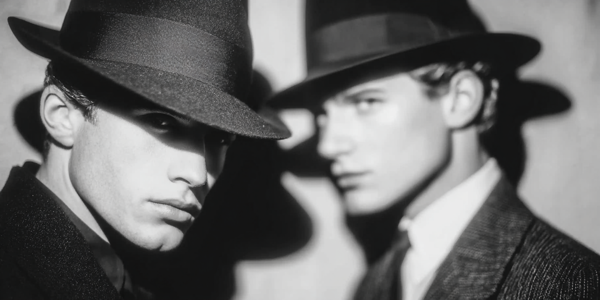
(Or: Why Historical Queerness is Complicated, Beautiful, and Occasionally Messy as Hell)
When I started writing queer characters, I didn’t expect to become a part-time amateur historian, therapist, and decoder of unspoken longing. But that’s what happens when you plop queer folks into past decades and tell them to live, love, and maybe solve a murder or two without getting arrested or excommunicated.
Right now, I’m waist-deep in a detective noir series set in 1930s Chicago—think fedoras, gin joints, and a paranormal investigator who’s a little too good at noticing things (especially when it comes to handsome suspects). And before that, I wrote a time-travel novel with scenes set in 1860. Yeah. That 1860. Civil War-era, “homosexuality is a criminal offense in every state” 1860.
I’ve learned a lot from these queer journeys through time. About shame. About resilience. About how love finds ways to survive—even when the world keeps trying to erase it.
If you’ve ever read a historical novel where two men are just very good friends and happen to share a bed because it’s “more efficient,” you’ve probably side-eyed your way into Queer History 101.
In the 1860s, I couldn’t write a character openly saying “I’m gay” without breaking the narrative like a poorly placed anachronism. So instead, there were loaded glances. Letters with double meanings. Physical closeness that a modern reader understands but the characters themselves might not even have words for.
And let me tell you, writing those subtle emotional gymnastics? Weirdly exhausting. But also really rewarding. Because it reminds you just how hard people had to fight to understand themselves—let alone find someone else who did.
I used to think of queer history as this slow unfolding—like LGBTQ+ people didn’t exist until we gradually “appeared” in the 20th century. LOL. Nope. We’ve always been here. What changed was the language and the risk.
In 1930s Chicago, things were just barely starting to crack open in the underground scenes. Speakeasies had back rooms. Men danced with men—quietly. Women lived together and were “confirmed bachelors” or “Boston marriages.” It was all hidden in plain sight, like a magic trick nobody acknowledged.
Writing queer characters during this time meant leaning into that tension. My detective might be quick with a pistol, but he’s slow to trust when it comes to romance. There’s always this edge of fear and secrecy humming beneath the surface—like the wrong word to the wrong person could end more than just a relationship.
I worried, at first, that writing historical queer characters would mean constantly flirting with doom. And yes, there’s pain. You can’t sugarcoat laws, persecution, and violence.
But there’s also joy. So much joy.
There’s coded love letters and whispered confessions in moonlit alleys. There’s finding the one person who sees you when the rest of the world insists you’re invisible. There’s loyalty. Found family. Unlikely alliances.
In the 1930s detective story I’m writing, my main character finds moments of connection in places he never expected. A bartender who looks the other way. A former lover turned informant. A kiss stolen in the dark while jazz spills from a phonograph. It’s a little noir, a little gothic, and 100% emotionally fraught (my favorite flavor).
Here’s a lesson I learned the hard way: you can’t just drop modern queer people into a historical setting and call it a day. You have to let the setting shape them. They wouldn’t have had access to the same conversations, communities, or even concepts that we do now.
In 1860, there was no “coming out” as we know it. There was no Pride parade, no TikTok explaining the difference between demiromantic and gray-ace. People figured things out in isolation—or not at all.
And while that’s tragic, it’s also a space for rich character exploration. The internal battles. The slow dawning of realization. The accidental discovery of joy.
This one hits hard, especially in the 1930s noir world. Even when you’re not being chased by mobsters or ghouls (because, yes, I threw in a supernatural twist), there’s always the social eye. The ever-present judgment. The “what will the neighbors think?”
That pressure shaped how queer people moved through the world. So in my writing, I try to show how small acts—like touching a hand for a beat too long—could be monumental. Intimacy is magnified under the weight of fear.
And yet, people still loved each other anyway. Because of course they did.
Writing queer characters across time has taught me this: we’ve always been here, quietly defiant, stubbornly tender, surviving by candlelight until someone could finally flip the switch.
As a writer, it’s both an honor and a responsibility to bring those stories to life—flawed, complicated, passionate, and human. Always human.
Now if you’ll excuse me, I have a ghost-infested speakeasy to write and a very grumpy 1930s detective who needs to admit he’s in love with the man helping him solve a murder.
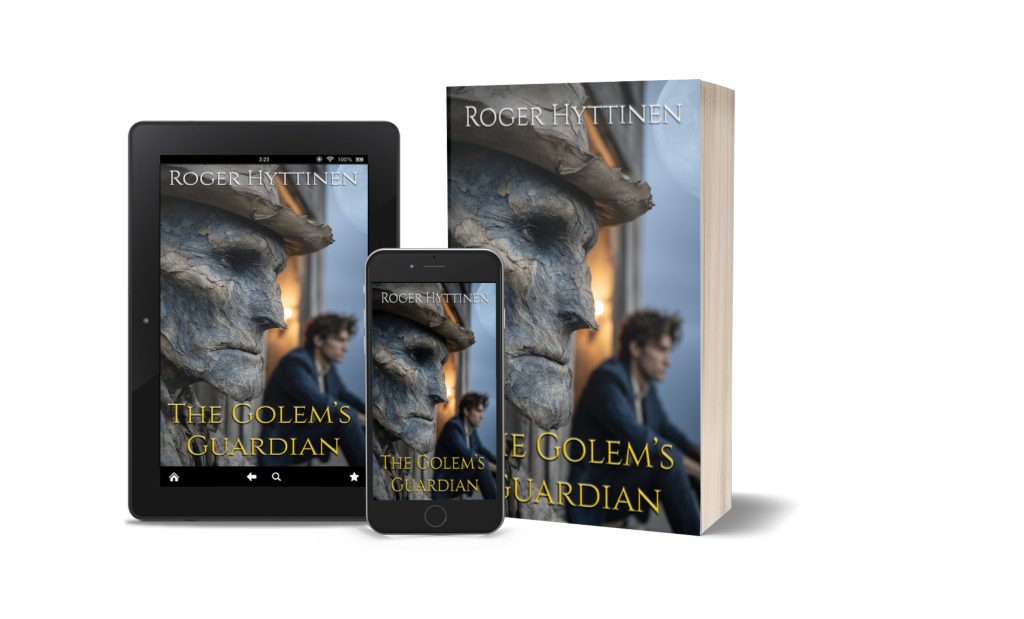
When Brooklyn librarian David Rosen accidentally brings a clay figure to life, he discovers an ancient family gift: the power to create golems. As he falls for charismatic social worker Jacob, a dark sorcerer threatens the city. With a rare celestial alignment approaching, David must master his abilities before the Shadow’s ritual unleashes chaos—even if using his power might kill him. The Golem’s Guardian
What I’ve Learned from Writing Queer Characters Across Different Decades Read Post »