Holiday Break
I’m going to be taking a little break from posting though the rest of the year. I’ll be back on January 4th with a year full of fresh posts for you.
See you all then. And….
HAPPY HOLIDAYS!!!
Still Here, Still Queer, Still Reading YA

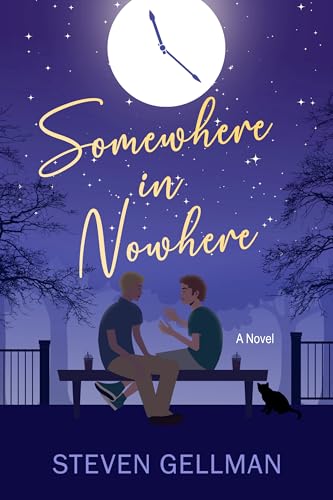
So, I was reorganizing my bookshelf last Tuesday—mostly because I was avoiding the massive pile of laundry staring at me from the corner of the room—and I found this battered paperback from 1975. The spine was cracked in three places, and it smelled like that specific mix of vanilla and old paper that only cheap trade paperbacks seem to acquire after a decade. It was a YA coming-out novel. I won’t name which one because, honestly, the writing hasn’t aged super well, but holding it brought this wave of nostalgia crashing over me. Not the fun, sparkly kind of nostalgia, but that heavy, tight-chested feeling of remembering exactly how scared I used to be.
It got me thinking about the state of Young Adult fiction right now.
There’s this chatter I hear sometimes, usually on Twitter or in the comments section of book reviews, where people complain that we have “too many” coming-out stories. The argument usually goes something like: We have marriage equality now! Gen Z is fluid! Why do we need another book about a nervous teenager telling their parents they’re gay? Can’t we just have gay wizards fighting dragons?
And look, I want gay wizards fighting dragons as much as the next nerd. Seriously, give me all the gay wizards. But the idea that coming-out stories are “over” or unnecessary? That makes me want to scream into a pillow.
The Mirror Effect
Here is the thing: growing up is terrifying. It’s messy and gross and confusing. When you add the layer of realizing you aren’t “default settings” straight, it gets lonely fast.
I remember reading my first real queer YA book. I was sitting on the floor of the local library, way back in the stacks where the motion-sensor lights would flicker off if you didn’t wave your arms every ten minutes. I felt seen. Not in a creepy way, but in a way that made my lungs expand a little better. Until that moment, I thought the weird knot of anxiety in my stomach was just a me-thing. Reading about a fictional character sweating through their shirt while trying to tell their best friend the truth? It validated my entire existence.
We can’t pretend that just because laws change, the internal freak-out of a fifteen-year-old changes too. That fear is primal. It’s the fear of losing love. As long as there are kids worrying that their parents or friends might reject them, we need these books. We need them to be mirrors.
It’s Not Just for the Queer Kids
Here is an opinion that might annoy some people: straight kids need these books just as much as queer kids do. Maybe more.
Empathy isn’t something you’re born with, like eye color. It’s a muscle. You have to work it out. When a straight, cisgender teenager picks up a book like Simon vs. the Homo Sapiens Agenda or The Miseducation of Cameron Post, they aren’t looking for a mirror; they’re looking through a window. They get to spend three hundred pages inside someone else’s head, feeling that panic, that longing, and that eventual relief.
It makes it a lot harder to be a bully in the locker room when you’ve mentally lived through the terror of being the target. I really believe that. Fiction sneaks past our defenses. You might roll your eyes at a lecture about tolerance, but it’s hard not to cry when a character you love gets their heart stepped on.
The Happy Ending Revolution
Also, can we talk about how the endings have changed?
Back in the day—and I’m talking the dark ages of the 80s, 90s and early 2000s—if you found a queer book, someone was probably going to die. Or run away. or end up miserable and alone staring at a rainy window. It was bleak.
Now? We get rom-coms. We get awkward first dates at the movies where they share a bucket of overly salty popcorn. We get prom scenes.
This shift is huge. It tells readers that their story doesn’t have to be a tragedy. It tells them that happiness is actually an option. I think that’s why I still buy these books, even though I’m technically too old for the demographic. I’m buying them for the version of me that didn’t think a happy ending was possible. Every time I read a scene where the main character gets the guy/girl/person and the parents say, “We love you anyway,” it heals a tiny fracture in my own history.
It’s Okay if They’re Cheesy
I want to defend the “bad” ones, too. Not every book needs to be a Pulitzer winner. We let straight people have endless, repetitive, cheesy Hallmark movies and formulaic romance novels. Queer kids deserve their own trashy, melodramatic, poorly plotted paperbacks too.
They deserve the freedom to be mediocre.
So, yeah. Keep writing the coming-out stories. Write the painful ones, the funny ones, the ones where nothing happens but talking, and the ones where they fight space aliens after they come out.
Because somewhere, right now, there is a kid sitting in a library (or scrolling on an iPad), feeling like they are the only person on earth who feels the way they do. They need to know they aren’t the only alien on the planet. They need to know the story continues after they say the words.
Anyway, I’m going to go finish that laundry now. Or maybe I’ll just read another chapter. The socks can wait.

David just wanted a distraction. Instead, his clay sculpture blinked, waved—and obeyed. Now he’s the accidental master of a mythical golem, and Brooklyn is about to need every ounce of its power. The Golem”s Guardian – grab your copy in my Web Store or from your favorite online retailer.
Still Here, Still Queer, Still Reading YA Read Post »
Can I Actually Ditch My Mac for an iPad? Maybe… Probably… I Don’t Know, Let’s Talk It Out

So I’ve been having thoughts, my friends. Dangerous thoughts. The kind of thoughts that sneak in when you’re sipping a latte and scrolling through tech blogs on your iPad, feeling a little smug because the screen is shiny and the keyboard clicks just the way you like it.
Lately, I keep bumping into all these posts from people who’ve gone full iPad. They’re out there living that sleek, cable-free, digital-nomad-at-the-café life. Meanwhile, I’m over here with my faithful MacBook, which—bless its aluminum heart—is basically glued to my monitor like it has separation anxiety.
And now I’m wondering… should I be more like those iPad people?
I mean, I love my MacBook. Love. It does everything. It handles my writing, my spreadsheets, my research rabbit holes, my attempt at organizing my life in twelve different apps because I apparently refuse to learn from past failures. But it stays on my desk like a loyal houseplant that never ventures out.
My iPad, though? That thing is a social butterfly. I take it everywhere. It’s light, it’s flexible, it’s fun. If tech had personalities, my iPad would be the friend who says “Let’s go to the library, it’ll be adorable,” while my Mac would say, “No, we are staying right here next to this monitor like grown-ups.”
The 80–90% Theory
Here’s what sparked this whole internal monologue: I realized I could probably do about 80 to 90 percent of my actual daily work on the iPad without breaking a sweat. Writing? Absolutely—Ulysses runs beautifully, and I’ve turned into one of those people who cackles while dragging snippets around with my finger. Emails? Easy. Social stuff, blog stuff, journaling, reading PDFs, making my endless to-do lists? Not a problem.
The iPad handles all of that like it’s lounging on a chaise with grapes.
But then there’s… Photoshop.
Cue dramatic piano chord.
Photoshop: The Final Boss
I design my own book covers, right? So Photoshop on the Mac is something I rely on heavily. Layers, masks, smart objects, finicky tweaks at 800% zoom—stuff that feels a little like performing tiny digital surgeries.
I’ve heard decent things about Photoshop on the iPad, but “decent” has a different meaning depending on who you ask. Some folks claim it’s fantastic for painting and drawing, which is great if you want to illustrate a dragon or sketch a mountain. My needs are a bit more “here is a ghost detective in a fedora; please make him dramatic but not too dramatic.”
From what I gather, iPad Photoshop is… fine. Like, it tries. It does a respectable job for many things, but it’s missing enough features to make cover design feel like assembling IKEA furniture with two screws and a verbal apology. The bones are there, but sometimes you just need the full muscle of desktop Photoshop to finish the job.
So that 10–20% remaining? Yeah. That’s where the Mac still wins.
But Here’s the Tug
I love working on the iPad more.
There, I said it.
There’s something energizing about being able to grab my little glass slab and head outside. Or to a coffee shop. Or to the library, where I can pretend I’m some babbling writer from the 1920s scribbling a masterpiece (except instead of a fountain pen, I’m tapping on a Magic Keyboard and hoping the Wi-Fi doesn’t hiccup).
And since I’m more mobile again—walking places, leaving my house, rediscovering the joy of not staring at the same four walls—it’s been really tempting to rethink my setup entirely. The iPad feels like the tool that fits this new chapter better. It’s portable, it’s fun, and it lets me work anywhere without feeling like I’m lugging around a small metal suitcase.
The Question: Could I Actually Move to iPad Full-Time?
I keep circling around the idea that it might be worth investigating. Really investigating. Maybe even doing a little experiment—like a weeklong “iPad-only” challenge to see what breaks first: my workflow or my spirit.
Maybe I’ll discover that Photoshop for iPad is secretly brilliant and I’ve been worrying for nothing. Maybe I’ll find myself running back to the MacBook like it’s an ex I never should have left. Or maybe—just maybe—I’ll split the difference and let each device do what it’s best at.
Honestly, that sounds the most likely: iPad for the daily roaming writer life, Mac for the deeper “let me manipulate this book cover until I’m convinced the shadows look moody enough without swallowing the poor detective whole” work.
But the idea of trimming down my tech life and actually embracing the iPad as my main machine? It keeps tugging at me.
Anyway, you know me—I’ll probably overthink this for another week and end up sitting in a café with the iPad anyway, pretending I’ve already made the switch because it just feels right.

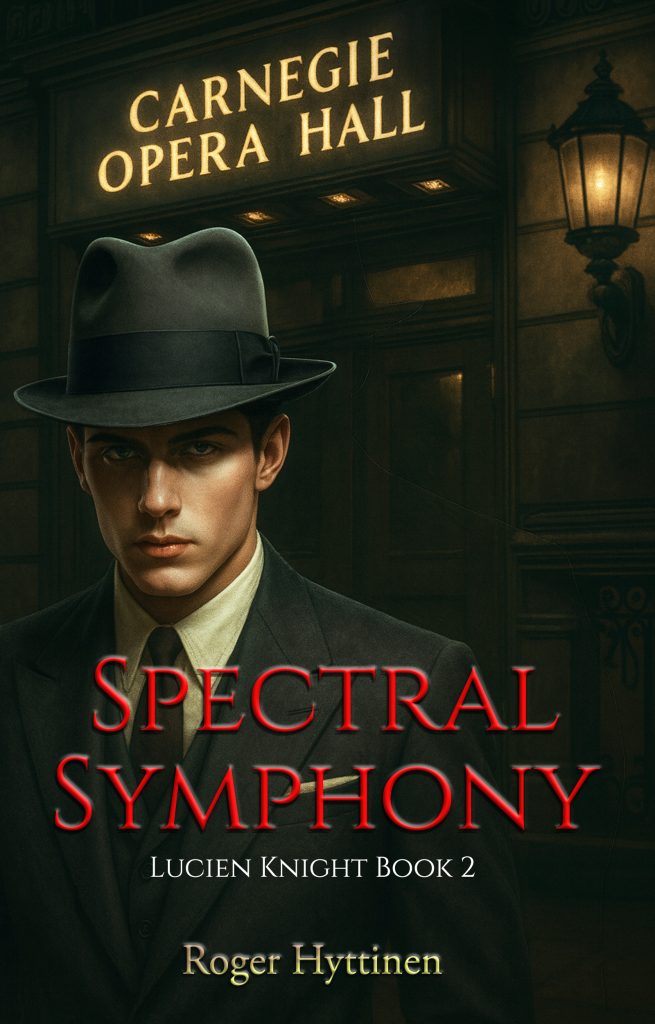
Lucien Knight came to New York to escape scandal.
He found a dead singer, a beautiful liar, and a ghost that won’t let go.
Murder at the Savoy — jazz-soaked noir meets the supernatural.
Throw Off the Bowlines (Even If You Still Get Lost in Your Own Neighborhood)

You know, every so often I’ll bump into a quote that feels like it crawled under my skin, fluffed up a pillow, and decided to stay awhile. That Mark Twain line—the one about regrets and bowlines and sailing away—hits me right behind the ribs every time I see it. Maybe it’s because I’ve made exactly too many “safe harbor” decisions in my life, the sort where you stay where it’s familiar because the familiar doesn’t bite. Or maybe it’s because I know how many times I’ve talked myself out of something I secretly wanted, usually with the weak excuse of: “Eh… maybe later.”
Spoiler: later is rarely a team player.
The Quote That Won’t Leave Me Alone
“Twenty years from now you will be more disappointed by the things you didn’t do than by the ones you did do.”
I swear, Twain must have had a time machine, because I’ve already lived the baby version of that. I can look back ten years and clearly see the little crossroads moments—like the weekend I almost bought a one-way ticket to Dublin because I’d convinced myself my future self would magically be braver than my present one.
Yeah. Still waiting on that upgrade.
But here’s what actually sticks with me: every time I did take the risk, even the messy ones, even the ones where I ended up flustered and feeling vaguely ridiculous… I never sat around thinking, “Wow, sure wish I’d stayed home scrolling cat videos.” The regrets always come from the hesitations, the almosts, the quiet little dreams I shoved off to the side to go alphabetize something instead.
Safe Harbor Is Cozy… But Cozy Gets Boring Fast
There’s something seductive about sticking to what you know. It’s like living your life wrapped in bubble wrap—everything muffled, nothing sharp poking through. And hey, bubble wrap is fun for about twenty seconds, and then suddenly you remember that real life is waiting outside like a golden retriever begging you to throw the damn ball.
Safe harbor is great for a nap, but it’s pretty lousy for stories.
Whenever I think about the “throw off the bowlines” part, I picture myself actually trying to work a boat and instantly realize the Coast Guard would absolutely have to intervene. But symbolically? I get it. It’s about snipping the rope between you and the life you’ve outgrown.
Some ropes are tiny. Some are more like those monster ropes used in tug-of-war competitions. But either way, they’re still tied to a version of you that wasn’t meant to steer the rest of your life.
Explore. Dream. Discover. (Or, At Least Try Something That Doesn’t Feel Like a Chore)
Twain hits you with those three little verbs—explore, dream, discover—which sound charming and breezy until you realize they require effort. Like, real actual effort. The kind where you stop talking about what you want and start messing around with reality to see what happens.
I’ve learned that “explore” doesn’t have to mean circling the globe with a backpack and a questionable water bottle. Sometimes it just means saying yes when a friend invites you somewhere you’d normally squirm out of.
“Dream”? That one’s trickier. Dreaming is easy, until suddenly you’re dreaming in circles and forgetting that dreams are supposed to be invitations, not screensavers.
And “discover”—that’s the sneaky part. Half the time, what you discover isn’t the thing you thought you were aiming for. You go looking for treasure and instead realize you’ve adopted a stray cat, or you’ve found out you’re actually kind of good at something you’d been avoiding for no real reason.
Twenty Years From Now…
Here’s the part that makes my stomach do that little wobble: twenty years will show up whether or not I do anything interesting in the meantime. It’ll just knock on the door one morning like, “Hey, remember all those things you said you’d get around to?”
And then I’ll have to answer it.
I think about future-me sometimes—older, maybe a little cranky, hopefully still able to get off the couch without making that involuntary noise I’m already making now. And I wonder what he’ll wish I’d been braver about. Which chances he’ll raise an eyebrow over. What adventures he’ll still be annoyed I chickened out on.
I don’t want that guy side-eyeing me.
So What Do We Do With This?
Honestly? I think we just start small. Nudge ourselves in a direction that feels slightly uncomfortable in a good way. Ask “what if?” and actually follow it with a sentence instead of ignoring it like a telemarketer call.
Throw off one tiny bowline today.
Something bite-sized.
Something that reminds you you’re still in motion.
The big leaps always start with one weird, wobbly little step, usually while you’re muttering, “Okay, okay, I guess we’re doing this.”
And that’s enough.
That counts.
Future-you will thank you.

When shadows with human faces begin stalking the city, a quiet librarian and his sister discover their family’s secret: a legacy of mysticism, prophecy, and a clay guardian who just might save—or doom—them all. The Golem’s Guardian – available HERE
Throw Off the Bowlines (Even If You Still Get Lost in Your Own Neighborhood) Read Post »
Define It Yourself, Darling

There’s this quote by Harvey Fierstein popped in my head outta nowhere the other day: “Accept no one’s definition of your life. Define yourself.” It’s one of those lines that hits you in the ribs a little, like someone just tapped your sternum and went, “Hey, are you paying attention?” And honestly, I needed that nudge. I’ve been thinking so much about the ways people try—usually without even realizing it—to hand you a pre-written script for who you’re supposed to be.
I mean, I spent years believing other people’s ideas of who I was. A teacher once told me I was “too quiet to ever be a writer.” I remember blinking at her, clutching my folder of short stories like it was a tiny kitten I needed to protect. Quiet doesn’t mean silent. Quiet doesn’t mean I don’t have a voice. It just means I didn’t want to yell over the kid who treated every class like his personal comedy hour. But for a long stretch, her words stuck to me like gum on a shoe. It took me years to scrape off that nonsense.
And that’s sort of what Fierstein was getting at, I think. Everyone has opinions—family, friends, random people in line at Target who feel compelled to offer life advice because you’re holding a planner with stickers. Folks will confidently tell you what “someone like you” should do or be or want. I’ve had people decide I’m “too old” for video games, too whimsical to run a business, too introverted to teach Zumba. Meanwhile, I’m bouncing around a gym studio with a room full of sweaty strangers and having a blast. Every time someone says, “Really? You teach Zumba?” I feel like Fierstein himself is somewhere offstage going, “See? This is what I’m talking about.”
The weirdest things people try to define you by are the things they understand the least. Like the time someone told me I shouldn’t write paranormal mysteries because “the supernatural isn’t serious literature.” I remember sipping my coffee and thinking, “Buddy, ghosts have been haunting stories longer than your family tree has been sprouting cousins.” Funny how folks will declare what’s “worthy” like they’ve been handed a golden clipboard by the universe.
I’ve watched friends get boxed in, too. One of my closest pals was always called “the responsible one,” which is code for “the one we expect to clean up everyone else’s messes.” It took him ages to realize that he wasn’t obligated to carry the weight of everyone’s disorganized chaos. The day he finally said no to something, he texted me like he’d just discovered fire. Meanwhile, he’s traveling now, taking improv classes, hiking in places with actual cliffs—living a life way bigger than the label he got stuck with at sixteen.
Sometimes the definitions are subtle, like when people react with mild surprise that you enjoy something outside the little category they’ve filed you into. “Oh, you’re into French? I didn’t think you’d be a language person.” “You’re starting a tarot blog? Huh.” They don’t mean harm—most folks aren’t malicious—but the effect can still be this small, quiet pressure that nudges you back into the “expected” lane.
And then there are the definitions you hand yourself without realizing. Those are the sneaky ones. For years, I had this internal rule that I wasn’t “sporty” because I hated gym class in middle school. Turns out, I love dance workouts, long walks, and the occasional bike ride where I pretend I’m in a charming European indie movie. It took me embarrassingly long to figure out that gym class was not, in fact, the universal measure of athleticism. Who knew?
Even silly examples count. I once decided I “wasn’t a hat person.” I don’t know where that came from—maybe some random snapshot of myself in a winter beanie that made me look like a startled turnip. But then, one day on a whim, I bought this wide-brimmed hat that gives me major “mysterious stranger in a 1930s speakeasy” energy, and suddenly I’m strutting around like I own the joint. Turns out I was a hat person the whole time; I was just wearing the wrong hats (and I now own two hat racks).
Defining yourself is messy and ongoing and occasionally weird. It means trying on identities like outfits and figuring out which ones fit and which ones scratch. It means ignoring the peanut gallery—even the well-meaning peanut gallery. It means letting yourself evolve, contradict yourself, surprise yourself. And honestly, that’s the fun of it.
So yeah. Fierstein wasn’t kidding. Don’t let people decide who you are just because they happened to show up early in your story. Write your own definition, scribble it out when it changes, doodle in the margins, add footnotes, cross out the parts that never belonged to you in the first place.

It’s here! Murder at the Savoy is out now — a jazz-soaked mystery where the ghosts never rest, and neither does Detective Lucien Knight.
🎩 1930s New York. Forbidden love. One haunting murder. Grab your copy HERE
Define It Yourself, Darling Read Post »
Me, My Eyes, and My Beloved Boox Note Air 4C

So, picture me squinting at my iPad mini like a grandpa reading the stock listings under a dusty lamp. That was my life for a while—thinking I’d cracked the code to digital reading nirvana with that tiny tablet—but my eyes pretty much staged a rebellion. Burning. Watering. The whole dramatic opera. I wanted to read for hours, not blink through a headache. And honestly, I felt betrayed. I bought the iPad for ebooks. That was supposed to be our thing.
But the universe nudged me in another direction.
I fell down the rabbit hole of e-ink readers, the way one falls into YouTube at 11 p.m. thinking, just one more review. Before I knew it, I was comparing refresh rates, note-taking latency, warm vs cool front lights, storage sizes, screen clarity, stylus feel, color rendering—you know, stuff I swore I’d never care about. I became that person. The research gremlin. I even caught myself stroking my chin like a philosopher while reading Reddit threads titled “Is Boox worth it??”
And then—cue soft glow and faint angel chorus—I found the one.
The Boox Note Air 4C
Sleek. Kinda classy. Understated like a writer who wears black sweaters and drinks strong tea.
The first time I powered it on, the screen looked like paper. Not “sorta-like-paper if you squint” paper—actual paper vibes. That warm matte texture makes my words feel real, and the color display (yes, color e-ink!) gives book covers just enough personality without punching me in the eyeballs with bright LED cheerfulness.
My eyes? Instantly happier.
I’m talking long reading sessions—two coffee refills deep—and zero regret. No stabbing brightness. No glare bouncing off the window. Just me sunk into a story, the device weight perfectly chill in my hands, as though it was designed for marathon reading binges and existential literary crises.
And Then I Realized This Thing Was More Than a Reader
This is where my Boox Note Air 4C surprised me. I originally bought it to read—full stop. But somewhere between chapter three of a mystery novel and my second peppermint tea, I thought:
Huh, I could edit my draft on this.
And I did.
And it was divine.
There’s this very pleasant scratch-to-stylus feel that tricks your brain into thinking you’re writing on real paper. I can scribble notes directly on PDFs, circle dialogue that feels clunky, doodle a sad stick-figure detective in the margin (for morale purposes), and highlight entire chapters like I’m a professor marking essays. It’s writable, in the most comforting sense. The digital pages take ink with little resistance.
My manuscript drafts look like someone spilled rainbow confetti on them—in the best possible way. Edits everywhere. Arrows. Stars. Angry punctuation. Tiny compliments to myself like good metaphor, past Roger.
It’s become my traveling writing companion. Coffee shops, park benches, planes—if the mood hits, I’m editing. And because the screen feels so gentle on the eyes, I can work longer without that throbbing behind-the-socket sensation that pretty much defines trying to revise on an iPad backlit at 2 a.m.
Things I Do With My Boox Without Shame
- Read on the couch until the cat demands food
- Annotate drafts like I’m preparing for a dissertation defense
- Highlight entire paragraphs because they “spark joy”
- Carry it around like a pocket-sized creative brain
- Flip between ebooks, PDFs, handwritten notes, and doodles like some kind of literary wizard
It’s funny—tech is usually so loud. Flashy. Shiny. Begging for attention. The Boox Note Air 4C feels more like a notebook that just happens to know how to sync files and display entire novels. It encourages slowing down, focusing, thinking. My writing sessions feel less like work and more like wandering through my thoughts with a pen.
And that’s exactly what I wanted.
I still love my iPad—don’t get me wrong. It’s great for apps, shows, gaming, hopping online when boredom hits. But for reading? For editing? For deep-thought creative sessions where I’m half annoyed and half in love with my own sentences?
No contest.
The Boox wins.
I guess this is my way of saying
I didn’t expect to fall for a device. But here I am, stroking its cover like it’s a hardcover first edition. If you’re like me—eyes tired, brain craving paper but unwilling to sacrifice digital convenience—this little beauty may be your new confidant.
I read more. I write more. I think more.
And honestly? That feels like magic.

My Ghost Oracle Box Set (Nick Michelson) is now available from your favorite online retailer.
Here’s a link for Books 1-3: https://books2read.com/u/mBKOAv
Here’s a link for Books 4-6: https://books2read.com/u/mVxr2l
Me, My Eyes, and My Beloved Boox Note Air 4C Read Post »