Why We Can’t Stop Crushing on Queer Villains (Even When They’re Trying to Burn Down the World)

AdobeStock 575537502.

Okay, so hear me out: queer-coded villains in fantasy are kind of… irresistible. Not in a “yay, evil!” way (though sometimes, yes, also that), but in that messy, juicy, fascinating way where you’re halfway through a book or movie and suddenly realizing you’d rather spend three hours in a morally complex debate with the villain than go to brunch with the hero. Like, yeah, they’re probably about to summon an ancient shadow beast or stab someone in the back with an obsidian dagger shaped like a bat wing, but also? They’re making a point.

Let’s just get this out of the way first: the queer villain trope has a long, messy history. Historically, a lot of them were coded as queer because writers couldn’t openly make characters LGBTQ+ without network censors freaking out. So instead, we got the slinky, sarcastic, well-dressed, emotionally repressed villain with perfect eyeliner and a penchant for elaborate monologues. Think Scar from The Lion King, or Jafar from Aladdin. (Disney, we see you.)

But here’s where it gets interesting: somewhere along the way, the queerness became part of what made them compelling, not just threatening. These characters often live outside the rules of the world around them. They’re not afraid to be other, to lean into their difference, to challenge systems. And for a lot of queer folks—myself included—there’s something deeply cathartic about watching a character who’s been rejected or misunderstood flip the whole system the bird and build their own tower of power. (Maybe literally.)

One of my forever favorites is Melisandre from Game of Thrones. Okay, yes, she’s technically not queer-coded in a sexual orientation sense (though I dare you to find a straighter woman who births a smoke demon). But she’s deliciously Other, mysterious, powerful, devoted to something everyone else thinks is nuts, and unapologetically herself. There’s something inherently queer in that rejection of social norms and that extravagant performance of belief.

Then there’s Loki. Ah, Loki. Tom Hiddleston smirking through ten thousand morally ambiguous decisions in Thor and The Avengers. Canonically genderfluid and pansexual in Norse mythology—and finally acknowledged as such (sort of) in the Disney+ series—Loki is the poster child for the chaotic queer archetype. Mischief isn’t just his title, it’s a lifestyle. And somehow, even while lying to literally everyone and trying to take over Asgard, he’s still sympathetic. Because underneath all the trickery is that wounded kid who was never enough for his dad. That hits harder than a Mjölnir to the gut.

But let’s not forget our literary babes. The Picture of Dorian Gray is practically one long queer villain origin story. Dorian is gorgeous, narcissistic, and fully corrupted by Lord Henry’s flamboyant nihilism. There’s something deeply seductive about watching him fall—gracefully, glamorously—into darkness. Oscar Wilde, who wrote it while living in Victorian England and facing actual prison for being gay, wasn’t exactly being subtle. The real tragedy? Dorian’s villainy isn’t just aesthetic—it’s a metaphor for repression, and what happens when desire gets buried too deep.

Now, obviously, it’s important to draw the line between complex characters and damaging stereotypes. We’ve had enough “the gay guy dies horribly because of his evil ways” stories, thanks. But when done right—when they’re not just queer-coded, but queer—these villains become something else. They stop being symbols of danger and start becoming avatars of agency. Power doesn’t have to look noble or straight. Sometimes, it looks like Ursula the Sea Witch, repurposed from Divine the drag queen and singing “Poor Unfortunate Souls” like she owns the ocean. (Which, let’s be honest, she kind of does.)

And then there’s Castlevania’s Carmilla. Oh my god. She’s like if you took every power-hungry, femme-fatale vampire trope and wrapped it in velvet and bisexual rage. The way she struts through that show—dripping sarcasm, rolling her eyes at incompetent men, and plotting world domination like it’s a wine tasting—it’s art. She’s not queer-coded. She’s queer, full stop. And she’s tired of men screwing everything up. Hard relate.

And while we’re on vampires: Interview with the Vampire‘s Lestat. Good lord, Lestat. I’m not saying Tom Cruise was giving deliberate queer energy in the 1994 version (though I am saying that), but in the recent AMC adaptation? It’s full tilt. The man is drama incarnate. He turns people into vampires because he’s lonely, throws blood tantrums when his undead boyfriends don’t love him enough, and monologues like a Shakespearean theater kid in eyeliner. It’s not just compelling—it’s vampiric gay chaos with a body count.

Let’s pop over to comics for a second—because you cannot talk about queer villains without tipping your hat to Mystique from X-Men. Shapeshifter, bisexual icon, deeply jaded revolutionary? Yes, yes, and hell yes. She’s one of those characters who is constantly blurring the line between right and wrong, self and other. Her queerness isn’t just in who she loves (though yes, Destiny, we know), it’s in her refusal to be fixed or defined. She literally changes her body whenever she wants. That’s pretty queer, philosophically speaking.

And She-Ra and the Princesses of Power gave us Catra. Look, if you didn’t feel something watching that emotionally damaged, jealous, brilliant lesbian cat-girl struggle with her feelings for Adora while also trying to conquer Etheria… I don’t know, maybe your heart is made of beige carpet. Catra is a modern blueprint for the queer villain-turned-antihero: traumatized, defiant, full of unprocessed affection and rage. And her redemption arc? Gorgeous. But even when she was Bad™? Still compelling as hell.

Quick detour into video games: Dragon Age: Inquisition gave us Samson, a tragic fallen Templar with an implied queerness that feels less token-y and more baked into the heartbreak of his character. He’s not evil because he’s queer—he’s a villain despite being queer, and the queerness is just part of his messy humanity. And don’t get me started on Final Fantasy villains like Kuja from FFIX, whose entire vibe is “gender is a prison and I’m showing up to the ball in feathers and vengeance.” Iconic.

And if we’re talking animated brilliance, let’s not skip over HIM from The Powerpuff Girls. Look, I know it’s a kid’s show, but HIM was doing devil drag before most of us knew what that even was. High heels, cravat, lobster claws, and a falsetto that could slice glass—he scared the crap out of me and made me question the gender binary. Duality, baby.

Bottom line? These villains stick with us not just because they’re queer or fabulous or damaged (though, sure, all of that), but because they’re multidimensional. They’re allowed to be vain and vicious and vulnerable and seductive and petty and powerful. They’re not just queer-coded throwaways anymore—they’re whole damn people, and we crave that.

I’d love to keep going, honestly, because once you start unearthing these characters, it becomes this little queer archaeology project: “Oh, this is why I was obsessed with Maleficent at age eight.” (Wings? Horns? The cheekbones?? Come on.)

Honestly, maybe what we love most about these characters is that they feel like they’ve had to fight for every inch of themselves. They’ve often been rejected, othered, and pushed to the margins—and instead of folding, they get fabulous. They sharpen their claws. They set the world on fire, but with style. And even when we know we shouldn’t root for them… we kind of do anyway.

So yeah. If your villain has emotional baggage, sparkling dialogue, and an aura of tragic fabulousness, there’s a good chance I’m rooting for them. Or at least writing fanfic in my head.

P.S. If you’ve got a favorite queer villain, send ‘em my way. I’m always looking to expand my League of Fabulous Evil.

Why We Can’t Stop Crushing on Queer Villains (Even When They’re Trying to Burn Down the World) Read Post »

Welcome to Homeroom, But With Spells — Why We’re Still Obsessed with Magical Schools (Especially Us Queer Folks)

Handsome young man working on a potion

Okay, real talk: I would absolutely have been the kid in the back row of Potions class pretending I totally meant to turn my cauldron into a small, hissing cabbage. And I would’ve loved every second of it. There’s just something about magical school settings that hits harder than a Firebolt to the face—and I think it’s about time we talk about why these stories keep tugging at our hearts, especially those of us who grew up a little (or a lot) outside the norm.

We All Want to Get the Letter

Let’s start here: the fantasy of escape. One day, you’re stuck in algebra class thinking about how your life is aggressively unmagical, and the next? Boom. A letter shows up saying you’re actually destined for something bigger. Like, “Here’s your wand, here’s your roommate, and oh, by the way, you have latent powers because you’re special.”

Tell me that doesn’t hit differently when you’ve spent your childhood feeling like the odd one out.

Whether it’s HogwartsBrakebills (The Magicians), Hex HallThe Scholomance, or even Xavier’s School for Gifted Youngsters (yes, that counts—don’t fight me), magical schools offer this built-in narrative of “Hey, you’re not weird, you’re just magical.” And if that’s not a queer metaphor, I don’t know what is.

The Magic of Chosen Family

Here’s the thing: a lot of us LGBTQ+ folks have a complicated relationship with traditional family structures. Magical school settings often create space for chosen family—the best kind of found friendships that grow out of survival, shared secrets, and late-night sneaking into the library to research forbidden charms.

Think about Will and Jem in the Shadowhunter Academy (The Infernal Devices), or even the chaotic friendship dynamics in Carry On by Rainbow Rowell. You get these intense, emotional bonds formed in the pressure cooker of coming-of-age, with extra bonus points for dragons and magical duels.

And honestly? Watching queer-coded or explicitly queer characters find that kind of deep connection in a magical environment feels healing. It’s not just about the spells. It’s about finding your people. Even if one of them turns out to be half-demon.

Structure, but Make It Sparkle

Another reason magical schools are so satisfying? The structure. As someone who lives by lists but also dreams of floating through a dark forest talking to sentient trees, I get the appeal.

You’ve got the school year, the class schedule, the dormitories… It gives a familiar rhythm. But instead of gym class, you’re dodging hexes. Instead of bullies throwing spitballs, it’s rival houses flinging minor curses across the dining hall.

It’s comforting and thrilling. There’s a safe framework—class, homework, exams—but inside it, anything can happen. Your professor might be secretly a vampire. Your best friend might turn out to be a reincarnated phoenix. And you? You might finally learn that being different isn’t a flaw, it’s your gift.

The Queer Allegory Is Not Subtle, and We Love That

Okay, can we just acknowledge how many queer-coded narratives exist in magical school books? There’s a whole subgenre of “Oops, I kissed my roommate and now our magical bond is spiraling out of control and also we might be soulmates.” (Looking at you, Witchmark and The House in the Cerulean Sea.)

There’s also the fact that magic itself is often portrayed as something hidden or suppressed until the character embraces it. Sound familiar? Yeah, it’s giving “closeted teenager finally coming into his own at wizard boot camp.”

Magical schools offer that sweet, sweet metaphorical buffet: repression, transformation, identity, power, found family, first love, and sometimes dragons. The queer parallels basically write themselves.

The Drama, Darling

Let’s be real—no one does high-stakes emotional drama like teenagers with magic. Especially queer teenagers with magic. The yearning? Off the charts. The angst? Breathtaking. The romantic subplots that simmer for 200 pages before exploding in a single magical kiss under the moonlight? Inject it straight into my veins.

If you’ve ever read “A Deadly Education” by Naomi Novik, you know what I mean. Or “The Witch King” by H.E. Edgmon, which unapologetically centers a trans protagonist navigating magic, trauma, and hot fae politics. There’s something deliciously cathartic about reading a story where the main character is both emotionally fragile and powerful enough to accidentally shatter a castle.

Closing the Spellbook (for now)

So yeah, I love magical schools. Always have. Probably always will. They’re not just fantasy—they’re wish fulfillment, especially for those of us who spent our formative years feeling like outsiders, hoping there was somewhere—anywhere—we might finally fit.

Give me a boarding school where the library whispers secrets and every student has a closet full of capes. Give me crushes that bloom under enchanted moons. Give me chaos and beauty and the kind of magic that makes you finally feel seen.

And if someone builds that school IRL? I’ve got my bags packed.

Welcome to Homeroom, But With Spells — Why We’re Still Obsessed with Magical Schools (Especially Us Queer Folks) Read Post »

Trying Again Tomorrow (and Maybe Eating a Cookie First)

Sad teenage boy worried about his problems sitting alone on bed in his room

Okay, so you know how some quotes just hit you in the gut and then gently pat your back while whispering, “Hey, it’s fine. You’re doing your best”? That’s how I feel about this one by Mary Anne Radmacher: “Courage doesn’t always roar. Sometimes courage is the quiet voice at the end of the day that says ‘I’ll try again tomorrow.’” And honestly? This has been one of my all-time favorite quotes for years. I’ve scribbled it on sticky notes, posted it above my desk, even stuck it in a journal like some kind of emotional lifeline for the days when life felt like a broken vending machine—loud, uncooperative, and refusing to give me my dang peanut M&M’s.

What I love most is that it flips the whole idea of courage. Like, we grow up thinking brave means swords and speeches and maybe a dramatic orchestral score, but honestly? Sometimes it’s just brushing your teeth at 11:58 PM after a full-on flop of a day and deciding not to give up entirely. That’s a different kind of fierce. A quieter kind, but no less gritty.

You know who totally embodies this vibe? Frodo Baggins. I mean, yeah, he had some roar-y moments, but a lot of his bravery came in the quieter scenes. That kid walked across Middle-earth barefoot (rude, honestly), carrying the world’s worst mood ring, and STILL kept going. Even when he was dehydrated, traumatized, and had Gollum whispering nonsense in his ear, he didn’t quit. Courage didn’t roar. It limped, wheezed, and mumbled, “Let’s just get to the next rock.”

Same energy with The Pursuit of Happyness—Will Smith (and his real-life son, which makes it extra emotionally spicy) plays a struggling single dad who basically eats rock bottom for breakfast every day. There’s that moment in the subway bathroom where he clutches his son while pretending it’s a game, and my soul just cracks. He’s not screaming. He’s not punching walls. He’s just hanging on, telling himself that tomorrow, he’ll try again. And spoiler alert: he does.

Even animated films get it. Inside Out was basically a quiet manifesto for this quote. Joy spends most of the movie trying to be loud and bright and perky (relatable), but it’s Sadness who teaches us that sitting with hard feelings is sometimes the most courageous thing you can do. Letting yourself cry and still showing up the next day? That’s peak bravery, in my opinion.

And don’t even get me started on books. Have you read Eleanor Oliphant Is Completely Fine by Gail Honeyman? Eleanor isn’t out there saving the world, but she is trying to function in a society that hasn’t been particularly kind to her. Every chapter is this slow burn of someone deciding, over and over, that maybe life is worth showing up for. Even if she has no idea how to do it right. (Spoiler: none of us do.)

So yeah. The next time your brain tries to tell you that you’re only brave if you’re loud or fearless or charging into battle with a flaming sword and a six-pack (of abs, not beer), just remember: sometimes the bravest thing you can do is whisper “I’ll try again tomorrow,” while wrapped in a blanket with a pint of rocky road and mascara streaked halfway down your cheek.

Trying again tomorrow doesn’t mean you failed today. It means you’re still in it.


The Golem’s Guardian – A perfect beach read!

Trying Again Tomorrow (and Maybe Eating a Cookie First) Read Post »

Weekly Roundup for July 12, 2025

Boy speaking into a megaphone

This week’s roudup is gonna be a short one—think espresso shot, not grande latte—mostly because I’ve got not a whole lot to report and I’m trying (trying being the key word here) to stay focused and not let the siren call of summer sunshine drag me away from my desk. Easier said than done, right? Every time I glance out the window, the grass looks greener and my to-do list looks… optional.

BUT! I did get a new toy—er, I mean tool. I finally pulled the trigger on a new eReader from Boox. It just arrived and I haven’t had time to really dig into it yet, but first impressions? Pretty snazzy. Super crisp screen, nice feel in the hand, and just enough buttons and settings to make me feel like I’m operating a gadget from a 1930s sci-fi serial. Which is fitting, because yes, I’ve clearly been marinating in 1930s slang lately—this thing is the cat’s pajamas, the bee’s knees, and maybe even the elephant’s eyebrows. (Too far?) Full review coming soon-ish on the blog once I’ve lived with it long enough to find its quirks and joys.

Oh, and while I have your attention – have you checked out “The Golem’s Guardian” yet? If you haven’t gotten your hands on a copy, you can snag one HERE. I’m still pretty excited about how that one turned out.

Some Things I Thought Were Worth Sharing


My author friends may find this article of interest: The Tools Have Changed, but Your Voice Still Matters https://writersinthestormblog.com/2025/05/the-tools-have-changed-but-your-voice-still-matters/

This definitely seems like a film worth watching: Tommy Dorfman’s Tender Directorial Debut ‘I Wish You All the Best’ Promises a Heartfelt, Hilariously Honest Coming-of-Age Tale https://gayety.com/tommy-dorfmans-tender-directorial-debut-i-wish-you-all-the-best-promises-a-heartfelt-hilariously-honest-coming-of-age-tale

I don’t know how this LGBT reality show on Netflix escaped my attention (prob because I hate reality tv): In defence of ‘The Ultimatum: Queer Love’ and its straight host https://xtramagazine.com/culture/he-ultimatum-queer-love-host-straight-274808

Compelling images of abandoned classic cars: During Our Exploration Of Abandoned Factory, We Were Surprised By Unexpected Finds Of Classic Cars https://www.boredpanda.com/abandoned-factory-cars-portugal-the-yellow-jackets-msn/

My writer friends may find this article by Johnny B Truant of interest: We’re Entering the Age of the Artisan Author https://johnnybtruant.substack.com/p/were-entering-the-age-of-the-artisan

An article for my indie author friends: 10 Tips for Self-Published Authors to Get More Book Reviews https://www.draft2digital.com/blog/10-tips-for-self-published-authors-to-get-more-book-reviews/

Washington Blade’s short interview with Doug Spearman from Noah’s Arc https://www.washingtonblade.com/2025/07/03/doug-spearman-noahs-arc/

This LGBTQ+ travel company’s mission of inclusivity is radical & ‘You’re more than welcome’ https://www.advocate.com/business/vacaya-inclusive-lgbtq-vacations

Looking for something to watch? Here’s the gayest movie & TV trailers that dropped in June 2025 https://www.queerty.com/watch-the-gayest-movie-tv-trailers-that-dropped-in-june-2025-20250630/

My writer friends may find this article on POV of interest: Choose a Powerful Foundation for Your Story https://writersinthestormblog.com/2025/05/choose-a-powerful-foundation-for-your-story-part-two/

The Best Entries Into The Comedy Wildlife Photography Awards https://www.boredpanda.com/comedy-wildlife-photography-contest-finalists-2023-msn/

My author friends might find this article about sharing of interest: None of Your Business: Why Writers Shouldn’t Feel Obligated to Share Too Much https://lithub.com/none-of-your-business-why-writers-shouldnt-feel-obligated-to-share-too-much/

Some of these are quite incredible: Unbelievable Wildlife Moments Frozen In Time By This Photographer https://www.boredpanda.com/captivating-wildlife-photography-munish-palnaiappan/

Writers and readers may find this article about ‘big books’ of interest: Is Summer Actually the Season for Reading Big, Thick Books? https://lithub.com/is-summer-actually-the-season-for-reading-big-thick-books/

My author friends may find this of value: “Please Keep Caring.” What John McPhee Taught Generations of Writers and Journalists https://lithub.com/please-keep-caring-what-john-mcphee-taught-generations-of-writers-and-journalists/


Weekly Roundup for July 12, 2025 Read Post »

Unicorns, Shapeshifters, and Sapphic Mermaids—Queer-Friendly Mythical Creatures You Probably Haven’t Met Yet

So I fell into a folklore rabbit hole the other night (as one does when insomnia and curiosity tag-team you at 2 a.m.), and wow—I did not expect to stumble upon an entire lineup of mythical creatures who basically scream, “I would totally march in Pride with glitter horns and bi flag wings.” Turns out, mythology and queerness go together like campfires and ghost stories: a little spooky, a little sparkly, and extremely extra in the best way.

Let’s start with the obvious (but still fabulous): unicorns. Yeah yeah, we all know they’ve been reclaimed by queer culture harder than a Bedazzler in a drag closet—but did you know that in some medieval texts, unicorns could only be tamed by virgins of any gender? Like, gender didn’t seem to matter as long as the vibes were pure. Honestly, that feels very nonbinary to me. Also, unicorn blood supposedly grants immortality, which I would argue is exactly the level of drama a queer icon should bring to the table.

Moving on. Ever heard of baobhan sith? They’re basically vampiric fairy women from Scottish folklore who wear green dresses and lure men into the woods for, um, deadly dances. But plot twist! Some older stories hint that they didn’t only prey on men. Like, there’s this whole sapphic energy happening under the surface—beautiful, deadly women wooing other beautiful, deadly women under the moonlight. It’s giving dangerous forest girlfriend, and I’m here for it.

Then we’ve got shapeshifters, the honorary mascots of fluid identity. From Japanese kitsune (fox spirits that can shift between genders and seduce humans) to Norse Loki (who, as we discussed in another post, literally transformed into a mare and gave birth to a horse—still not over it), these magical beings were way ahead of the curve. They didn’t just break gender rules—they exploded them, danced in the glittering remains, and went back for seconds.

And let’s take a hot second to appreciate the selkies. These seal-people from Scottish and Irish lore could shed their seal skins and walk on land, usually taking human lovers. The classic version tends to lean cis-het (yawn), but dig a little deeper, and you’ll find queer retellings where selkies fall in love across the gender spectrum. There’s something inherently queer about living between worlds, don’t you think? Ocean or land, skin or no skin—it’s all about choosing your identity and swimming against the current.

One of my personal faves, though? The Galli, ancient gender-nonconforming priests of Cybele, the Phrygian mother goddess. These folks existed IRL but were so steeped in divine mystery and myth that they basically blurred the line between person and creature. The Galli were assigned male at birth, but many lived as women, worshiped in ecstatic rituals, and embraced queer community thousands of years ago. Ancient texts totally tried to write them off as “mad” or “possessed,” but like… isn’t that just history’s way of saying “they were vibing too hard”?

Also! Real random but fascinating fact: in certain versions of Chinese mythology, dragons were said to be able to shift their sex at will. Which, once again, makes me wonder how much ancient storytellers just understood that queerness was magic and didn’t need justification. (Source: Handbook of Chinese Mythology, by Yang & An)

And don’t even get me started on mermaids. They’ve been slinking through seafaring legends for centuries, and not all of them are about pining after sailors. Haitian La Sirène, for example, is a goddess of the sea associated with femininity, magic, and—depending who you ask—queer empowerment. I once read a story where she was described as “the mother of all queer hearts who long for another world,” and I felt that in my chest cavity.

So yeah. If anyone tries to tell you queerness is “new” or not “natural,” please remind them that mythical creatures were already living their best fluid, fabulous, rainbow lives long before colonialism told us what “normal” was. We’ve always been part of the story—whether lurking in the woods, gliding through the sea, or shapeshifting into our truest forms.

Until next time, stay magical and mildly unhinged….


Nick Michelson is 16 and he:

  • Can see ghosts
  • Reads Tarot cards
  • Gets visions of the future
  • May or may not have a crush on his best friend.
  • And ghosts come to him for help
  • ..and some, for revenge

Read the book that began it all: Nick’s Awakening: https://buff.ly/3R31RCV

Unicorns, Shapeshifters, and Sapphic Mermaids—Queer-Friendly Mythical Creatures You Probably Haven’t Met Yet Read Post »

Why I’m Obsessed with Benito Skinner’s “Overcompensating”

Okay, I need to talk to you about this show that completely blindsided me. Like, I went into it expecting maybe some light entertainment and ended up watching all eight episodes in one sitting while ugly-crying into my leftover pizza. We’re talking about “Overcompensating,” the new Amazon Prime series from Benito Skinner (aka our beloved BennyDrama), and honestly? I think I might be having feelings about it.

You know how sometimes you watch something and it hits you right in that weird spot between nostalgia and current anxiety? That’s exactly what happened here. Benito plays Benny (creative, I know), this former high school football star who arrives at college carrying more emotional baggage than a Kardashian on vacation. The guy’s so deep in the closet he’s practically in Narnia, trying to convince everyone—including himself—that he’s straight by doing the most ridiculous performative masculinity dance I’ve ever seen.

The whole thing starts when Benny meets Carmen (played by the absolutely brilliant Wally Baram), this New Jersey girl who’s dealing with her own pile of trauma. Their friendship becomes the heart of the show, and I swear, watching them navigate freshman year together made me feel every single emotion I thought I’d successfully buried from my own college experience.

What gets me is how real it all feels. Benny’s not just “struggling with his sexuality”—he’s actively self-sabotaging in ways that made me want to reach through the screen and shake him. The scene where he tries to hook up with Carmen while clearly being more interested in her male friends? My secondhand embarrassment was OFF THE CHARTS. But that’s the thing about this show—it doesn’t shy away from making you cringe. It forces you to sit with all that uncomfortable, messy stuff that comes with figuring out who you are.

What really surprised me was how the show handles the supporting characters. Benny’s sister Grace (Mary Beth Barone, who’s actually Benito’s real-life podcasting partner) is dating this finance bro nightmare named Peter, and watching her slowly realize she’s been morphing herself to fit his expectations? Chef’s—wait, no, I’m not allowed to say that phrase. It was really well done. The way the show explores how we all perform different versions of ourselves, not just Benny, feels painfully accurate.

I have to be honest though—there are moments where Benito playing a college freshman feels a bit… ambitious. The man is clearly 31, and sometimes it shows. But honestly? It almost works better that way. There’s something about the slight disconnect that makes the whole thing feel more like a fever dream memory than a realistic portrayal, which somehow makes it more emotionally honest.

The show doesn’t reinvent television or anything. It’s definitely walking in the footsteps of shows like “The Sex Lives of College Girls” (RIP, we hardly knew ye), but it carves out its own space by being unafraid to make everyone kind of terrible. These aren’t your typical loveable college kids—they’re selfish and messy and make decisions that will have you yelling at your TV. But that’s what makes it feel so authentic.

One thing that really struck me is how the show handles coming out. It’s not trying to be groundbreaking or make grand statements about LGBTQ+ representation. Instead, it just shows one person’s very specific, very messy journey toward accepting himself. There’s this scene where Benny finally starts opening up to Miles (Rish Shah), and you can see these little moments where the real Benny—the one we glimpse in Benito’s TikToks—starts peeking through all that performative straightness.

The supporting cast is absolutely stacked too. Kyle MacLachlan shows up as Benny’s dad, and even though he’s only in a few scenes, he brings this whole complex dynamic about family expectations and small-town Idaho masculinity. Plus there are random cameos from people like Lukas Gage that make the whole thing feel like this weird, wonderful fever dream.

What I love most about “Overcompensating” is that it doesn’t try to wrap everything up in a neat little bow. By the end of the season, Benny’s still figuring things out, Carmen’s still carrying her secrets, and Grace is still untangling her relationship mess. It feels like real life—messy and ongoing and complicated.

The show got some mixed reviews, with critics saying it’s “too gay for straight audiences and too straight for gay audiences,” but honestly? That feels exactly right for a story about someone caught between worlds. Sometimes the most authentic stories are the ones that don’t fit neatly into categories.

If you’re looking for something light and easy, this might not be your vibe. But if you want something that will make you think about your own college experiences—the good, the bad, and the deeply cringe—then definitely give it a watch. Just maybe have some tissues handy, because apparently I’m the type of person who cries over college comedies now.

I’m really, really, really hoping Amazon gives us a second season, because I need to know what happens when these messy kids figure their lives out. Or continue to spectacularly fail at figuring their lives out. Either way, I’ll be here for it.

P.S. – The gratuitous male nudity doesn’t hurt either. Just saying.


Cover image for Golem's Guardian

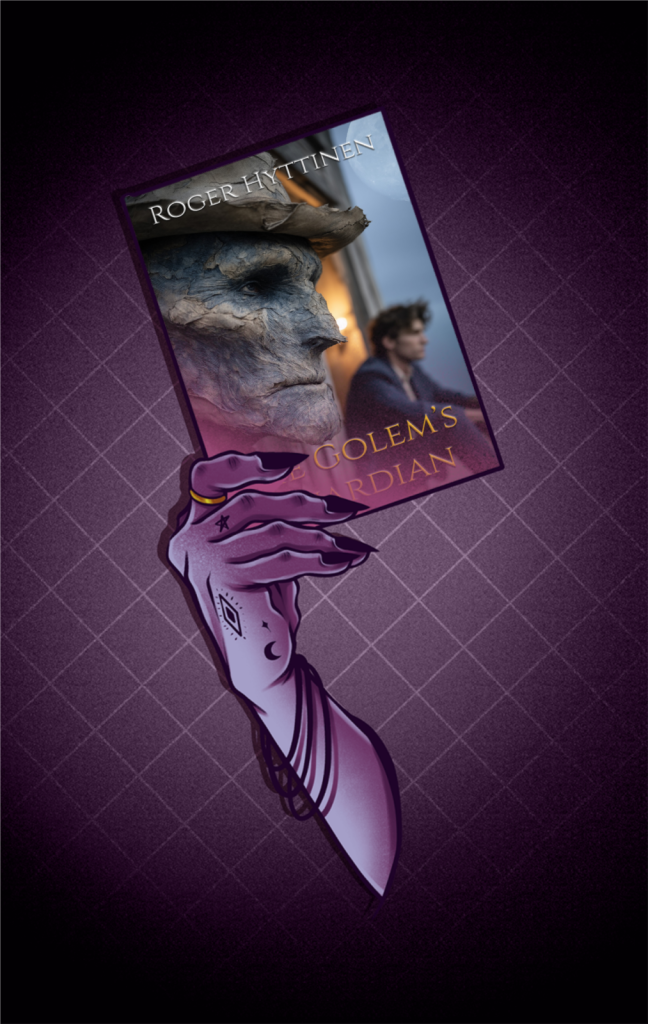
When Brooklyn librarian David Rosen accidentally brings a clay figure to life, he discovers an ancient family gift: the power to create golems. As he falls for charismatic social worker Jacob, a dark sorcerer threatens the city. With a rare celestial alignment approaching, David must master his abilities before the Shadow’s ritual unleashes chaos—even if using his power might kill him. The Golem’s Guardian – out now!

Why I’m Obsessed with Benito Skinner’s “Overcompensating” Read Post »

Scroll to Top