Skates, Sweat, and Feelings: My Slightly Unhinged Love Letter to Heated Rivalry

Image

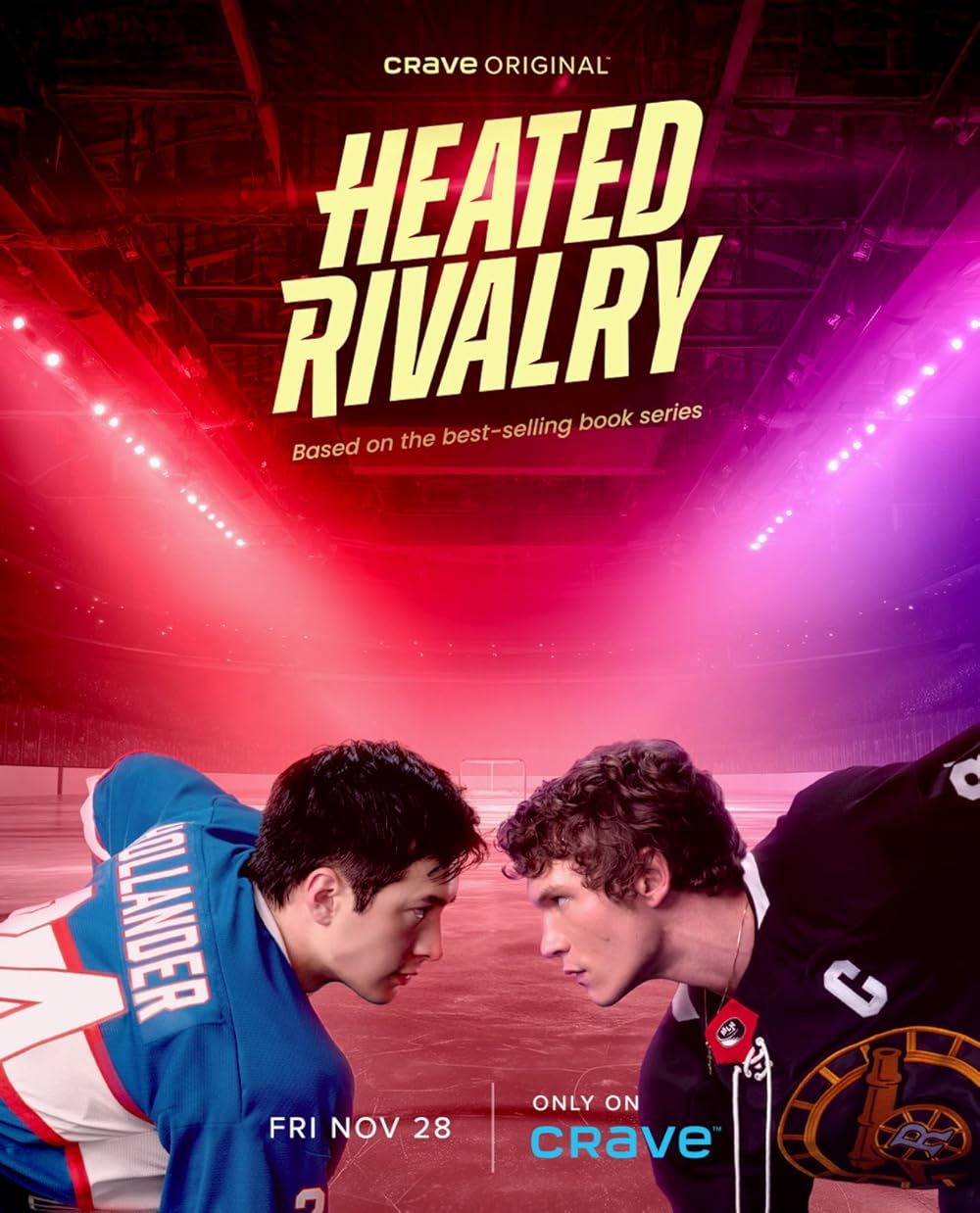
So. I finally sat down with Heated Rivalry on HBO Max, and I need to talk about it while it’s still buzzing in my bones. This is one of those shows where you press play thinking, Okay, I’ll sample an episode, and suddenly it’s dark outside, your tea’s gone cold, and you’re emotionally attached to fictional hockey players.

If you somehow missed the memo, Heated Rivalry is a Canadian gay hockey series based on the novels by Rachel Reid. And yes, hockey. Real hockey. Sweat, locker rooms, bruised knuckles, ice shavings clinging to skates, that echoing thunk of pucks hitting boards. The show smells like cold air and adrenaline and bad decisions made at 2 a.m. after a game. In other words, it already had me.

Enemies First, Feelings Later (Or… Sooner)

The setup is classic in the best possible way: two elite hockey players land on opposite sides of a fierce rivalry. Shane and Ilya meet young, cocky, and very sure they despise each other. Trash talk flies. Gloves metaphorically come off. Then something unexpected sparks, and suddenly the line between hatred and attraction gets very thin.

What I liked is how the series lets that tension breathe. You feel it in the way they circle each other on the ice, in the sharp glances during interviews, in the way silence stretches just a beat too long in locker rooms. It’s not rushed, but it’s never boring. My stomach did that little flip thing more than once, which I was not prepared for from a hockey show.

About Those Performances

Image

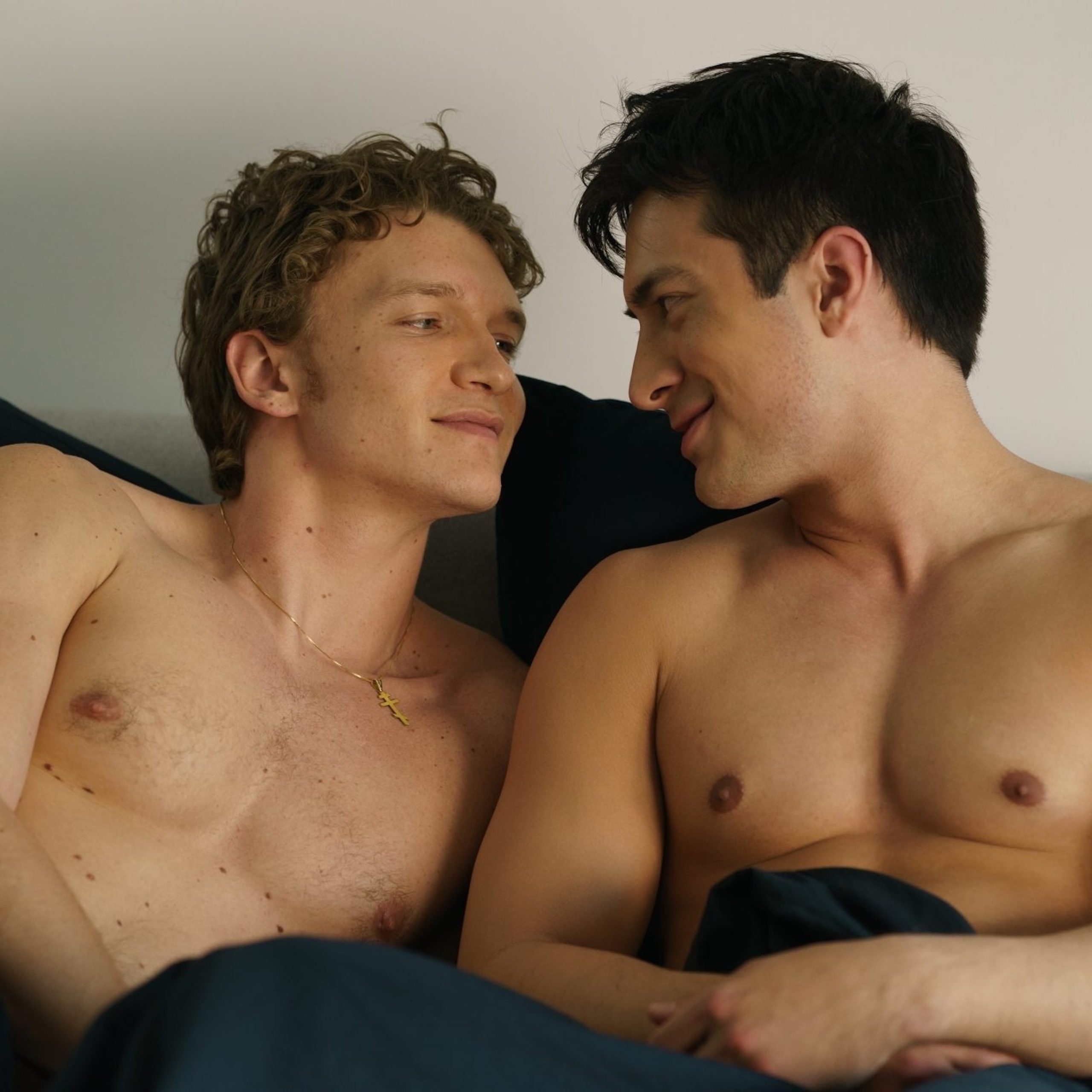
The actors playing Shane and Ilya deserve serious praise. Their chemistry doesn’t feel rehearsed or polished into oblivion. It feels messy and human. Sometimes awkward. Sometimes heated. Sometimes soft in a way that sneaks up on you. You can tell when characters are acting tough because that’s what the world expects of them, and you can also tell when the mask slips.

There’s a particular moment—no spoilers—where one of them just exhales, shoulders dropping, and you can almost hear the weight hitting the floor. That kind of physical acting sticks with me. It’s quiet, but it lands.

The supporting cast helps too. Teammates feel like teammates, not cardboard cutouts. Coaches loom in that authoritative, coffee-breath, fluorescent-light way that feels painfully familiar if you’ve ever been stuck in an institutional hallway being judged.

My Rachel Reid Confession

Here’s my honest bit: I read a Rachel Reid book years ago. I remember liking it well enough, but it didn’t carve itself into my brain or anything. I didn’t immediately sprint off to read the rest of her catalog. Life moved on. Other books piled up.

This series, though? Totally different story.

Whatever didn’t fully click for me on the page absolutely works on screen. Maybe it’s the performances. Maybe it’s the sound of skates cutting into ice, or the way longing looks when you can see it flicker across someone’s face. All I know is that this adaptation made me sit up and pay attention. By the end, I was already thinking, Okay, maybe I should give the book another shot.

Why It Hit Me So Hard

I think part of why I loved Heated Rivalry is how it handles queerness in a hyper-masculine space without turning it into a lecture. Being gay in professional sports is complicated, and the show doesn’t sugarcoat that. Fear sits in the room. Risk hums under every choice. At the same time, it never forgets that this is also a love story. A messy, stubborn, yearning one.

There’s joy here too. Smirks. Teasing. That electric feeling when someone sees you exactly as you are and doesn’t flinch. I found myself smiling at my screen more than I expected, which honestly surprised me.

Season 2, Please. I’m Begging.

I really, really hope we get a second season. I mean that. I would be genuinely bummed if this story just… stopped. There’s so much more emotional ice to skate on, so many unresolved looks and half-spoken things. I already know this is a show I’d rewatch, partly for the big moments and partly for the small ones I probably missed while grinning like an idiot.

If HBO Max pulls the plug, I’ll survive, sure—but I’ll be sulky about it.

So yeah…

Heated Rivalry caught me off guard in the best way. It’s sharp, tender, sexy, and sincere without feeling precious. It made me care, which is the hardest trick any series can pull. And yes, it nudged me back toward Rachel Reid’s books with fresh curiosity.

If you like sports romances, queer love stories, or just watching two stubborn people crash into their feelings over and over again, I’d say give this one a shot. I’m already itching to hit play again.


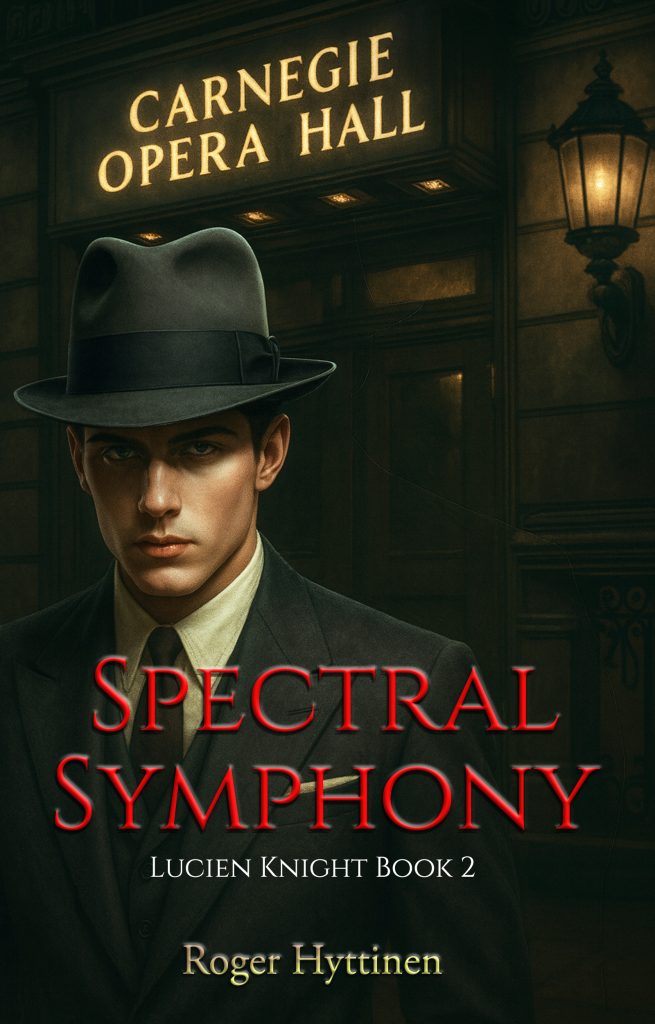
book cover for Spectral Symphony, young man in Fedora in front of Carnegie Opera Hall

A haunted melody.
A vanished maestro.
And a detective who knows music can kill.

When a piece of forbidden sheet music resurfaces, Lucien Knight is dragged back into the paranormal world he fled—where ghosts perform, secrets fester, and the wrong note can be deadly.

Grab your copy HERE

Skates, Sweat, and Feelings: My Slightly Unhinged Love Letter to Heated Rivalry Read Post »

My 13 Favorite Reads of 2025 (aka: Books That Glued Me to the Couch and Made My Coffee Go Cold)

I’ve been thinking I should start doing little book roundups each year — mostly because I forget everything the second I close a cover. I’ll swear I loved a book, but if you ask me why, suddenly I’m blinking like someone asked me to recite the tax code. So here we are: the 13 reads from 2025 that actually stuck with me.
Next year, I might even try doing mini reviews as I go. You know… grown-up reader behavior.

So here we go. These are the books that stuck to my ribs this year — the stories I kept thinking about while brushing my teeth or waiting for my toast to pop.

1. The Bones Beneath My Skin by TJ Klune

This one is tender, strange, and kind of beautiful in that “I wasn’t expecting feelings today” sort of way. It follows a burned-out ex-soldier who ends up protecting a young girl with extraordinary abilities. Their road trip turns into this unusual, makeshift family story full of emotional cracks, healing, and the kind of sci-fi glow that sneaks up on you. I ended up reading half of it with my hand on my chest like I was in a dramatic Victorian play.

2. Famous Last Words by Gillian McAllister

Cam, a new mom whose life is already operating in scrambled-egg mode, wakes up to discover her husband hasn’t come home — and left behind a very unsettling note. Within hours she learns he’s at the center of a hostage situation, not as a victim but as the guy holding the gun. The story flips between that terrifying day and the messy years afterward as Cam tries to figure out who she actually married. It’s tense, emotional, and full of those “oh no” moments where you question everyone.

3. Middletide by Sarah Crouch

A body is found hanging from a tree on Elijah Leith’s property — and the scene looks eerily like something pulled straight from his own failed novel. Cue instant suspicion. Elijah has slunk back to his hometown after blowing up his big writing dreams, and now he’s stuck dealing with old heartbreak, a fractured community, and a police investigation that keeps pointing its flashlight directly at him. The book hops between past and present, full of secrets, regrets, and Pacific Northwest moodiness.

4. The Last Conclave by Glen Cooper

This scratches that itch for Vatican intrigue, political maneuvering, and centuries-old secrets bubbling to the surface. After the Pope dies, a small group of insiders discovers a hidden plot to push a dangerously extremist candidate into power. Cue a desperate scramble across Europe to uncover truths the Church has buried for ages. It’s fast, brain-twitchy, and has that “should I be reading this in a dark room?” energy.

5. Unhinged by Onley James

This is pure chaotic delight: a morally questionable man with a soft spot the size of a dinner plate meets a sunshine-y cinnamon roll who really shouldn’t be anywhere near him… and yet keeps ending up in his orbit anyway. There’s romance, murder, banter, and emotional healing tucked between the knives. It’s messy in the best, most addictive way.

6. The Ghost Writer by A.R. Torre

Helena Ross, a bestselling author with more walls than windows, is dying — and determined to write one final book, not a romance but a confession. To get it done, she hires a ghostwriter and forces him into her controlled little world. As he digs into her past, the truth she’s been hoarding turns darker and darker. The whole thing reads like someone slowly peeling off old wallpaper and revealing something terrible underneath.

7. Devil in the White City by Erik Larson

Part architectural marvel, part true-crime horror show. On one side: the creation of the 1893 Chicago World’s Fair. On the other: H. H. Holmes building his infamous “murder castle.” The back-and-forth makes the whole era feel alive, and I kept pausing to Google details like a nerd who loves historical rabbit holes. Chicago shines, and Holmes chills.

8. The Three Lives of Cate Kay by Kate Fagan

Cate Kay — bestselling author, Hollywood darling, literary powerhouse — doesn’t actually exist. She’s the latest identity of a woman who has already lived as Annie Callahan and Cass Ford. Now she’s finally ready to tell the truth about her life, the friends she loved, the tragedy that reshaped everything, and the years spent reinventing herself to outrun the past. It’s structured like the memoir she’s writing, full of raw honesty, old wounds, and a relationship that shaped every version of her.

9. Here One Moment by Liane Moriarty

A mysterious woman walks down the aisle of a commercial flight and calmly tells passengers the dates of their deaths. Most people shrug it off… until one of the predictions happens exactly as stated. The book follows several of those passengers as they try to live with that knowledge—some obsess, some rebel, some deny, all of them unravel in fascinating ways. It’s eerie, funny, sad, and deeply human in that Moriarty way I adore.

10. Sea of Unspoken Things by Adrienne Young

A young woman returns home to her island community after a deeply personal loss, only to find old secrets, tangled relationships, and buried truths waiting for her. The ocean is practically a character — salty, moody, and full of memory. The whole book has this soft ache to it, the kind that makes you stare off into space for a minute after finishing a chapter.

11. Run Away With Me by Brian Selznick

Set in Rome in 1986, this story follows sixteen-year-old Danny as he spends the summer wandering the city’s sun-soaked streets while his mother works. Then he meets Angelo, a boy who feels carved from the same longing Danny’s been carrying inside himself. Their connection grows into a tender, fleeting first love wrapped in art, history, and the bittersweet feeling of knowing summer can’t last. The illustrations add that dreamy Selznick charm.

12. Ghost of Lies: Medium Trouble by Alice Winters

A sarcastic medium who can’t stop attracting trouble teams up with a grumpy detective who has no patience for ghosts… or for him. There’s a murder to solve, spirits popping up at the worst times, and enough banter to power a small city. It’s funny, flirty, and just spooky enough to keep things interesting.

13. Mystery Magnet by Gregory Ashe

Dashiell Dane (writer, mess, charming disaster) moves to a seaside town to work with his literary idol… who promptly turns up dead in her own home. And thanks to an extremely ill-timed secret passage attached to his bedroom, Dash becomes suspect number one. To clear his name, he teams up with a handsome local who might be too good to be true. Expect small-town secrets, queer romance, and that signature Ashe flavor of emotional landmines.


Anyway, if you’ve read any of these, let me know so I don’t feel like I’m reading into the void.


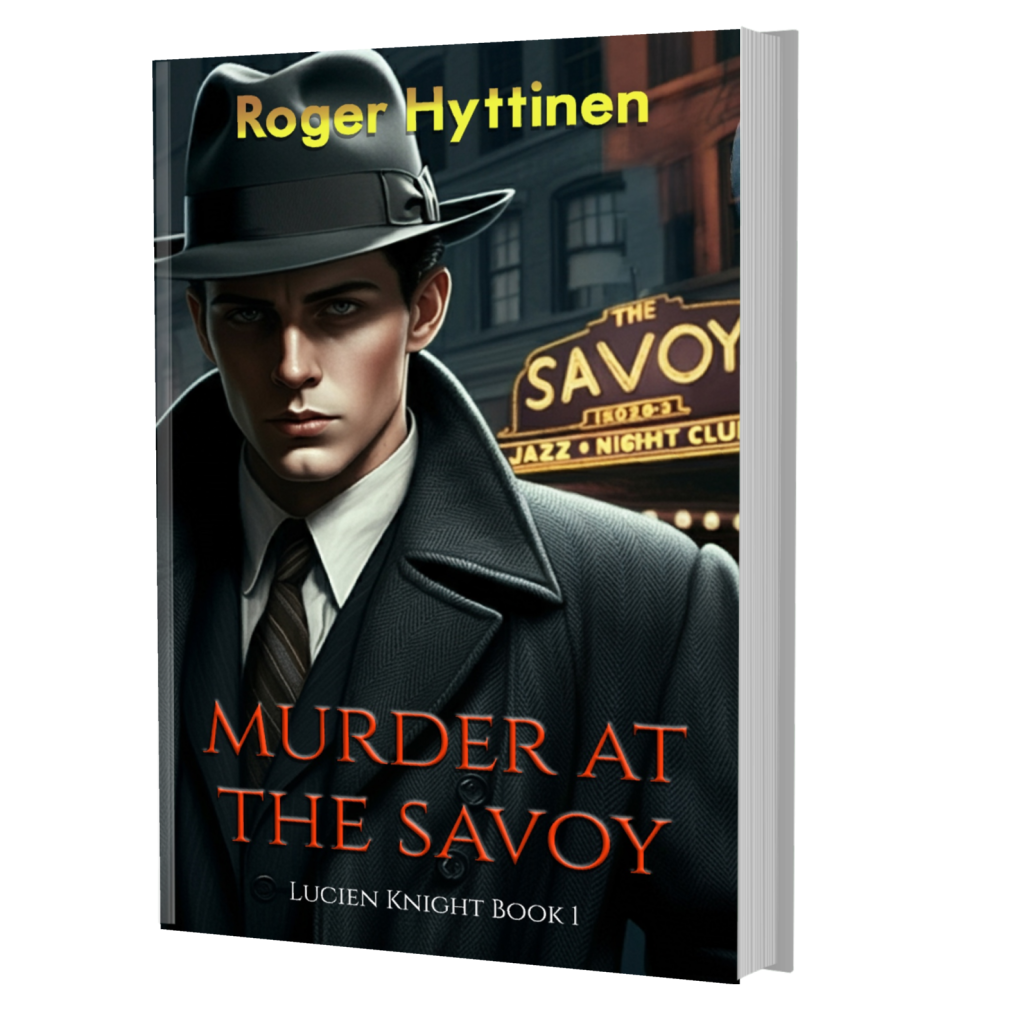
Book cover image of man wearing a fedora for Murder at the Savoy

A murdered songbird. A haunted ballroom. A detective with secrets of his own.

When Evelyn Sinclair’s body is found backstage at the Savoy, everyone calls it an overdose. Everyone but Clara Beaumont. She hires newcomer Lucien Knight, an English detective with a checkered past and a knack for finding trouble. From Harlem’s jazz clubs to Manhattan’s shadowed alleys, Lucien hunts a killer—and faces the ghosts that followed him across the Atlantic. Grab your copy HERE.

My 13 Favorite Reads of 2025 (aka: Books That Glued Me to the Couch and Made My Coffee Go Cold) Read Post »

🎶 It’s Here! Spectral Symphony Has Officially Hit the World 🎶

book cover for Spectral Symphony, young man in Fedora in front of Carnegie Opera Hall

Okay, I’ve been sitting on this news for a bit and trying not to be that person who blurts things out before coffee, but… I can’t help it.

Book two in my Lucien Knight series, Spectral Symphony, is officially out in the wild.
And yes, I am doing that awkward author thing where I pace the room, refresh browser tabs, and mutter, “Well… here we go.”

If you’ve already met Lucien, you know he’s a paranormal detective with a complicated relationship with ghosts, music, and his own past. If you haven’t—welcome. You’re about to meet a man who keeps trying to live a quiet life and keeps failing spectacularly.

🎼 So what’s Spectral Symphony about?

It starts the way bad ideas often do:
a terrified stranger.
a scrap of sheet music that shouldn’t exist.
and a sense that something has gone deeply sideways.

Lucien wants normal cases. Cheating spouses. Missing people who just don’t want to be found. Instead, he gets a ghost who won’t stop playing the piano, a violin note that echoes where no one stands, and a very prestigious opera house quietly losing its mind.

The music is wrong. Not “out of tune” wrong—dangerous wrong.

And as Lucien digs into what’s happening behind the velvet curtains of New York’s classical music scene, he finds obsession, ambition, murder, and secrets that refuse to stay buried. The deeper he listens, the harder it gets to tell whether the dead are warning him… or luring him in.

Also? His personal life is a mess. Because of course it is.

📚 Where you can grab it

Here’s the good news:

So whether you’re a digital reader, a “must smell the paper” reader, or someone who likes their shelves looking dramatic, you’re covered.

💭 Author confession time

I’m having so much fun writing these Lucien Knight books.

They let me lean into moody settings, sharp dialogue, queer characters who get to be messy and human, and supernatural mysteries that don’t play fair. Every time I start a new one, I think, okay, this is the one where I calm down—and then I absolutely do not.

I really hope you enjoy Spectral Symphony as much as I loved writing it. And if you already read book one and were wondering where Lucien would end up next… trust me, things are only getting stranger from here.

Thanks for reading. Thanks for supporting indie authors. And thanks for sticking with me while I keep unleashing haunted detectives into the world.

🎶 It’s Here! Spectral Symphony Has Officially Hit the World 🎶 Read Post »

Hello, 2026 (I’ve Been Expecting You)

Person writing out their new year goals. Arms and hands only.

Happy New Year to all of you! Truly. I hope it found you warm, fed, rested, and maybe a little hopeful. Or at least holding a decent cup of coffee and a moment of quiet before the noise kicked back in.

I always take a short break between Christmas and New Year. Every single year. No guilt, no apologies. I disappear a bit, unplug just enough, and give myself space to think. It’s the pause between songs. The soft hush before the lights come back on. Coffee tastes better. Mornings move slower. The world exhales. I need that time. My brain needs that time.

That week is when I sit down with notebooks, half-finished lists, and a pen that I swear writes better than the others. I don’t make resolutions. I never have. They feel flimsy to me, like something you say out loud once and then quietly avoid. Goals work better for me. Goals have shape. Goals can be poked, rearranged, rewritten. I like things I can aim at, adjust, revisit. I’m wired that way. Slightly obsessive, happily focused, probably annoying in group projects. Yeah, I’m very much a goal person.

Last year was… well. Let’s call it a year. A big chunk of it was spent recovering from my accident, which meant my usual rhythm got knocked sideways. There were days when brushing my teeth felt ambitious. Productivity looked very different from what I was used to. I won’t sugarcoat that part. It was frustrating, isolating, and sometimes flat-out boring.

Nine months in the chair changes things. It changes your days, your patience, your body, and your headspace. There were moments when productivity felt laughable. There were other moments when writing was the only thing that made the hours behave.

One unexpected gift came out of it, though. I had time. Long stretches of it. Nine months in the chair with nowhere to go meant writing became my main way to stay sane. So I wrote. A lot. Pages stacked up quietly. Stories found their way out. Some days they arrived angry or tired or sharp around the edges.

Now that I’m editing those books, I can see the fingerprints of that period all over them. The tone is darker than my usual work. Edges feel sharper. Rooms feel dimmer. Not grim for the sake of it. Just heavier. Moodier. I’m fine with that. I don’t think that’s a flaw. It feels honest. Mood seeps into fiction whether we want it to or not, and mine was complicated at the time. You’ll be seeing those books in the coming months, and I’m curious to hear how they land with you.

The upside is this: I have an ambitious publishing schedule lined up for 2026, and I’m excited in that jittery, can’t-sit-still way. You’ll be seeing more of Lucien Knight, which makes me happy since he never stays quiet for long. I’m starting a brand-new series too, since I apparently lack the ability to focus on one thing at a time. Plus there are a couple of surprise novels tucked away that I wrote during those long months. They’ve been waiting patiently. Their turn is coming. I like keeping a few secrets in my back pocket.

Seeing those manuscripts stacked up now feels strange and good. Like proof that something solid came out of a rough stretch. That matters to me.

Writing isn’t my only goal for the year, though it does take up a large chunk of my brain. I want to keep learning how to draw. I’ve already talked about that in an earlier post, and I’m still terrible at it, which is part of the charm. There’s something freeing about being bad at something on purpose.

I’m sticking with French and Spanish too. Some days it’s five minutes. Some days it’s longer. I like the rhythm of it, the sound of words that don’t belong to me yet. It keeps my mind stretchy.

I’m getting back to the piano. That one feels personal. I abandoned it completely after my mishap, partly from frustration, partly from fear that my hands wouldn’t cooperate (not that I could have sat on a piano bench for any length of time, anyway). Sitting down at the keys again feels like reclaiming something. I missed the sound. I missed the way the room changes when music fills it.

I’m setting a minimum of four to five blog posts a week. Not for hustle points. I just like showing up here. Writing to you keeps me honest and grounded.

There’s gaming on the list too. I want to get better. Sharper. Less button-mashing panic, more intention. And yes, I’m still learning Linux. Slowly. Patiently. Sometimes loudly. That alone could keep me busy for a year.

When I look at all of it written out, it feels like a lot (overachiever, much?). It should. Life needs texture. Projects. Play. Quiet skills learned over time. All of this should keep me busy in the best way. Curious. Engaged. Slightly tired in that good, earned sense.

I don’t know how the year will pan out. I never do. That’s part of the deal. What I do know is that I’m here, I’m moving forward, and I’m genuinely excited to see what unfolds.

So tell me about you. What are you aiming for this year? Big plans, small plans, quiet hopes, strange experiments—I want to hear them.

So here’s to a new year. New pages. Old habits kept. New ones tried. And grace when things wobble.

I’m glad you’re here with me.

Hello, 2026 (I’ve Been Expecting You) Read Post »

Still Here, Still Queer, Still Reading YA

Teen boy reading a book
Candid shot of a teen boy reading a book in the forest

So, I was reorganizing my bookshelf last Tuesday—mostly because I was avoiding the massive pile of laundry staring at me from the corner of the room—and I found this battered paperback from 1975. The spine was cracked in three places, and it smelled like that specific mix of vanilla and old paper that only cheap trade paperbacks seem to acquire after a decade. It was a YA coming-out novel. I won’t name which one because, honestly, the writing hasn’t aged super well, but holding it brought this wave of nostalgia crashing over me. Not the fun, sparkly kind of nostalgia, but that heavy, tight-chested feeling of remembering exactly how scared I used to be.

It got me thinking about the state of Young Adult fiction right now.

There’s this chatter I hear sometimes, usually on Twitter or in the comments section of book reviews, where people complain that we have “too many” coming-out stories. The argument usually goes something like: We have marriage equality now! Gen Z is fluid! Why do we need another book about a nervous teenager telling their parents they’re gay? Can’t we just have gay wizards fighting dragons?

And look, I want gay wizards fighting dragons as much as the next nerd. Seriously, give me all the gay wizards. But the idea that coming-out stories are “over” or unnecessary? That makes me want to scream into a pillow.

The Mirror Effect

Here is the thing: growing up is terrifying. It’s messy and gross and confusing. When you add the layer of realizing you aren’t “default settings” straight, it gets lonely fast.

I remember reading my first real queer YA book. I was sitting on the floor of the local library, way back in the stacks where the motion-sensor lights would flicker off if you didn’t wave your arms every ten minutes. I felt seen. Not in a creepy way, but in a way that made my lungs expand a little better. Until that moment, I thought the weird knot of anxiety in my stomach was just a me-thing. Reading about a fictional character sweating through their shirt while trying to tell their best friend the truth? It validated my entire existence.

We can’t pretend that just because laws change, the internal freak-out of a fifteen-year-old changes too. That fear is primal. It’s the fear of losing love. As long as there are kids worrying that their parents or friends might reject them, we need these books. We need them to be mirrors.

It’s Not Just for the Queer Kids

Here is an opinion that might annoy some people: straight kids need these books just as much as queer kids do. Maybe more.

Empathy isn’t something you’re born with, like eye color. It’s a muscle. You have to work it out. When a straight, cisgender teenager picks up a book like Simon vs. the Homo Sapiens Agenda or The Miseducation of Cameron Post, they aren’t looking for a mirror; they’re looking through a window. They get to spend three hundred pages inside someone else’s head, feeling that panic, that longing, and that eventual relief.

It makes it a lot harder to be a bully in the locker room when you’ve mentally lived through the terror of being the target. I really believe that. Fiction sneaks past our defenses. You might roll your eyes at a lecture about tolerance, but it’s hard not to cry when a character you love gets their heart stepped on.

The Happy Ending Revolution

Also, can we talk about how the endings have changed?

Back in the day—and I’m talking the dark ages of the 80s, 90s and early 2000s—if you found a queer book, someone was probably going to die. Or run away. or end up miserable and alone staring at a rainy window. It was bleak.

Now? We get rom-coms. We get awkward first dates at the movies where they share a bucket of overly salty popcorn. We get prom scenes.

This shift is huge. It tells readers that their story doesn’t have to be a tragedy. It tells them that happiness is actually an option. I think that’s why I still buy these books, even though I’m technically too old for the demographic. I’m buying them for the version of me that didn’t think a happy ending was possible. Every time I read a scene where the main character gets the guy/girl/person and the parents say, “We love you anyway,” it heals a tiny fracture in my own history.

It’s Okay if They’re Cheesy

I want to defend the “bad” ones, too. Not every book needs to be a Pulitzer winner. We let straight people have endless, repetitive, cheesy Hallmark movies and formulaic romance novels. Queer kids deserve their own trashy, melodramatic, poorly plotted paperbacks too.

They deserve the freedom to be mediocre.

So, yeah. Keep writing the coming-out stories. Write the painful ones, the funny ones, the ones where nothing happens but talking, and the ones where they fight space aliens after they come out.

Because somewhere, right now, there is a kid sitting in a library (or scrolling on an iPad), feeling like they are the only person on earth who feels the way they do. They need to know they aren’t the only alien on the planet. They need to know the story continues after they say the words.

Anyway, I’m going to go finish that laundry now. Or maybe I’ll just read another chapter. The socks can wait.


Golem's Guardian book image

David just wanted a distraction. Instead, his clay sculpture blinked, waved—and obeyed. Now he’s the accidental master of a mythical golem, and Brooklyn is about to need every ounce of its power. The Golem”s Guardian – grab your copy in my Web Store or from your favorite online retailer.

Still Here, Still Queer, Still Reading YA Read Post »

Scroll to Top