LGBT Characters

A Love Letter to Queer Coming-of-Age Films
young male couple at outdoor theater

I don’t know about you, but the first time I saw a queer character on screen who actually felt like me, it was like someone cracked open a secret door I didn’t know existed. For me, that moment was watching Beautiful Thing on a scratchy VHS tape I’d rented from the one indie video store in town that dared to have a “Gay/Lesbian” section hidden behind the foreign films. I must’ve been fifteen or sixteen, sitting cross-legged on the carpet, lights off, terrified my mom might walk in, and there it was: two awkward boys, figuring out who they were, falling in love without the world immediately ending. I swear I held my breath for the entire runtime.

The First Time Films Saw Me Back

Queer coming-of-age movies are like time capsules for emotions. They’re messy, tender, sometimes tragic, sometimes giddy, but always—always—honest. Watching Moonlight for the first time, I felt this ache in my chest that didn’t quite go away for days. That moment on the beach? You know the one. It felt like the kind of intimacy we were never supposed to see on screen, but there it was—quiet, vulnerable, devastatingly beautiful.

Then there’s Love, Simon, which I’ll admit I went into with a bit of side-eye because I thought it might be too glossy, too safe. But honestly? I cried. Like full-on ugly cried. Because here was a mainstream teen rom-com, backed by a major studio, letting a gay kid have the Ferris wheel kiss he deserved. Fifteen-year-old me would’ve killed for that movie. Instead, I had American Pie and an endless parade of “token gay best friends” played for laughs.

And let’s not forget Call Me by Your Name. The Italian sunlight, the peaches (yes, those peaches), the ache of first love wrapped in art and languid summer days. That final shot of Timothée Chalamet crying by the fireplace might be one of the most accurate depictions of heartbreak I’ve ever seen on screen.

The Messy Middle Ground

Not every queer coming-of-age film is soft-focus and affirming. Some are chaotic and raw, and that’s part of why I love them. Pariah absolutely gutted me in the best possible way. It’s about identity, family, and the jagged edges of growing up when your truth doesn’t match the script your parents wrote for you.

Or take The Miseducation of Cameron Post. It’s not an easy watch—conversion therapy never is—but there’s something incredibly defiant about the way it balances trauma with friendship and resilience.

Blue is the Warmest Color might be divisive (and rightfully criticized for how it was made), but for a lot of folks, it cracked open conversations about queer first loves and obsession. Similarly, Tomboy—about a French child navigating gender identity—hit me with such gentle honesty. Céline Sciamma has a gift for capturing adolescence in all its messy, questioning glory (Water Lilies deserves a nod here too).

Mysterious Skin is another one that doesn’t flinch. It’s haunting, painful, and deeply unsettling, but it tackles trauma in a way that feels brutally honest. Same goes for God’s Own Country, which somehow manages to mix heartbreak, mud, tenderness, and hope all in one windswept Yorkshire farm setting.

And Maurice—based on E.M. Forster’s novel—remains one of the most quietly radical queer love stories ever put to film.

The Quirky Comforts

Sometimes, though, I want my queer teen stories to be weird and a little awkward—because, let’s be real, being a teenager is weird and awkwardEdge of Seventeen (the 1998 one, not the Hailee Steinfeld one) was another VHS discovery for me, and it remains one of my favorites.

Then there’s But I’m a Cheerleader—camp, satire, bubblegum-pink absurdity—and yet, underneath all the silliness, it nails the reality of compulsory heterosexuality and how ridiculous (and damaging) those expectations are.

Other films in this camp? Geography ClubGBFAlex StrangeloveCrush, and the Brazilian gem The Way He Looks, which is basically a warm hug of a film.

The Quiet Gems

Some films never make the mainstream but deserve love. North Sea Texas, a small Belgian film, is beautifully understated and tender. Summer of 85 (French, dramatic, seaside) captures teenage obsession and grief in a way that hit me harder than I expected.

Closet Monster—with its surreal touches (yes, that hamster voiced by Isabella Rossellini)—is one of the most inventive portrayals of queer fear and desire I’ve ever seen.

My Beautiful Laundrette (1985) deserves its flowers too—an interracial gay romance set against Thatcher-era tensions in London.

I also can’t not mention My Own Private Idaho. River Phoenix and Keanu Reeves wandering through street hustling, Shakespearean monologues, and desolate highways—messy, tragic, beautiful. Same goes for Beau Travail—queer desire wrapped in French Foreign Legion uniforms and hypnotic dance sequences.

And if we’re talking groundbreaking, Torch Song Trilogy and Milk both deserve special status. The first gave us Harvey Fierstein’s wry, biting, devastatingly human portrait of love and loss. The second (with Sean Penn as Harvey Milk) gave us a history lesson in activism that still inspires me to this day.

Why These Films Matter

The thing about queer coming-of-age films is that they don’t just tell stories—they give permission. They whisper, “You’re not the only one.” When I was a teenager, that whisper was everything. Today, I think about some kid in a small town scrolling through streaming platforms, stumbling onto HeartstopperAnything’s Possible, or Saturday Church, and feeling seen for the first time.

Even now, I still devour these movies. They remind me of all the versions of myself I’ve been: the scared kid hiding DVDs under my bed, the young adult finding courage in messy indie films, the grown-up who can finally laugh, cry, and cheer along without shame.

So yeah, this is my love letter to queer coming-of-age films. To the VHS tapes, the festival indies, the Netflix originals, the Milwaukee LGBT Film Festival (RIP), the hidden gems, and the big glossy rom-coms. You held my hand when no one else did. You cracked open doors I didn’t know I was allowed to walk through. And you still keep reminding me that queer joy, queer pain, queer first loves—they all matter, and they all deserve to be told.

Thanks for listening to me gush. Now tell me—what was your first queer coming-of-age film?


Queer Coming-of-Age Starter Pack (A Non-Comprehensive but Totally Loving List)

  • Beautiful Thing (1996)
  • Moonlight (2016)
  • Love, Simon (2018)
  • Call Me by Your Name (2017)
  • Pariah (2011)
  • The Miseducation of Cameron Post (2018)
  • Blue is the Warmest Color (2013)
  • Tomboy (2011)
  • Water Lilies (2007)
  • Mysterious Skin (2004)
  • God’s Own Country (2017)
  • Maurice (1987)
  • Edge of Seventeen (1998)
  • But I’m a Cheerleader (1999)
  • Geography Club (2013)
  • GBF (2013)
  • Alex Strangelove (2018)
  • Crush (2022)
  • The Way He Looks (2014)
  • North Sea Texas (2011)
  • Summer of 85 (2020)
  • Closet Monster (2015)
  • My Beautiful Laundrette (1985)
  • My Own Private Idaho (1991)
  • Beau Travail (1999)
  • Torch Song Trilogy (1988)
  • Milk (2008)

A Love Letter to Queer Coming-of-Age Films Read Post »

Beyond the Gay Best Friend: Let’s Talk About Writing LGBTQ+ Side Characters Who Aren’t Just Sassy Props

a group of four friends posing for the camera

So here’s the thing—I’ve read a lot of books. Like, so many that I sometimes forget what day it is or whether I remembered to feed the cat (don’t worry, she’s extremely vocal about reminding me). And one thing I’ve noticed over the years is this weird little pattern in fiction: the token LGBTQ+ supporting character. You know the one. The sassy gay best friend who only exists to give fashion advice, drop a few one-liners, and then vanish when the main character starts making out with their love interest.

Yawn. We’ve been there. We’ve done that. And honestly? It’s time for a glow-up.

Let’s talk about how we can write queer supporting characters who are actually, you know, human beings with dreams, flaws, backstories, and weird quirks—just like the rest of the cast. Because spoiler alert: queer people don’t just exist to prop up the straight protagonist’s emotional arc.

Step One: Let Them Have a Life (Outside the Main Character)

Okay, I get it. Your story might revolve around a main character who’s doing something epic—saving the world, solving a murder, falling in love in a coffee shop where everyone somehow has perfect hair and emotional availability. That’s cool. But if your LGBTQ+ side character disappears when they’re not directly interacting with the protagonist, that’s a red flag.

Give them a job, a dog, an unhealthy attachment to Bake-Off reruns—whatever! Just give them something that makes them feel like they exist in the world, not just in the MC’s orbit.

Example? Let’s say you’ve got a lesbian bartender in your urban fantasy novel. Don’t just have her pouring drinks and giving sassy advice. Maybe she’s a witch who’s secretly building protective wards around the neighborhood. Maybe she writes cryptic poetry that she folds into napkins. Maybe she’s terrible at dating and keeps asking your main character for help crafting dating app messages. Give her a messy, vibrant, real life.

Step Two: Break the Mold

Look, I love a good drag queen character or a snarky twink with zero filter. Truly, I do. But sometimes the best thing you can do for queer rep is write the character who isn’t what the audience expects.

Your bisexual character doesn’t have to be “confused” or polyamorous. Your gay guy doesn’t need to love musicals. Your trans character doesn’t have to spend the whole story focused on transition-related stuff (unless you want to explore that—totally valid!). The point is, people are nuanced. Queer folks are not one-size-fits-all.

Example? In one of my favorite paranormal mysteries (no shame, it’s mine), I’ve got a queer supporting character who’s a grumpy mortician with a ridiculous crush on the mailman. He listens to Scandinavian death metal, collects antique taxidermy, and has absolutely no interest in “helping the main character find love.” And that’s okay. He’s his own weird, prickly, wonderful person.

Step Three: Let Them Mess Up

Here’s something that really bugs me: the flawless queer sidekick. Like, they’re morally perfect, always say the right thing, and somehow know how to solve every emotional problem with a snap and a martini. I know it comes from a good place—writers trying to be respectful—but it ends up flattening the character.

Let them be wrong. Let them get mad. Let them ghost someone, fall for the wrong person, or blow up at the protagonist because they’re stressed and haven’t slept in two days. That’s what makes them feel real. Real people mess up. That includes the queer ones.

Example? Remember Robin from Stranger Things? She’s a great supporting character—funny, sharp, kind of a disaster. She’s got layers. She doesn’t just exist to back up Steve. She gets her own weirdness, her own anxieties, and even a painfully awkward crush or two. That’s what I’m talking about.

Step Four: Not Everything Has to Be About Being Queer

Sometimes a queer side character’s biggest plot twist isn’t coming out or dealing with homophobia. Maybe they’re just trying to solve a supernatural murder mystery while dealing with their mom’s obsession with crocheted owls. Maybe their queerness is part of who they are—but not the only thing they are.

This doesn’t mean we should erase queer experiences—those stories matter—but sometimes it’s nice to just see a trans woman who’s also a badass werewolf hunter. Or a gay uncle who makes balloon animals and secretly works for the CIA. Give me chaos. Give me complexity. I want to feel like they could carry their own book.

So yeah…

So yeah, if you’re a writer—and I know some of you are—don’t settle for cardboard cutouts or queer plot accessories. Write characters who are weird and messy and fully alive. Let them be the funny one and the one who screws up. Let them have dreams, flaws, and nervous breakdowns over IKEA furniture. We need more of that.

Now if you’ll excuse me, I’ve got a grumpy demon to write and a queer necromancer who keeps refusing to follow the plot I gave them. Typical.

Beyond the Gay Best Friend: Let’s Talk About Writing LGBTQ+ Side Characters Who Aren’t Just Sassy Props Read Post »

What I’ve Learned from Writing Queer Characters Across Different Decades

 a good-looking gay male couple in the 1930s

(Or: Why Historical Queerness is Complicated, Beautiful, and Occasionally Messy as Hell)

When I started writing queer characters, I didn’t expect to become a part-time amateur historian, therapist, and decoder of unspoken longing. But that’s what happens when you plop queer folks into past decades and tell them to live, love, and maybe solve a murder or two without getting arrested or excommunicated.

Right now, I’m waist-deep in a detective noir series set in 1930s Chicago—think fedoras, gin joints, and a paranormal investigator who’s a little too good at noticing things (especially when it comes to handsome suspects). And before that, I wrote a time-travel novel with scenes set in 1860. Yeah. That 1860. Civil War-era, “homosexuality is a criminal offense in every state” 1860.

I’ve learned a lot from these queer journeys through time. About shame. About resilience. About how love finds ways to survive—even when the world keeps trying to erase it.

The Unspoken is Deafening

If you’ve ever read a historical novel where two men are just very good friends and happen to share a bed because it’s “more efficient,” you’ve probably side-eyed your way into Queer History 101.

In the 1860s, I couldn’t write a character openly saying “I’m gay” without breaking the narrative like a poorly placed anachronism. So instead, there were loaded glances. Letters with double meanings. Physical closeness that a modern reader understands but the characters themselves might not even have words for.

And let me tell you, writing those subtle emotional gymnastics? Weirdly exhausting. But also really rewarding. Because it reminds you just how hard people had to fight to understand themselves—let alone find someone else who did.

Queerness Isn’t New (But It Was Dangerous)

I used to think of queer history as this slow unfolding—like LGBTQ+ people didn’t exist until we gradually “appeared” in the 20th century. LOL. Nope. We’ve always been here. What changed was the language and the risk.

In 1930s Chicago, things were just barely starting to crack open in the underground scenes. Speakeasies had back rooms. Men danced with men—quietly. Women lived together and were “confirmed bachelors” or “Boston marriages.” It was all hidden in plain sight, like a magic trick nobody acknowledged.

Writing queer characters during this time meant leaning into that tension. My detective might be quick with a pistol, but he’s slow to trust when it comes to romance. There’s always this edge of fear and secrecy humming beneath the surface—like the wrong word to the wrong person could end more than just a relationship.

It’s Not All Tragedy (Promise)

I worried, at first, that writing historical queer characters would mean constantly flirting with doom. And yes, there’s pain. You can’t sugarcoat laws, persecution, and violence.

But there’s also joy. So much joy.

There’s coded love letters and whispered confessions in moonlit alleys. There’s finding the one person who sees you when the rest of the world insists you’re invisible. There’s loyalty. Found family. Unlikely alliances.

In the 1930s detective story I’m writing, my main character finds moments of connection in places he never expected. A bartender who looks the other way. A former lover turned informant. A kiss stolen in the dark while jazz spills from a phonograph. It’s a little noir, a little gothic, and 100% emotionally fraught (my favorite flavor).

You Can’t Ignore the Era

Here’s a lesson I learned the hard way: you can’t just drop modern queer people into a historical setting and call it a day. You have to let the setting shape them. They wouldn’t have had access to the same conversations, communities, or even concepts that we do now.

In 1860, there was no “coming out” as we know it. There was no Pride parade, no TikTok explaining the difference between demiromantic and gray-ace. People figured things out in isolation—or not at all.

And while that’s tragic, it’s also a space for rich character exploration. The internal battles. The slow dawning of realization. The accidental discovery of joy.

There’s Always Someone Watching

This one hits hard, especially in the 1930s noir world. Even when you’re not being chased by mobsters or ghouls (because, yes, I threw in a supernatural twist), there’s always the social eye. The ever-present judgment. The “what will the neighbors think?”

That pressure shaped how queer people moved through the world. So in my writing, I try to show how small acts—like touching a hand for a beat too long—could be monumental. Intimacy is magnified under the weight of fear.

And yet, people still loved each other anyway. Because of course they did.

The Takeaway (If I Had to Pick Just One)

Writing queer characters across time has taught me this: we’ve always been here, quietly defiant, stubbornly tender, surviving by candlelight until someone could finally flip the switch.

As a writer, it’s both an honor and a responsibility to bring those stories to life—flawed, complicated, passionate, and human. Always human.

Now if you’ll excuse me, I have a ghost-infested speakeasy to write and a very grumpy 1930s detective who needs to admit he’s in love with the man helping him solve a murder.


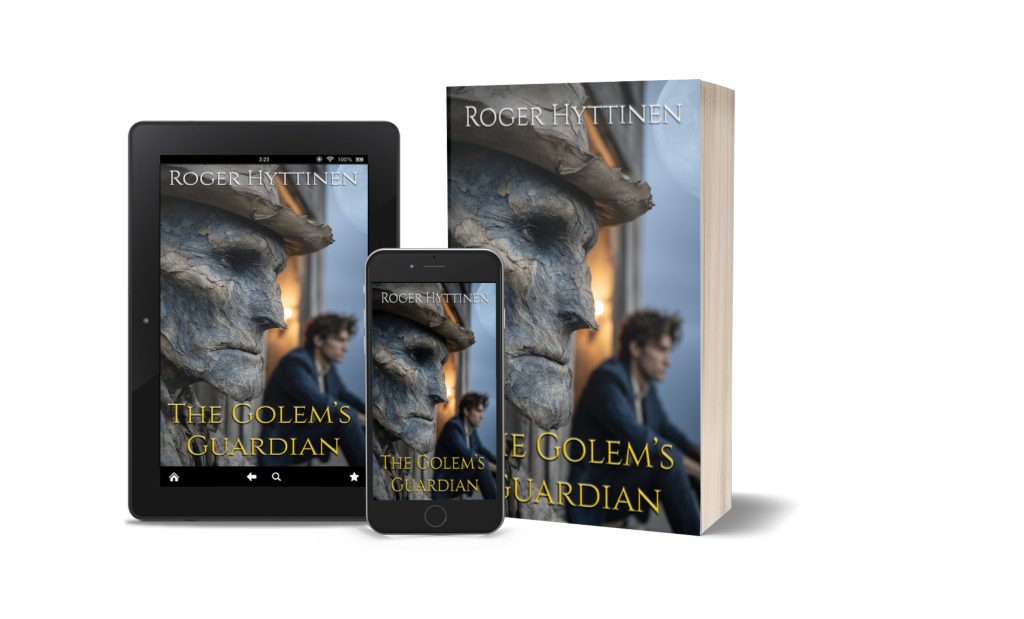
When Brooklyn librarian David Rosen accidentally brings a clay figure to life, he discovers an ancient family gift: the power to create golems. As he falls for charismatic social worker Jacob, a dark sorcerer threatens the city. With a rare celestial alignment approaching, David must master his abilities before the Shadow’s ritual unleashes chaos—even if using his power might kill him. The Golem’s Guardian

What I’ve Learned from Writing Queer Characters Across Different Decades Read Post »

Ghosts, Grit, and Guys Who Kiss—Why I Write Gay Male Heroes in Supernatural Worlds

Man with dirty face and yellow eyes

So let me tell you something weird and very specific about me (and maybe you can relate, maybe you’ll just smile and nod politely): I’ve always been that guy who wanted the vampire hunter to kiss his brooding male companion instead of rescuing the blonde ingenue. And not just kiss him—but, like, really go through something together first. Blood, betrayal, maybe a deal with a demon that leaves emotional scars. You know. The good stuff.

I write gay male heroes in gritty, supernatural worlds because that’s the kind of story I craved growing up—and let’s just say the pickings were slim if you wanted queer characters who weren’t tragic sidekicks, sassy best friends, or some blink-and-you’ll-miss-it coded glance across a smoky bar.

Nope. I wanted haunted alleyways, cursed antiques, moonlit rooftops, and dudes falling in love while dodging ghosts with knives. I wanted longing and horror. Leather jackets and emotional repression. Soulmates and salt circles.

Why supernatural?

There’s just something deliciously cathartic about supernatural settings. Everything’s turned up to eleven. The stakes are literally life and death (or, you know, un-death), and the emotional terrain gets all twisty and intense. It’s messy. Dangerous. Romantic in a way that actually feels risky.

And as a queer person? Yeah, I relate to that. A lot of us grew up having to live in the shadows, second-guessing our gut feelings, trying to figure out which parts of ourselves were “safe” to show. That kind of double life? That’s vampire material right there. That’s shapeshifter. That’s cursed oracle. The metaphor is practically glowing in neon.

Why gritty supernatural?

Because I don’t do fluff well. I mean, don’t get me wrong—I love a sweet story with two dudes baking cupcakes and falling in love over an enchanted mixer, but when I write, I’m chasing something darker. Not grimdark-for-the-sake-of-it, but raw. Ugly. Honest.

I want my heroes bruised, emotionally and otherwise. I want them cracking jokes while bleeding out in a haunted speakeasy. I want them kissing like it’s a last meal. And I want magic to be beautiful and terrifying. Because that’s how the world often feels. Especially when you’re queer.

A lot of queer folks live in survival mode for a while. We become hyper-aware, emotionally nimble, a little cynical. That’s why I love dropping gay male heroes into these pressure-cooker worlds. I want to show how they rise—how they still choose connection, even when everything in them says “nope, too risky, shut it down.”

My favorite kinds of guys to write?

Give me the reluctant hero. The loner. The ex-cop with a demon in his basement and a cigarette habit he keeps swearing he’ll quit. The medium who didn’t ask to see ghosts, thank you very much. The snarky necromancer who falls for the grim reaper. (Still mad that hasn’t been done more, by the way.)

These men are complicated. They’re not always soft or shiny or good at feelings. But they care. And they fight. Not just the monsters in the shadows, but their own trauma, their own guilt, their own belief that they don’t deserve love. Watching them find it anyway? That’s the part that gets me every time.

Why gay male heroes?

Because we need more of them. Not sanitized, side-character versions, but central, messy, sexy, real ones. We deserve stories that let us be the chosen ones. The cursed ones. The heroes and the disasters. I want gay characters who save the world and get the guy. Preferably while covered in blood and muttering something sarcastic.

And maybe, just maybe, I’m still writing for the younger version of me who sat in his childhood bedroom with a horror paperback in one hand and a spiral notebook in the other, dreaming up alternate endings where the monster hunter didn’t end up with the damsel—but with the other monster hunter. The one with the scar and the tragic past and the slow-burn yearning that never made it to the page.

Alright, that’s my ramble. If you’ve ever wanted to see queer guys get their hands dirty in stories full of ghosts, demons, and supernatural what-the-hellery, then hey, welcome to the club. The blood’s fresh, the magic’s weird, and the boys? They’re just trying to survive—and maybe fall in love before the next curse hits.

Did you know that the Ghost Oracle series is now available in a box set (ebook only)? It’s broken out into two sets:  Books 1-3 and Books 4-6

Ghosts, Grit, and Guys Who Kiss—Why I Write Gay Male Heroes in Supernatural Worlds Read Post »

Why We Can’t Stop Crushing on Queer Villains (Even When They’re Trying to Burn Down the World)

AdobeStock 575537502.

Okay, so hear me out: queer-coded villains in fantasy are kind of… irresistible. Not in a “yay, evil!” way (though sometimes, yes, also that), but in that messy, juicy, fascinating way where you’re halfway through a book or movie and suddenly realizing you’d rather spend three hours in a morally complex debate with the villain than go to brunch with the hero. Like, yeah, they’re probably about to summon an ancient shadow beast or stab someone in the back with an obsidian dagger shaped like a bat wing, but also? They’re making a point.

Let’s just get this out of the way first: the queer villain trope has a long, messy history. Historically, a lot of them were coded as queer because writers couldn’t openly make characters LGBTQ+ without network censors freaking out. So instead, we got the slinky, sarcastic, well-dressed, emotionally repressed villain with perfect eyeliner and a penchant for elaborate monologues. Think Scar from The Lion King, or Jafar from Aladdin. (Disney, we see you.)

But here’s where it gets interesting: somewhere along the way, the queerness became part of what made them compelling, not just threatening. These characters often live outside the rules of the world around them. They’re not afraid to be other, to lean into their difference, to challenge systems. And for a lot of queer folks—myself included—there’s something deeply cathartic about watching a character who’s been rejected or misunderstood flip the whole system the bird and build their own tower of power. (Maybe literally.)

One of my forever favorites is Melisandre from Game of Thrones. Okay, yes, she’s technically not queer-coded in a sexual orientation sense (though I dare you to find a straighter woman who births a smoke demon). But she’s deliciously Other, mysterious, powerful, devoted to something everyone else thinks is nuts, and unapologetically herself. There’s something inherently queer in that rejection of social norms and that extravagant performance of belief.

Then there’s Loki. Ah, Loki. Tom Hiddleston smirking through ten thousand morally ambiguous decisions in Thor and The Avengers. Canonically genderfluid and pansexual in Norse mythology—and finally acknowledged as such (sort of) in the Disney+ series—Loki is the poster child for the chaotic queer archetype. Mischief isn’t just his title, it’s a lifestyle. And somehow, even while lying to literally everyone and trying to take over Asgard, he’s still sympathetic. Because underneath all the trickery is that wounded kid who was never enough for his dad. That hits harder than a Mjölnir to the gut.

But let’s not forget our literary babes. The Picture of Dorian Gray is practically one long queer villain origin story. Dorian is gorgeous, narcissistic, and fully corrupted by Lord Henry’s flamboyant nihilism. There’s something deeply seductive about watching him fall—gracefully, glamorously—into darkness. Oscar Wilde, who wrote it while living in Victorian England and facing actual prison for being gay, wasn’t exactly being subtle. The real tragedy? Dorian’s villainy isn’t just aesthetic—it’s a metaphor for repression, and what happens when desire gets buried too deep.

Now, obviously, it’s important to draw the line between complex characters and damaging stereotypes. We’ve had enough “the gay guy dies horribly because of his evil ways” stories, thanks. But when done right—when they’re not just queer-coded, but queer—these villains become something else. They stop being symbols of danger and start becoming avatars of agency. Power doesn’t have to look noble or straight. Sometimes, it looks like Ursula the Sea Witch, repurposed from Divine the drag queen and singing “Poor Unfortunate Souls” like she owns the ocean. (Which, let’s be honest, she kind of does.)

And then there’s Castlevania’s Carmilla. Oh my god. She’s like if you took every power-hungry, femme-fatale vampire trope and wrapped it in velvet and bisexual rage. The way she struts through that show—dripping sarcasm, rolling her eyes at incompetent men, and plotting world domination like it’s a wine tasting—it’s art. She’s not queer-coded. She’s queer, full stop. And she’s tired of men screwing everything up. Hard relate.

And while we’re on vampires: Interview with the Vampire‘s Lestat. Good lord, Lestat. I’m not saying Tom Cruise was giving deliberate queer energy in the 1994 version (though I am saying that), but in the recent AMC adaptation? It’s full tilt. The man is drama incarnate. He turns people into vampires because he’s lonely, throws blood tantrums when his undead boyfriends don’t love him enough, and monologues like a Shakespearean theater kid in eyeliner. It’s not just compelling—it’s vampiric gay chaos with a body count.

Let’s pop over to comics for a second—because you cannot talk about queer villains without tipping your hat to Mystique from X-Men. Shapeshifter, bisexual icon, deeply jaded revolutionary? Yes, yes, and hell yes. She’s one of those characters who is constantly blurring the line between right and wrong, self and other. Her queerness isn’t just in who she loves (though yes, Destiny, we know), it’s in her refusal to be fixed or defined. She literally changes her body whenever she wants. That’s pretty queer, philosophically speaking.

And She-Ra and the Princesses of Power gave us Catra. Look, if you didn’t feel something watching that emotionally damaged, jealous, brilliant lesbian cat-girl struggle with her feelings for Adora while also trying to conquer Etheria… I don’t know, maybe your heart is made of beige carpet. Catra is a modern blueprint for the queer villain-turned-antihero: traumatized, defiant, full of unprocessed affection and rage. And her redemption arc? Gorgeous. But even when she was Bad™? Still compelling as hell.

Quick detour into video games: Dragon Age: Inquisition gave us Samson, a tragic fallen Templar with an implied queerness that feels less token-y and more baked into the heartbreak of his character. He’s not evil because he’s queer—he’s a villain despite being queer, and the queerness is just part of his messy humanity. And don’t get me started on Final Fantasy villains like Kuja from FFIX, whose entire vibe is “gender is a prison and I’m showing up to the ball in feathers and vengeance.” Iconic.

And if we’re talking animated brilliance, let’s not skip over HIM from The Powerpuff Girls. Look, I know it’s a kid’s show, but HIM was doing devil drag before most of us knew what that even was. High heels, cravat, lobster claws, and a falsetto that could slice glass—he scared the crap out of me and made me question the gender binary. Duality, baby.

Bottom line? These villains stick with us not just because they’re queer or fabulous or damaged (though, sure, all of that), but because they’re multidimensional. They’re allowed to be vain and vicious and vulnerable and seductive and petty and powerful. They’re not just queer-coded throwaways anymore—they’re whole damn people, and we crave that.

I’d love to keep going, honestly, because once you start unearthing these characters, it becomes this little queer archaeology project: “Oh, this is why I was obsessed with Maleficent at age eight.” (Wings? Horns? The cheekbones?? Come on.)

Honestly, maybe what we love most about these characters is that they feel like they’ve had to fight for every inch of themselves. They’ve often been rejected, othered, and pushed to the margins—and instead of folding, they get fabulous. They sharpen their claws. They set the world on fire, but with style. And even when we know we shouldn’t root for them… we kind of do anyway.

So yeah. If your villain has emotional baggage, sparkling dialogue, and an aura of tragic fabulousness, there’s a good chance I’m rooting for them. Or at least writing fanfic in my head.

P.S. If you’ve got a favorite queer villain, send ‘em my way. I’m always looking to expand my League of Fabulous Evil.

Why We Can’t Stop Crushing on Queer Villains (Even When They’re Trying to Burn Down the World) Read Post »

Welcome to Homeroom, But With Spells — Why We’re Still Obsessed with Magical Schools (Especially Us Queer Folks)

Handsome young man working on a potion

Okay, real talk: I would absolutely have been the kid in the back row of Potions class pretending I totally meant to turn my cauldron into a small, hissing cabbage. And I would’ve loved every second of it. There’s just something about magical school settings that hits harder than a Firebolt to the face—and I think it’s about time we talk about why these stories keep tugging at our hearts, especially those of us who grew up a little (or a lot) outside the norm.

We All Want to Get the Letter

Let’s start here: the fantasy of escape. One day, you’re stuck in algebra class thinking about how your life is aggressively unmagical, and the next? Boom. A letter shows up saying you’re actually destined for something bigger. Like, “Here’s your wand, here’s your roommate, and oh, by the way, you have latent powers because you’re special.”

Tell me that doesn’t hit differently when you’ve spent your childhood feeling like the odd one out.

Whether it’s HogwartsBrakebills (The Magicians), Hex HallThe Scholomance, or even Xavier’s School for Gifted Youngsters (yes, that counts—don’t fight me), magical schools offer this built-in narrative of “Hey, you’re not weird, you’re just magical.” And if that’s not a queer metaphor, I don’t know what is.

The Magic of Chosen Family

Here’s the thing: a lot of us LGBTQ+ folks have a complicated relationship with traditional family structures. Magical school settings often create space for chosen family—the best kind of found friendships that grow out of survival, shared secrets, and late-night sneaking into the library to research forbidden charms.

Think about Will and Jem in the Shadowhunter Academy (The Infernal Devices), or even the chaotic friendship dynamics in Carry On by Rainbow Rowell. You get these intense, emotional bonds formed in the pressure cooker of coming-of-age, with extra bonus points for dragons and magical duels.

And honestly? Watching queer-coded or explicitly queer characters find that kind of deep connection in a magical environment feels healing. It’s not just about the spells. It’s about finding your people. Even if one of them turns out to be half-demon.

Structure, but Make It Sparkle

Another reason magical schools are so satisfying? The structure. As someone who lives by lists but also dreams of floating through a dark forest talking to sentient trees, I get the appeal.

You’ve got the school year, the class schedule, the dormitories… It gives a familiar rhythm. But instead of gym class, you’re dodging hexes. Instead of bullies throwing spitballs, it’s rival houses flinging minor curses across the dining hall.

It’s comforting and thrilling. There’s a safe framework—class, homework, exams—but inside it, anything can happen. Your professor might be secretly a vampire. Your best friend might turn out to be a reincarnated phoenix. And you? You might finally learn that being different isn’t a flaw, it’s your gift.

The Queer Allegory Is Not Subtle, and We Love That

Okay, can we just acknowledge how many queer-coded narratives exist in magical school books? There’s a whole subgenre of “Oops, I kissed my roommate and now our magical bond is spiraling out of control and also we might be soulmates.” (Looking at you, Witchmark and The House in the Cerulean Sea.)

There’s also the fact that magic itself is often portrayed as something hidden or suppressed until the character embraces it. Sound familiar? Yeah, it’s giving “closeted teenager finally coming into his own at wizard boot camp.”

Magical schools offer that sweet, sweet metaphorical buffet: repression, transformation, identity, power, found family, first love, and sometimes dragons. The queer parallels basically write themselves.

The Drama, Darling

Let’s be real—no one does high-stakes emotional drama like teenagers with magic. Especially queer teenagers with magic. The yearning? Off the charts. The angst? Breathtaking. The romantic subplots that simmer for 200 pages before exploding in a single magical kiss under the moonlight? Inject it straight into my veins.

If you’ve ever read “A Deadly Education” by Naomi Novik, you know what I mean. Or “The Witch King” by H.E. Edgmon, which unapologetically centers a trans protagonist navigating magic, trauma, and hot fae politics. There’s something deliciously cathartic about reading a story where the main character is both emotionally fragile and powerful enough to accidentally shatter a castle.

Closing the Spellbook (for now)

So yeah, I love magical schools. Always have. Probably always will. They’re not just fantasy—they’re wish fulfillment, especially for those of us who spent our formative years feeling like outsiders, hoping there was somewhere—anywhere—we might finally fit.

Give me a boarding school where the library whispers secrets and every student has a closet full of capes. Give me crushes that bloom under enchanted moons. Give me chaos and beauty and the kind of magic that makes you finally feel seen.

And if someone builds that school IRL? I’ve got my bags packed.

Welcome to Homeroom, But With Spells — Why We’re Still Obsessed with Magical Schools (Especially Us Queer Folks) Read Post »

Why I’m Obsessed with Benito Skinner’s “Overcompensating”

Okay, I need to talk to you about this show that completely blindsided me. Like, I went into it expecting maybe some light entertainment and ended up watching all eight episodes in one sitting while ugly-crying into my leftover pizza. We’re talking about “Overcompensating,” the new Amazon Prime series from Benito Skinner (aka our beloved BennyDrama), and honestly? I think I might be having feelings about it.

You know how sometimes you watch something and it hits you right in that weird spot between nostalgia and current anxiety? That’s exactly what happened here. Benito plays Benny (creative, I know), this former high school football star who arrives at college carrying more emotional baggage than a Kardashian on vacation. The guy’s so deep in the closet he’s practically in Narnia, trying to convince everyone—including himself—that he’s straight by doing the most ridiculous performative masculinity dance I’ve ever seen.

The whole thing starts when Benny meets Carmen (played by the absolutely brilliant Wally Baram), this New Jersey girl who’s dealing with her own pile of trauma. Their friendship becomes the heart of the show, and I swear, watching them navigate freshman year together made me feel every single emotion I thought I’d successfully buried from my own college experience.

What gets me is how real it all feels. Benny’s not just “struggling with his sexuality”—he’s actively self-sabotaging in ways that made me want to reach through the screen and shake him. The scene where he tries to hook up with Carmen while clearly being more interested in her male friends? My secondhand embarrassment was OFF THE CHARTS. But that’s the thing about this show—it doesn’t shy away from making you cringe. It forces you to sit with all that uncomfortable, messy stuff that comes with figuring out who you are.

What really surprised me was how the show handles the supporting characters. Benny’s sister Grace (Mary Beth Barone, who’s actually Benito’s real-life podcasting partner) is dating this finance bro nightmare named Peter, and watching her slowly realize she’s been morphing herself to fit his expectations? Chef’s—wait, no, I’m not allowed to say that phrase. It was really well done. The way the show explores how we all perform different versions of ourselves, not just Benny, feels painfully accurate.

I have to be honest though—there are moments where Benito playing a college freshman feels a bit… ambitious. The man is clearly 31, and sometimes it shows. But honestly? It almost works better that way. There’s something about the slight disconnect that makes the whole thing feel more like a fever dream memory than a realistic portrayal, which somehow makes it more emotionally honest.

The show doesn’t reinvent television or anything. It’s definitely walking in the footsteps of shows like “The Sex Lives of College Girls” (RIP, we hardly knew ye), but it carves out its own space by being unafraid to make everyone kind of terrible. These aren’t your typical loveable college kids—they’re selfish and messy and make decisions that will have you yelling at your TV. But that’s what makes it feel so authentic.

One thing that really struck me is how the show handles coming out. It’s not trying to be groundbreaking or make grand statements about LGBTQ+ representation. Instead, it just shows one person’s very specific, very messy journey toward accepting himself. There’s this scene where Benny finally starts opening up to Miles (Rish Shah), and you can see these little moments where the real Benny—the one we glimpse in Benito’s TikToks—starts peeking through all that performative straightness.

The supporting cast is absolutely stacked too. Kyle MacLachlan shows up as Benny’s dad, and even though he’s only in a few scenes, he brings this whole complex dynamic about family expectations and small-town Idaho masculinity. Plus there are random cameos from people like Lukas Gage that make the whole thing feel like this weird, wonderful fever dream.

What I love most about “Overcompensating” is that it doesn’t try to wrap everything up in a neat little bow. By the end of the season, Benny’s still figuring things out, Carmen’s still carrying her secrets, and Grace is still untangling her relationship mess. It feels like real life—messy and ongoing and complicated.

The show got some mixed reviews, with critics saying it’s “too gay for straight audiences and too straight for gay audiences,” but honestly? That feels exactly right for a story about someone caught between worlds. Sometimes the most authentic stories are the ones that don’t fit neatly into categories.

If you’re looking for something light and easy, this might not be your vibe. But if you want something that will make you think about your own college experiences—the good, the bad, and the deeply cringe—then definitely give it a watch. Just maybe have some tissues handy, because apparently I’m the type of person who cries over college comedies now.

I’m really, really, really hoping Amazon gives us a second season, because I need to know what happens when these messy kids figure their lives out. Or continue to spectacularly fail at figuring their lives out. Either way, I’ll be here for it.

P.S. – The gratuitous male nudity doesn’t hurt either. Just saying.


Cover image for Golem's Guardian

When Brooklyn librarian David Rosen accidentally brings a clay figure to life, he discovers an ancient family gift: the power to create golems. As he falls for charismatic social worker Jacob, a dark sorcerer threatens the city. With a rare celestial alignment approaching, David must master his abilities before the Shadow’s ritual unleashes chaos—even if using his power might kill him. The Golem’s Guardian – out now!

Why I’m Obsessed with Benito Skinner’s “Overcompensating” Read Post »

Scroll to Top