

So, I was reorganizing my bookshelf last Tuesday—mostly because I was avoiding the massive pile of laundry staring at me from the corner of the room—and I found this battered paperback from 1975. The spine was cracked in three places, and it smelled like that specific mix of vanilla and old paper that only cheap trade paperbacks seem to acquire after a decade. It was a YA coming-out novel. I won’t name which one because, honestly, the writing hasn’t aged super well, but holding it brought this wave of nostalgia crashing over me. Not the fun, sparkly kind of nostalgia, but that heavy, tight-chested feeling of remembering exactly how scared I used to be.
It got me thinking about the state of Young Adult fiction right now.
There’s this chatter I hear sometimes, usually on Twitter or in the comments section of book reviews, where people complain that we have “too many” coming-out stories. The argument usually goes something like: We have marriage equality now! Gen Z is fluid! Why do we need another book about a nervous teenager telling their parents they’re gay? Can’t we just have gay wizards fighting dragons?
And look, I want gay wizards fighting dragons as much as the next nerd. Seriously, give me all the gay wizards. But the idea that coming-out stories are “over” or unnecessary? That makes me want to scream into a pillow.
The Mirror Effect
Here is the thing: growing up is terrifying. It’s messy and gross and confusing. When you add the layer of realizing you aren’t “default settings” straight, it gets lonely fast.
I remember reading my first real queer YA book. I was sitting on the floor of the local library, way back in the stacks where the motion-sensor lights would flicker off if you didn’t wave your arms every ten minutes. I felt seen. Not in a creepy way, but in a way that made my lungs expand a little better. Until that moment, I thought the weird knot of anxiety in my stomach was just a me-thing. Reading about a fictional character sweating through their shirt while trying to tell their best friend the truth? It validated my entire existence.
We can’t pretend that just because laws change, the internal freak-out of a fifteen-year-old changes too. That fear is primal. It’s the fear of losing love. As long as there are kids worrying that their parents or friends might reject them, we need these books. We need them to be mirrors.
It’s Not Just for the Queer Kids
Here is an opinion that might annoy some people: straight kids need these books just as much as queer kids do. Maybe more.
Empathy isn’t something you’re born with, like eye color. It’s a muscle. You have to work it out. When a straight, cisgender teenager picks up a book like Simon vs. the Homo Sapiens Agenda or The Miseducation of Cameron Post, they aren’t looking for a mirror; they’re looking through a window. They get to spend three hundred pages inside someone else’s head, feeling that panic, that longing, and that eventual relief.
It makes it a lot harder to be a bully in the locker room when you’ve mentally lived through the terror of being the target. I really believe that. Fiction sneaks past our defenses. You might roll your eyes at a lecture about tolerance, but it’s hard not to cry when a character you love gets their heart stepped on.
The Happy Ending Revolution
Also, can we talk about how the endings have changed?
Back in the day—and I’m talking the dark ages of the 80s, 90s and early 2000s—if you found a queer book, someone was probably going to die. Or run away. or end up miserable and alone staring at a rainy window. It was bleak.
Now? We get rom-coms. We get awkward first dates at the movies where they share a bucket of overly salty popcorn. We get prom scenes.
This shift is huge. It tells readers that their story doesn’t have to be a tragedy. It tells them that happiness is actually an option. I think that’s why I still buy these books, even though I’m technically too old for the demographic. I’m buying them for the version of me that didn’t think a happy ending was possible. Every time I read a scene where the main character gets the guy/girl/person and the parents say, “We love you anyway,” it heals a tiny fracture in my own history.
It’s Okay if They’re Cheesy
I want to defend the “bad” ones, too. Not every book needs to be a Pulitzer winner. We let straight people have endless, repetitive, cheesy Hallmark movies and formulaic romance novels. Queer kids deserve their own trashy, melodramatic, poorly plotted paperbacks too.
They deserve the freedom to be mediocre.
So, yeah. Keep writing the coming-out stories. Write the painful ones, the funny ones, the ones where nothing happens but talking, and the ones where they fight space aliens after they come out.
Because somewhere, right now, there is a kid sitting in a library (or scrolling on an iPad), feeling like they are the only person on earth who feels the way they do. They need to know they aren’t the only alien on the planet. They need to know the story continues after they say the words.
Anyway, I’m going to go finish that laundry now. Or maybe I’ll just read another chapter. The socks can wait.
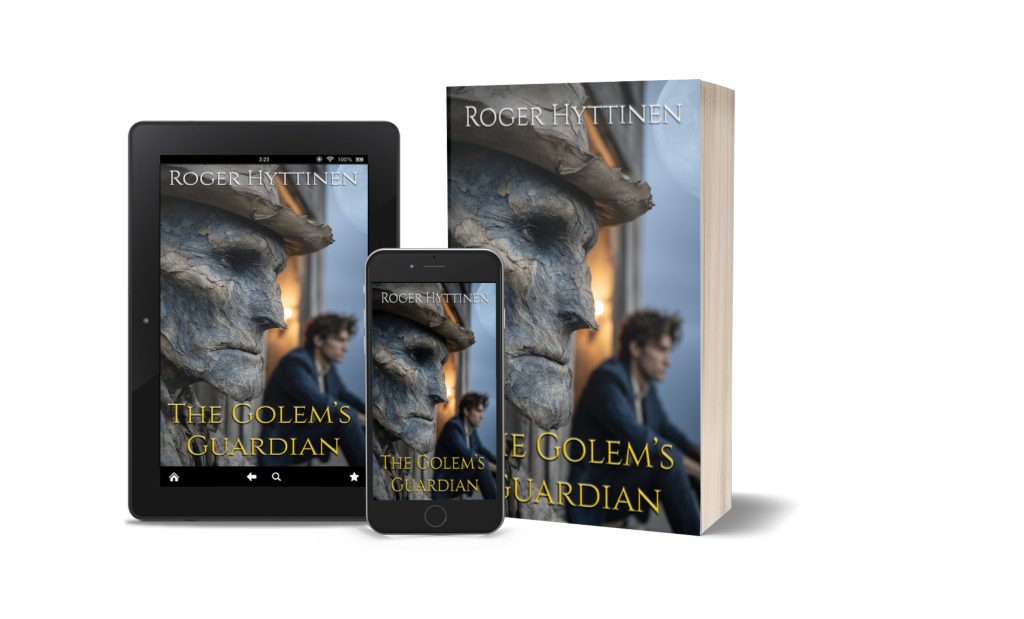
David just wanted a distraction. Instead, his clay sculpture blinked, waved—and obeyed. Now he’s the accidental master of a mythical golem, and Brooklyn is about to need every ounce of its power. The Golem”s Guardian – grab your copy in my Web Store or from your favorite online retailer.