Uncategorized

Making a Fool of Myself (and Writing Anyway)

I keep a little quote taped above my desk. It’s not fancy. The paper is curling at the edges, and there’s a coffee stain that refuses to fade. It says:
“To write something, you have to risk making a fool of yourself.” — Anne Rice.

I read that line almost every day. Some days I nod like a wise old monk. Other days I glare at it like it personally wronged me.

The First Time I Felt Ridiculous

I still remember the first time I shared something I’d written with another human being. My hands were sweaty. My stomach felt tight, like I’d swallowed a brick. The room smelled faintly of printer ink and dust. I hit “send” and immediately wanted to crawl under the desk and live there forever.

I wasn’t afraid of bad grammar. I was afraid of being seen.

Writing puts your inner mess on the page. The odd thoughts. The private worries. The stuff you never say out loud at dinner. Once it’s written, it’s not just yours anymore. Someone can laugh. Someone can shrug. Someone can misunderstand the whole thing.

That’s the fool part.

Writing Is Not a Safe Hobby

People love to talk about writing like it’s gentle. Like you sit there with a candle, soft music, and a calm heart. That has never been my experience. Writing feels noisy. It smells like cold coffee. My shoulders tense up. My brain throws tantrums.

Every time I start a new piece, there’s a moment when I think, “This is dumb. I sound dumb. Who do I think I am?”

Anne Rice didn’t sugarcoat that feeling. She didn’t say, “Be brave.” She said you have to risk looking foolish. That hits closer to home. Bravery sounds noble. Foolish sounds embarrassing. Real life tends to lean toward embarrassing.

The Fear Never Really Leaves

Here’s the annoying truth: the fear doesn’t vanish once you’ve written a lot. It changes shape, though. Early on, I worried about sounding amateur. Later, I worried about repeating myself. Now I worry about honesty. Real honesty. The kind that leaves fingerprints.

I can write a ghost story without blinking. I can write about grief, longing, or desire, and my pulse picks up. My fingers hover over the keyboard. The room feels too quiet. The radiator clicks. The clock ticks louder than it should.

That’s the edge where the fool waits.

Why I Keep Doing It Anyway

There’s a small moment, usually late at night, when a sentence lands just right. The words line up. My chest loosens. I exhale without noticing. For a second, the noise shuts up.

That moment only shows up after the risk. It never arrives during safe writing. It never comes from polite sentences that offend no one and reveal nothing.

I’ve learned that if I don’t feel a little exposed, I probably didn’t go far enough.

Looking Silly Is Part of the Job

I’ve written things I’d never say out loud. I’ve admitted fears I’d rather pretend I don’t have. I’ve reread old work and winced so hard my face hurt.

And still, I’d rather have that pile of awkward pages than a perfect silence.

Silence feels neat. Silence feels controlled. Silence doesn’t change anything.

The Page Can Take It

One thing I remind myself on bad writing days: the page doesn’t judge. It doesn’t roll its eyes. It doesn’t whisper to friends later. It just sits there, blank and patient, waiting to be filled with something real.

People might judge. That’s out of my hands. The page just wants honesty. Even clumsy honesty counts.

A Quiet Kind of Courage

I don’t think Anne Rice meant public humiliation. I think she meant private courage. The willingness to say, “This matters to me,” without knowing how it will land.

That kind of courage isn’t loud. It happens alone, in a room that smells like yesterday’s coffee, with sore shoulders and tired eyes. It happens when you write the sentence you want to delete.

Why This Still Matters to Me

Every piece I care about started with that familiar dread. Every one. The fool feeling never stopped me for long. It just let me know I was near something honest.

So I keep the quote above my desk. Crooked tape. Coffee stain. Daily reminder.

If I’m going to write, I have to accept the risk. The awkwardness. The chance that someone won’t get it.

That’s the price. I’ll pay it.


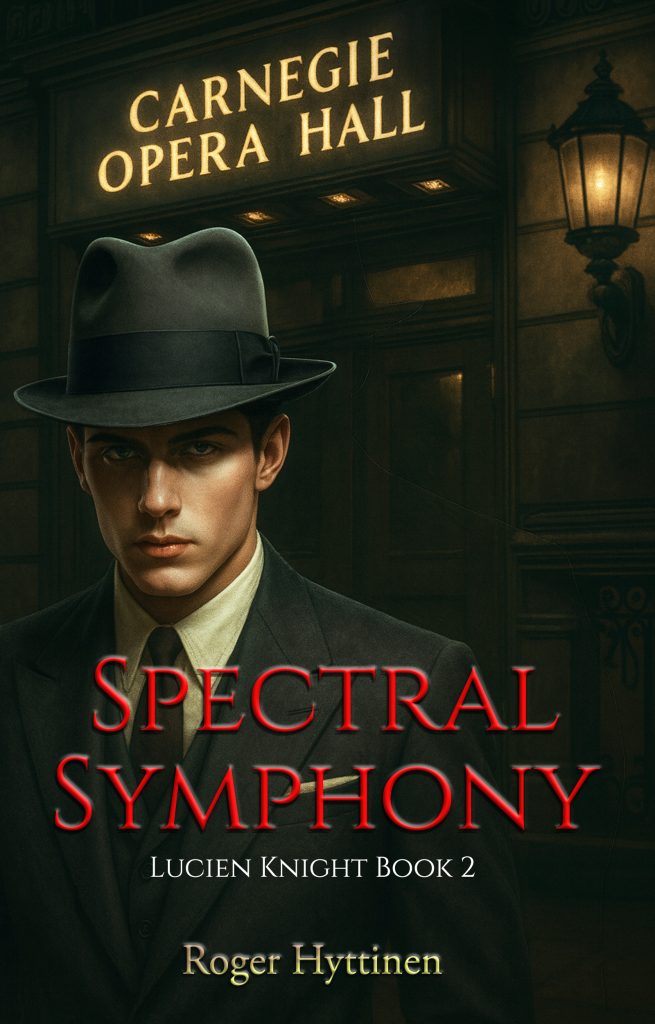
book cover for Spectral Symphony, young man in Fedora in front of Carnegie Opera Hall

A ghostly melody haunts New York’s grandest opera house.

When a piece of forbidden music resurfaces, paranormal detective Lucien Knight is forced to confront a mystery where ghosts perform, musicians vanish, and some notes carry a deadly price. Grab your copy HERE

Making a Fool of Myself (and Writing Anyway) Read Post »

Success Is Loud. Value Is Quiet. And I’ve Been Thinking About That…

Hey friends,

So I’ve had this quote rattling around in my head for a while now—the kind that just pops up when you’re doing something completely unrelated, like folding laundry or staring at the ceiling at 2 a.m. It’s from Albert Einstein, and it goes:

“Try not to become a man of success, but rather try to become a man of value.”

I know, I know. Roger and his quotes. But stick with me. This one actually gets under my skin in a way I can’t shake.

Because everywhere I look, we’re drowning in success stories. Loud ones. Flashy ones. Stories with yachts, private jets, and headlines that scream about net worth like it’s the only scoreboard that matters. And the longer I sit with it, the more I realize how often “success” has very little to do with value.

Success Is a Billboard. Value Is a Foundation.

Here’s the thing I keep coming back to: success likes attention. It wants applause. It wants numbers attached to it. Followers. Dollars. Rankings.

Value? Value just… works.

Most days, value doesn’t trend. It doesn’t come with a press release. It shows up early, stays late, and usually doesn’t get its name spelled right on the thank-you card.

And honestly? The people doing the work that actually keeps the world stitched together rarely look like the people holding the microphone.

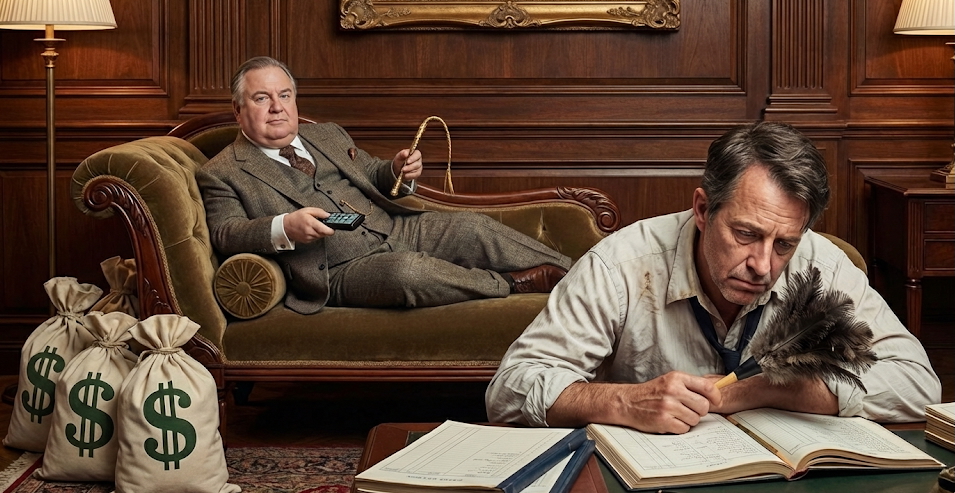
Billionaires Make the News. Workers Make the World Run.

Let’s talk billionaires for a second. Not all of them—because nuance exists—but enough of them to make the point.

We’re told they’re “visionaries.” “Self-made.” “Innovators.” And sure, some of them had ideas. But ideas don’t build warehouses. Ideas don’t stock shelves. Ideas don’t answer phones at 6 a.m. or clean offices after everyone else goes home.

People do that.

The folks packing boxes, writing code, fixing machines, caring for patients, teaching kids, cooking food, cleaning messes—those are the people creating actual value. Their labor keeps the lights on, the systems moving, the gears turning. Strip them out, and all the money in the world just sits there, useless.

I’ve always found it strange that we celebrate the person at the top while quietly ignoring the hundreds or thousands underneath holding everything up. If value were measured honestly, the spotlight would look very different.

I Think About This a Lot as a Writer

I’m not a billionaire. Shocking, I know.

I write books. I blog. I toss my thoughts into the void and hope they land somewhere soft. And early on, I got caught up in the success math. Sales numbers. Rankings. Algorithms doing whatever mysterious nonsense they do.

But the moments that actually stick with me? They’re quieter.

An email from someone who said a story helped them through a rough patch. A comment from a reader who felt seen. A DM that starts with, “I didn’t know how much I needed this.”

That’s value. No chart needed.

Those moments don’t pay rent by themselves, but they remind me why I sit down at the keyboard in the first place. They feel human. They feel real.

Value Has a Long Memory

Success burns hot and fast. Today’s headline is tomorrow’s “whatever happened to…?”

Value sticks around.

You probably remember a teacher who took you seriously when no one else did. Or a friend who showed up when things were messy and uncomfortable. Or a stranger who did something small that somehow changed your whole week.

None of those people were chasing success. They were just… being useful. Kind. Present.

And years later, you still remember them.

That says a lot.

I’m Trying to Aim Lower (And Mean It as a Compliment)

I used to think aiming for success was the responsible thing. Now I’m not so sure.

These days, I’m more interested in being someone whose presence makes things a little easier. A little warmer. A little less sharp around the edges. I want my work to matter to someone, even if it never blows up in the way the internet likes to reward.

I’d rather be valuable than impressive.

And if that means my life looks smaller on paper but richer in the day-to-day? I can live with that. Happily.

Anyway, that’s where my head’s been lately—somewhere between a quote, a cup of coffee, and the quiet realization that the people doing the real work rarely get statues built for them.

But they’re the reason anything works at all.


Nick's Awakening

What if the dead could find you anywhere—at school, on the street, even in your own house? For Nick, the world has cracked open, and ghosts are pouring through. Ready or not, he’s their only hope. Read the book that began it all: NIck’s Awakening

Success Is Loud. Value Is Quiet. And I’ve Been Thinking About That… Read Post »

Haunted Hotel: I Checked In for the Spooks… and Stayed for the Sweetness

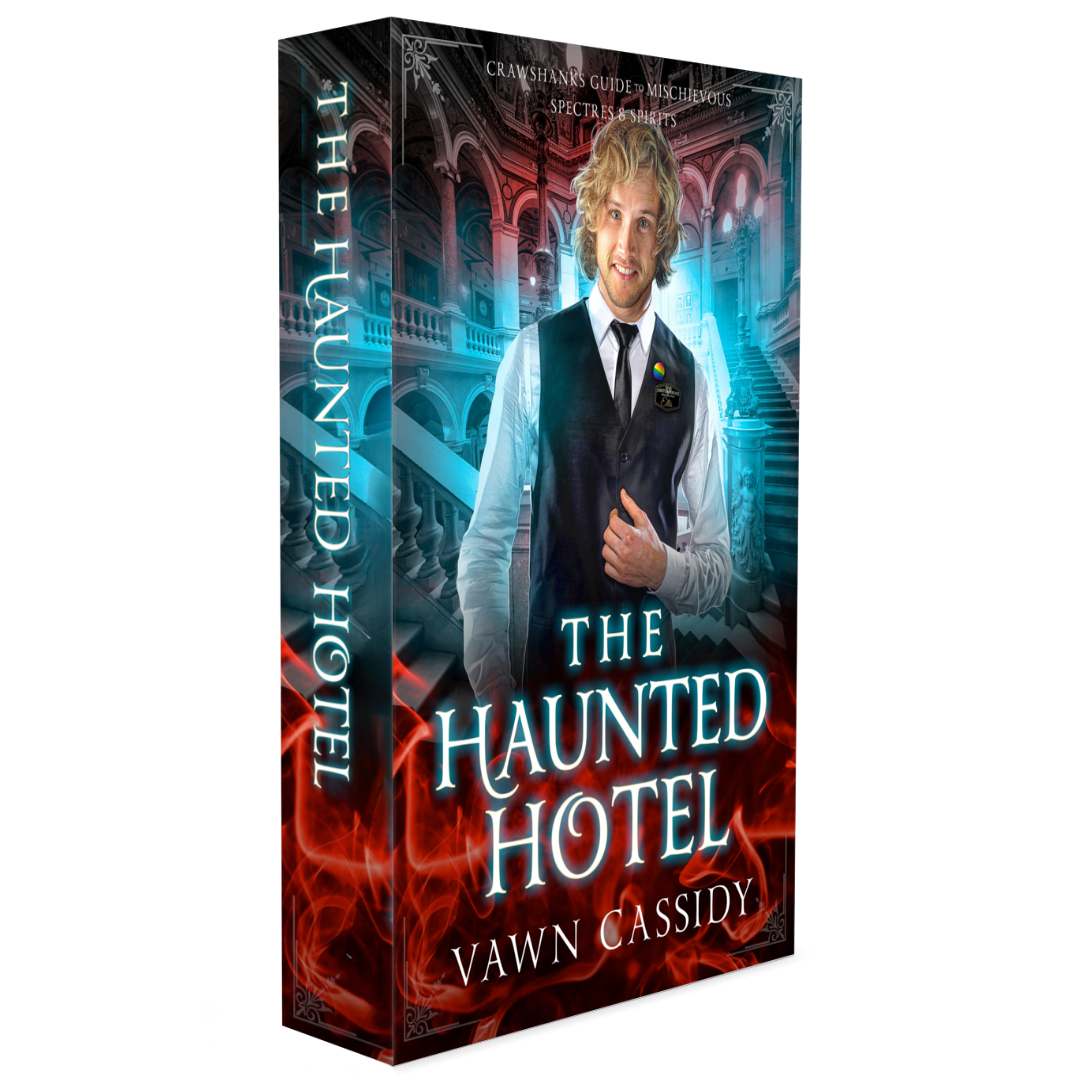
Mini Book Review: Haunted Hotel by Vawn Cassidy

Okay, so I just finished the book, Haunted Hotel by Vawn Cassidy, and I’m here to report that I had an absurd amount of fun reading it. The kind of fun where you keep telling yourself you’ll stop after “one more chapter,” and then suddenly you’re blinking at the clock like it personally betrayed you.

This book is spooky in that delicious, storybook way—creaky hallways, odd little chills, and a hotel that feels like it’s holding its breath. But it’s also warm. And funny. And kind of oddly romantic in a way that made me grin like a goof.

I loved it. Full stop.

The Setup: A Moody Old Hotel With a Very Active Afterlife

The premise is exactly the kind of thing I can’t resist: Morgan Ashton-Drake gets pulled back to his ancestral home in Yorkshire after a suspicious death and a very public scandal at the family’s old place—now known as the Ashton-Drake Manor House Hotel. Morgan has built a life in the States, running a hotel empire with his brother, and you can tell he’s the type who treats “rest” like a suspicious concept. The man is allergic to slowing down.

So of course he has to return to England, face the past, deal with the family mess, and step into a building that basically screams, “I have secrets and also possibly ghosts.”

And yeah. There are ghosts.

Morgan Ashton-Drake: Grumpy, Capable, and Definitely Not Here for Feelings

Morgan is the kind of character who walks into a room and you can practically hear the crisp snap of his self-control. He’s competent, a little tightly wound, and clearly carrying some emotional baggage he’d rather keep locked in a drawer labeled Do Not Open Under Any Circumstances.

I love characters like that—especially when the story gently pokes them until they finally crack and act like a human.

He’s not thrilled to be back. He’s not thrilled about the hotel’s problems. He’s definitely not thrilled about things getting personal.

Which brings us to…

Ellis Sparks: Sunshine in Human Form (With Chaos Sprinkles)

Enter Ellis Sparks, who has worked at the hotel since he was sixteen and loves it like it’s part of his bloodstream. He’s optimistic, earnest, and the type who can probably talk a grumpy stranger into smiling through sheer persistence.

The author’s description calls him a “seriously cute little blonde disaster,” and honestly? That feels accurate.

Ellis is trying to keep the place running, trying to keep it from closing, and trying to wrangle a hotel that comes with… extra residents. He’s the heart of the book for me. He made the setting feel lived-in, like this haunted manor isn’t just a spooky backdrop—it’s a home people care about.

Matchmaking Ghosts: Yes, Really

Now let’s talk about the part that made me laugh and also weirdly emotional: the resident ghosts decide that the best way to save the hotel is to keep Morgan around… by nudging him toward Ellis.

Is it meddling? Absolutely.

Is it entertaining? Oh, completely.

The haunting here isn’t just “oOoOo scary noises.” It has personality. It has intent. It has attitude. And it adds this playful layer to the story where you’re not only watching Morgan and Ellis collide, you’re also watching a bunch of unseen troublemakers basically go, “We’re helping. Do not question our methods.”

I enjoyed the supernatural elements because they felt integrated into the story’s emotional engine. The ghosts aren’t tossed in as window dressing. Their presence shapes the stakes and the mood and the way the characters are forced together.

The Romance: A Touch of Gay Sweetness (and It Works)

Yes—there’s romance, and it’s M/M. Not the entire point of the book, but it’s absolutely part of the reason it works so well.

Morgan is the grumpy workaholic with his walls up. Ellis is the cheerful ray of sunshine who keeps poking those walls like, “Hi, I’m not scared of you.”

Their chemistry builds in a way that felt natural to me. It’s not insta-love whiplash. It’s more like watching someone slowly realize that the thing they’ve been avoiding—connection, softness, choosing a life instead of just a job—might actually be what they’ve needed all along.

And because the setting is this creaky, haunted manor hotel, the romance lands with extra charm. There’s something about tenderness in a spooky place that hits just right.

The No-Spoiler Plot Talk

Plot-wise, you’ve got Morgan returning under bad circumstances, a hotel on the edge of closing, and a whole lot of strange activity that doesn’t want to be ignored. Morgan has to decide what he’s going to do with this place—emotionally and practically—while Ellis is doing everything he can to keep it alive.

There’s also that “suspicious death and scandal” thread hanging over everything, which gives the story a nice bite of tension without turning the book into a grim slog.

I can’t say much more without tipping too far, but the pacing kept me moving, and the book never felt like it was stalling out. I stayed curious the whole time.

Vawn Cassidy’s Track Record With Me

I’ve read other books by Vawn Cassidy, and I’ve enjoyed every one. This one fits right into what I like about their writing: characters with personality, a story that knows what it wants to be, and a vibe that balances spooky with genuinely enjoyable.

Also—and this matters to me—this is the start of a series, and I’m definitely continuing. I finished Haunted Hotelalready wanting more time in this odd little world and more of these characters (and yes, more ghostly meddling).

So, if you like haunted houses disguised as hotels, grumpy/sunshine dynamics, and paranormal mayhem with a sweet thread of gay romance running through it, put this one on your list.

Anyway, that’s my check-in from the Ashton-Drake Manor front desk.

Book Cover of Norian's Gamble

What happens when the heir to a kingdom is bound by the curse of the wolf? For Prince Norian, the answer comes with blood, fire, and the terrifying knowledge that dark magic has singled him out. As shadows close in, he must protect his people from an enemy who will stop at nothing to seize the throne. Danger, destiny, and deadly secrets entwine in Norian’s Gamble.

Haunted Hotel: I Checked In for the Spooks… and Stayed for the Sweetness Read Post »

Why LGBT Cinema Still Matters (Yeah, Even More Right Now)

Young gay couple at the cinema

I’ve been thinking a lot about movies lately. Which, okay, is not exactly a rare event for me. Movies are kind of my thing. But lately, when I sit down on the couch, lights low, phone face-down (mostly), I’m noticing that the films hitting me hardest are queer ones. Not just the shiny new releases, but the older stuff too. The scrappy indies. The messy, imperfect stories. The ones that feel like they were made by people who needed to tell them.

And I keep circling back to the same thought: LGBT cinema isn’t just nice to have. It’s necessary. Especially right now.


It’s Proof We Exist (And Always Have)

This might sound obvious, but stick with me.

When you grow up queer—especially if you’re a certain age—you don’t see yourself much on screen. Or when you do, it’s tragic, coded, or buried under subtext so thick you need a shovel. So when I first saw characters who loved like I loved, wanted like I wanted, or even just stood in a room like I did, something in my chest loosened.

Movies are receipts. They quietly say, We were here. We are here. No matter how loud the shouting gets in politics or media cycles, those stories remain. Someone pressed record. Someone said, “This matters enough to film.”

That counts for more than people realize.

When the World Gets Loud, Stories Get Louder

Let’s be honest: things feel weird out there. Tense. Side-eye inducing. Every time I scroll the news, it feels like someone, somewhere, is having a strong opinion about queer lives—usually without asking queer people first.

That’s when LGBT films start doing heavy lifting.

They don’t argue. They don’t debate. They just show. A couple cooking dinner. A teen staring at their crush a second too long. An older man remembering a love he wasn’t allowed to keep. These moments sneak past defenses. You don’t have to agree with a policy to feel something when a character hurts or hopes.

I’ve seen straight friends watch queer movies and go quiet afterward. Not because they were preached at, but because they recognized something human. That recognition matters.

Representation Isn’t About Perfection

Here’s my possibly unpopular take: queer cinema doesn’t need to make us look “good.”

Some of my favorite LGBT films feature deeply flawed people. Messy relationships. Bad decisions. Awkward silences. Lives that don’t wrap up neatly.

And thank god for that.

I don’t want saints. I want people. I want characters who screw up, who say the wrong thing, who fall for the wrong person, who still manage to be worthy of love. Straight characters have been allowed to be disasters for a hundred years. We deserve the same grace.

Seeing that onscreen reminds me I don’t need to earn my humanity by being perfect.

It’s a Lifeline for Someone Sitting Alone Right Now

This part always gets me.

Somewhere out there, someone is watching their first queer movie alone. Maybe late at night. Maybe with headphones on so nobody hears. Maybe they typed a title into a search bar with shaky hands.

That movie might not fix their life. It won’t magically make things easy. But it might give them one small, stubborn thought: I’m not broken.

I remember that feeling. That quiet relief. That sense of being seen by strangers who somehow knew exactly how it felt.

Cinema can do that. Books too, obviously—I’m biased—but movies have faces, voices, bodies. They make it real in a different way.

Queer Films Hold History When No One Else Does

A lot of LGBT history didn’t make it into textbooks. It lived in bars, bedrooms, letters, glances. Cinema preserves that. Even fictional stories carry truth about the time they were made.

Watching older queer films feels like listening to elders talk. There’s fear there. Caution. Sometimes joy that feels hard-won. It reminds me that what we have now didn’t appear out of nowhere. People pushed for it. Loved through it. Lost things along the way.

That context matters, especially when it feels like progress can wobble.

Why I Keep Showing Up for These Stories

I write about LGBT cinema because it feeds me. It challenges me. It reminds me who I am when the noise gets loud. Some nights, it’s comfort. Other nights, it’s a quiet punch to the heart. I need both.

These films don’t ask permission to exist. They just do. And every time one gets made, released, streamed, talked about, shared—that’s another little line drawn in the sand.

So yeah, LGBT cinema matters. Not someday. Not theoretically. Right now.

And I’ll keep watching. Writing. Talking about it. Because stories like these kept me company when I needed it most, and I know I’m not the only one.


murder at the savoy book cover, 1930s detective in a fedora

Lucien Knight came to New York to escape scandal.
He found a dead singer, a beautiful liar, and a ghost that won’t let go.
Murder at the Savoy — jazz-soaked noir meets the supernatural.

Grab your copy HERE

Why LGBT Cinema Still Matters (Yeah, Even More Right Now) Read Post »

Exploring Morality in a World of Magic (aka: Why I’d Be a Hot Mess Wizard)

So, I’ve been thinking a lot about magic lately. Not the pull-a-bunny-from-a-hat kind, and not the Harry-Potter-got-his-letter kind either. I mean the kind of magic that sneaks into everyday life and turns totally normal situations into philosophical headaches.
You know—Tuesday afternoon moral crises, but with fireballs.

Every time I write something supernatural or wander through a fantasy novel, my brain wanders to the same question: If I had magic, would I actually be a good person?

If I’m being honest, there’s a decent chance I’d use telekinesis to grab the TV remote I dropped on the floor instead of walking three steps to get it. Which… okay, not exactly a moral emergency. But once you start bending the rules of the natural world, everything else starts bending with it.

Let me explain before I lose my remaining credibility.

Magic Makes Temptation Weirdly Convenient

Picture this: you’ve overslept, you’re late for work, your coffee tastes like disappointment… and you know one tiny time-freeze spell would fix everything.

Do you use it?

Part of me is like, “Yes, absolutely, freeze the universe so I can brush my teeth in peace.”
But then the other part chimes in with, “Are you literally manipulating the fabric of reality because you stayed up too late reading paranormal detective fiction again?”

And once you realize you can fix every small annoyance with a spark of magic, the temptation grows.
Traffic jam? Poof—gone.
Laundry? Floats into the washer on its own.
Annoying neighbor? Maybe their TV remote just keeps mysteriously disappearing. (Totally unrelated to my earlier comment. Probably.)

This is where morality starts sliding around like a greased pig.
Magic doesn’t create selfishness—it just hands it a jetpack.

The “Helpful Magic” Conundrum

Then there’s the flip side: using magic to help people.

Sounds noble, right? But then the questions start piling up like mismatched socks.

Let’s say you can see ghosts (hi, Nick Michelson). A spirit shows up crying about unfinished business. You could help… but maybe their unfinished business is deeply personal or dangerous or maybe you’re just trying to enjoy your grilled cheese sandwich without a phantom hovering over you.

Do you owe them your help?

What if you can heal people?
Do you heal everyone?
Do you heal your friends first?
Do you cure your enemies out of compassion or leave them to stew in their bad decisions?

That’s the thing about magic: every “good” act grows fangs once you tug on the threads a little.

I once read a fantasy where the hero could turn back time, but every time he “fixed” something, he made someone else’s life worse without realizing it.
A bit like rearranging your living room furniture only to discover you’ve blocked every power outlet in the house.

Mind Reading? Absolutely Not.

This one always gets my blood pressure going.

Imagine being able to read minds.
On the surface: ooh interesting!
In reality: worst idea ever.

First of all, I do not need to know what the barista thinks of my overly complicated order.
Second, privacy becomes a joke.
Third, how do you even maintain relationships when you accidentally hear someone thinking, “He says he likes this shirt but that color makes him look like a sleepy tangerine”?

And if you can read minds, is it wrong not to warn someone when you hear their date planning to ghost them?
Or do you let fate roll on because meddling feels sketchy?

Magic always gives you new ways to be nosy, which is just… dangerous.

Love Spells: The Biggest Nope in the Universe

There is no moral gray area here. Love spells should be fired into the sun.

If I bake a batch of enchanted cookies that make someone adore me, that’s not romance.
That’s emotional identity theft.

But of course, in magical worlds people always try it anyway. And it always ends like:

  • They fall in love with the wrong person
  • They fall too hard and become obsessive
  • They fall in love with EVERYONE (chaotic, but maybe fun for a minute? An episode of Buffy the Vampire Slayer did this)

The point is, free will matters. Magic that messes with hearts is a straight-up moral sinkhole.

Accidental Magic: A Whole Category of Oops

One of my favorite tropes is when someone didn’t mean to do magic but whoops—now the cat talks.

Accidental magic makes everything messy because you didn’t plan to break the rules of existence, but now you’ve got sentient furniture judging your life choices.

Imagine walking through your apartment thinking you’re alone and your bookshelf says, “Really? Another paranormal noir novel? Live a little.”

Now you have to figure out:

  • Do you undo it?
  • Does the bookshelf WANT you to undo it?
  • Are you its legal guardian now???

Morality gets fuzzy fast.

The Big Question

What magic really does is test your character.
It shines a bright, awkward spotlight on the stuff you normally keep tucked away—selfishness, fear, impatience, compassion, guilt, curiosity, all of it.

Magic doesn’t make someone good or bad.
It just removes the limits that usually keep our choices small.

And if I’m being honest, that’s why I love writing about it. Magic isn’t just glitter and glowing symbols—it’s a giant “what if” directed straight at your conscience.

Besides, imagining myself as a wizard who can’t resist magically reheating leftover pizza is far too entertaining.

Thanks for indulging me in this little ethical ramble.
I promise I’m only slightly morally questionable without magic.


book cover for Spectral Symphony, young man in Fedora in front of Carnegie Opera Hall

When impossible sheet music draws Lucien Knight back into the supernatural world he tried to escape, he finds himself investigating haunted musicians, a vanished maestro, and dark secrets buried inside New York’s most prestigious opera house.

Some melodies were never meant to be played. Grab your copy HERE

Exploring Morality in a World of Magic (aka: Why I’d Be a Hot Mess Wizard) Read Post »

Why I Still Feel Sixteen (Even When My Knees Beg to Differ)

“We are always the same age inside.” — Richard Stein

Okay, so the first time I heard that quote, I actually laughed out loud… and then immediately felt that tiny sting of recognition, the kind that sneaks in like, Oh. Ohhh. Someone finally said it.

Because here’s the thing I don’t usually admit unless I’m among friends:
my inner age is absolutely, unmistakably sixteen.

Not seventeen.
Not twenty-one.
Not something wise and serene like forty.
Nope—sixteen. A year where everything happened at once, like the universe just dumped a major expansion pack onto my life and said, “Good luck, kid.”

And for whatever reason, inner-me never moved on. He set up camp there. He still wanders around in that version of the world, with his big emotions and bigger dreams and that feeling of being perched right on the edge of everything.

The Sixteen-Year-Old Who Runs the Control Room

I swear this inner teen is still the one pushing buttons in my brain.

He’s the one who gets startled whenever someone addresses me as “sir.” Every time that happens, he perks up like, Who, me? Then looks around for an adult—like an actual adult—because surely the title wasn’t meant for him.

He’s also the one who still believes I can pull off things my present-day knees disagree with. Like climbing up on a chair to change a lightbulb without thinking it through. Then the outside version of me remembers gravity just in time and steps off the chair like I meant to do that.

Sixteen-year-old me is the emotional driver, too. He’s full-volume, very opinionated, and convinced that the world is one big, mysterious invitation. He feels everything like it’s happening right this minute. Joy hits him hard. Music hits him harder. Heartache? Don’t even ask—he still thinks about certain moments like they were yesterday.

That Year That Glued Itself to Me

I’ve spent a lot of time wondering why sixteen stuck instead of some quieter, gentler age.

And honestly, that year just imprinted itself on me.
So much happened—big things, strange things, turning points I didn’t recognize as turning points until way later. Sixteen was the year that rearranged my internal furniture. I didn’t have the words for it back then, but I knew life was shifting underneath my feet.

And somehow, my inner self grabbed onto that age and said, We’ll stay here. This is who we are.

He never moved out. He hangs string lights in the hallways of my memories and occasionally blasts music when I’m trying to sleep.

The Ways My Sixteen-Year-Old Still Shows Up

You know that feeling when you hear a song from that particular era of your life and you’re suddenly right back in those same too-big jeans or that over-washed T-shirt you loved for no reason? Yeah, for me, that happens almost weekly.

Sixteen-year-old me:

  • Still thinks he can learn anything overnight. I watch one tutorial and inner-me goes, “We could totally do that.” Outer-me realizes the next morning that… no. No we cannot.
  • Shows up every time I write. That blend of hope and fear—of wanting someone to read my words and also wanting to run away if they do—yep, that’s him.
  • Panics over new experiences the way you panic before going onstage for the school play, even though present-day me just wants to pick up a prescription or something equally mundane.
  • Still gets giddy over holiday decorations. The adult sweeps up the glitter explosion; the sixteen-year-old thinks every ornament is a sign that magic might be real.

And honestly? I kind of adore him for that.

Juggling Inside Age and Outside Age

Life gets interesting when your inside age and outside age don’t line up neatly. The outside version of me is capable of things inner-me couldn’t imagine—like handling paperwork without calling someone for emotional support.

But inside-me is the version who dreams, who remembers, who still feels that electric sense of becoming—even though that word makes me sound like a self-help pamphlet.

He’s the one who nudges me into trying new hobbies I’m probably not ready for. He’s also the one who thinks everyone is basically a potential crush until proven otherwise.

He lives with curiosity. The grown-up version lives with lists.

Put the two together, and I’m… well, me.

Letting Sixteen Stick Around

These days I’ve stopped trying to shake him off or “upgrade” him. Instead, I let him ride shotgun.

He points out things I forget to appreciate.
He reminds me of the kid I was before life got louder.
He keeps things tender, which isn’t always comfortable, but it is honest.

And I think that’s why Stein’s quote hits so hard: the inside age is our truest witness. It’s the version of us that never stopped being real.

My sixteen-year-old self may not pay bills or moisturize or stretch before bending over to pick something up, but he’s the spark that never went out.

And honestly, I like having him around.


Book cover for the Golem's Guardian

Would you trust a creature of mud and legend to guard your life? David doesn’t have a choice. Brooklyn is under siege by a man wielding living shadows, and only his impossible clay sentinel stands between survival and ruin. Grab your copy HERE

Why I Still Feel Sixteen (Even When My Knees Beg to Differ) Read Post »

Campy Queer Christmas Films

I posted a list of LGBT Christmas films the other day and figured it would be fun to post a list of Campy Christmas films. How many of these have you seen?

  1. Single All the Way (2021)
    Netflix’s gay Christmas rom-com that knows exactly what it is — a holiday comfort flick with a wink.
    It’s packed with tropes (fake boyfriend! meddling family! small-town charm!) and yes, Jennifer Coolidge shows up in full fabulous form. Instant camp classic.
  2. Scrooge & Marley (2012)
    A queer retelling of A Christmas Carol — and honey, it’s gayer than a Christmas tree in sequins.
    Big performances, drag cameos, and a community-theater-meets-divine-inspiration energy. The kind of movie you watch with friends and cocktails.
  3. Make the Yuletide Gay (2009)
    Indie, low-budget, and intentionally cheesy in the best way.
    A closeted college student brings his boyfriend home for the holidays, chaos ensues, and the camp lives in its awkward sincerity. It’s basically the gay holiday rom-com that paved the way for all the others.
  4. Season of Love (2019)
    Often described as the lesbian Love Actually.
    Six queer women, tangled love stories, and a soundtrack that leans delightfully melodramatic. It’s glossy, sweet, and perfectly over-the-top — a queer-holiday sugar rush.
  5. Under the Christmas Tree (2021)
    Lifetime’s first lesbian holiday movie!
    It’s sugary, full of familiar tropes (rival tree-farmers! small-town magic!), and delightfully predictable — in that sparkly-Hallmark-but-make-it-gay way.
  6. A New York Christmas Wedding (2020)
    If It’s a Wonderful Life got re-written by a queer angel with a flair for melodrama.
    It’s emotional, messy, and just the right amount of surreal — like someone sprinkled glitter on a Hallmark script and said, “Let’s go gay.”
  7. Merry & Gay (2021)
    A lesbian holiday musical, complete with small-town nostalgia, snappy dialogue, and a big queer heart.
    The singing alone qualifies it as camp; the sparkly costumes seal the deal.
  8. City of Trees (2019)
    More subtle than some others here, but still wears its indie-queer heart on its sleeve.
    It’s tender, a bit awkward, and somehow feels like watching a stage play — perfect for those who like their camp with a side of emotional realism.
  9. Christmas on the Square (2020)
    Okay, not explicitly queer, but Dolly Parton plays a literal angel in rhinestones, so we’re claiming it.
    It’s wall-to-wall glitter, gospel, and campy musical numbers. If you don’t smile at least once, check your pulse.
  10. The Bitch Who Stole Christmas (2021)
    Now this one is pure drag-camp gold.
    Produced by RuPaul’s Drag Race, it’s like Mean Girls meets Hallmark meets a fever dream in stilettos. Peppermint, Ginger Minj, and Brooke Lynn Hytes deliver full holiday chaos.

A touch of Cedar ebook cover

A Touch of Cedar is gothic, romantic, and just a little bit heartbreaking. Because sometimes, the ghost isn’t the scariest part of the story.

Campy Queer Christmas Films Read Post »

Scroll to Top