

So, I’ve been thinking a lot about magic lately. Not the pull-a-bunny-from-a-hat kind, and not the Harry-Potter-got-his-letter kind either. I mean the kind of magic that sneaks into everyday life and turns totally normal situations into philosophical headaches.
You know—Tuesday afternoon moral crises, but with fireballs.
Every time I write something supernatural or wander through a fantasy novel, my brain wanders to the same question: If I had magic, would I actually be a good person?
If I’m being honest, there’s a decent chance I’d use telekinesis to grab the TV remote I dropped on the floor instead of walking three steps to get it. Which… okay, not exactly a moral emergency. But once you start bending the rules of the natural world, everything else starts bending with it.
Let me explain before I lose my remaining credibility.
Magic Makes Temptation Weirdly Convenient
Picture this: you’ve overslept, you’re late for work, your coffee tastes like disappointment… and you know one tiny time-freeze spell would fix everything.
Do you use it?
Part of me is like, “Yes, absolutely, freeze the universe so I can brush my teeth in peace.”
But then the other part chimes in with, “Are you literally manipulating the fabric of reality because you stayed up too late reading paranormal detective fiction again?”
And once you realize you can fix every small annoyance with a spark of magic, the temptation grows.
Traffic jam? Poof—gone.
Laundry? Floats into the washer on its own.
Annoying neighbor? Maybe their TV remote just keeps mysteriously disappearing. (Totally unrelated to my earlier comment. Probably.)
This is where morality starts sliding around like a greased pig.
Magic doesn’t create selfishness—it just hands it a jetpack.
The “Helpful Magic” Conundrum
Then there’s the flip side: using magic to help people.
Sounds noble, right? But then the questions start piling up like mismatched socks.
Let’s say you can see ghosts (hi, Nick Michelson). A spirit shows up crying about unfinished business. You could help… but maybe their unfinished business is deeply personal or dangerous or maybe you’re just trying to enjoy your grilled cheese sandwich without a phantom hovering over you.
Do you owe them your help?
What if you can heal people?
Do you heal everyone?
Do you heal your friends first?
Do you cure your enemies out of compassion or leave them to stew in their bad decisions?
That’s the thing about magic: every “good” act grows fangs once you tug on the threads a little.
I once read a fantasy where the hero could turn back time, but every time he “fixed” something, he made someone else’s life worse without realizing it.
A bit like rearranging your living room furniture only to discover you’ve blocked every power outlet in the house.
Mind Reading? Absolutely Not.
This one always gets my blood pressure going.
Imagine being able to read minds.
On the surface: ooh interesting!
In reality: worst idea ever.
First of all, I do not need to know what the barista thinks of my overly complicated order.
Second, privacy becomes a joke.
Third, how do you even maintain relationships when you accidentally hear someone thinking, “He says he likes this shirt but that color makes him look like a sleepy tangerine”?
And if you can read minds, is it wrong not to warn someone when you hear their date planning to ghost them?
Or do you let fate roll on because meddling feels sketchy?
Magic always gives you new ways to be nosy, which is just… dangerous.
Love Spells: The Biggest Nope in the Universe
There is no moral gray area here. Love spells should be fired into the sun.
If I bake a batch of enchanted cookies that make someone adore me, that’s not romance.
That’s emotional identity theft.
But of course, in magical worlds people always try it anyway. And it always ends like:
- They fall in love with the wrong person
- They fall too hard and become obsessive
- They fall in love with EVERYONE (chaotic, but maybe fun for a minute? An episode of Buffy the Vampire Slayer did this)
The point is, free will matters. Magic that messes with hearts is a straight-up moral sinkhole.
Accidental Magic: A Whole Category of Oops
One of my favorite tropes is when someone didn’t mean to do magic but whoops—now the cat talks.
Accidental magic makes everything messy because you didn’t plan to break the rules of existence, but now you’ve got sentient furniture judging your life choices.
Imagine walking through your apartment thinking you’re alone and your bookshelf says, “Really? Another paranormal noir novel? Live a little.”
Now you have to figure out:
- Do you undo it?
- Does the bookshelf WANT you to undo it?
- Are you its legal guardian now???
Morality gets fuzzy fast.
The Big Question
What magic really does is test your character.
It shines a bright, awkward spotlight on the stuff you normally keep tucked away—selfishness, fear, impatience, compassion, guilt, curiosity, all of it.
Magic doesn’t make someone good or bad.
It just removes the limits that usually keep our choices small.
And if I’m being honest, that’s why I love writing about it. Magic isn’t just glitter and glowing symbols—it’s a giant “what if” directed straight at your conscience.
Besides, imagining myself as a wizard who can’t resist magically reheating leftover pizza is far too entertaining.
Thanks for indulging me in this little ethical ramble.
I promise I’m only slightly morally questionable without magic.
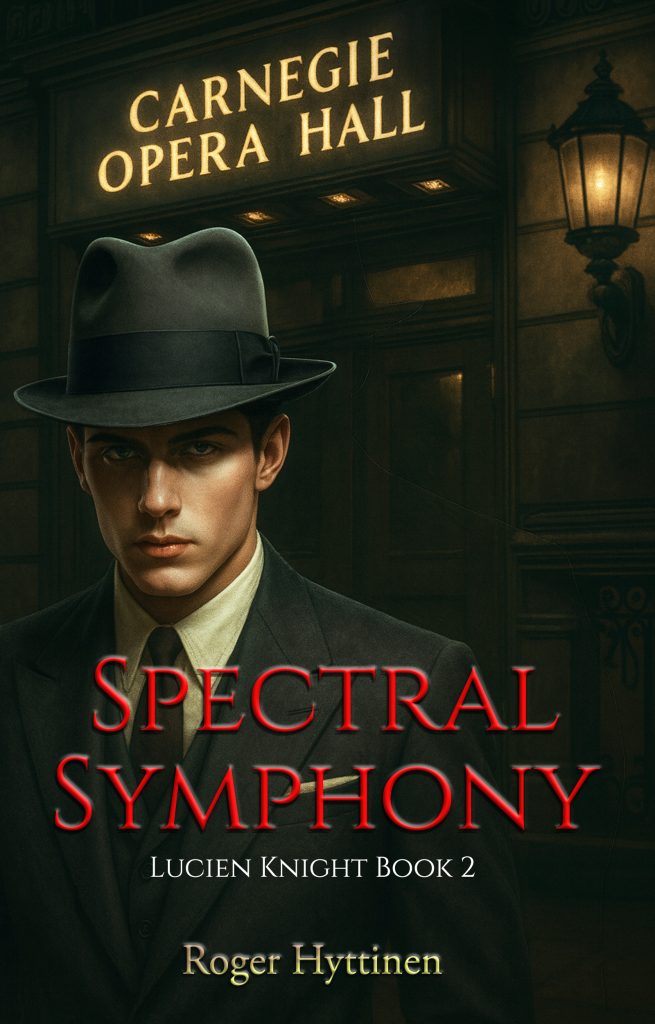
When impossible sheet music draws Lucien Knight back into the supernatural world he tried to escape, he finds himself investigating haunted musicians, a vanished maestro, and dark secrets buried inside New York’s most prestigious opera house.
Some melodies were never meant to be played. Grab your copy HERE