
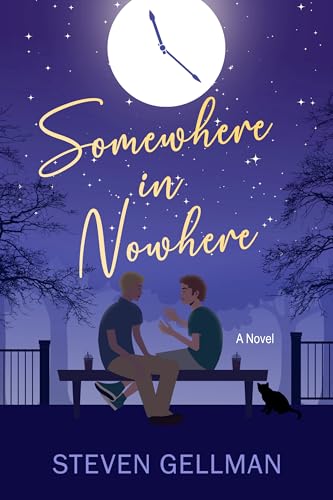
So I just finished Somewhere in Nowhere by Steven Gellman (published in 2026, and yes, I would like to personally thank whoever decided to put this story into the world), and I’m still carrying that weird mix of happy/sad/fearful-for-teen-boys-on-new-schedules.
This book is basically: what if senior year is already hard, you move towns, you’re figuring out your sexuality, and your anxiety… shows up as an actual alien in your stomach trying to murder you. Like, no pressure.
And somehow it’s not just a quirky gimmick—it’s so relatable that I felt my own stomach do that “ugh” drop whenever Simon’s stress ramps up.
Simon Bugg: the main character I wanted to put in my pocket
Simon Bugg starts senior year feeling like the universe is one wrong move away from humiliating him in front of everyone. He’s got anxiety that’s loud and physical, and on top of that his life is complicated in the most teenager way possible: he’s trying to stay “him” while also not letting people decide what his identity “means.”
The plot kicks off hard when his mom (Lindsey) lands a dream job and the family moves to Rockville. Simon is leaving behind the friends he actually knows how to be around. New school = new everything. New cafeteria energy. New awkward walkways. New people who don’t know your history and will absolutely judge you based on vibes alone.
And then Simon meets PJ in drama class, and—because this is a queer story and also because romance in teen brains is feral—things get intense fast.
Simon’s brain is the kind that overthinks everything: what people think, what he feels, whether he’s “allowed” to want things, whether his feelings make him too different from who he wants to be. Sometimes he’s a little sheltered in a way that made me go “buddy, you’ve never heard of anxiety before?” but honestly… that’s also real. Some people go through life without having language for what’s happening until it hits them in the face. Or in his case: 11:22 pm in the form of an alien attacker.
The alien in his stomach (aka anxiety, but make it sci-fi)
I actually loved how the book handles Simon’s anxiety as an alien. It’s funny, gross, and terrifying in that “why is my own body acting like this” way.
It also makes the stakes feel personal. This isn’t just “Simon is anxious.” It’s “Simon is being hunted from the inside, and he has to pretend he’s fine because everyone expects him to be fine.” That combination? Brutal. But it worked for me.
When the story starts revealing what’s really going on (and how the nightly attacks connect to everything), I felt like the book was taking Simon seriously—like his fear and panic weren’t random, they were information. Bad information, but still information.
PJ: sweet, supportive, and secretly dealing with a whole lot
PJ is the kind of character that makes you want to be like, “Okay, yes, I will be normal around you,” and then immediately realize that’s impossible because you’re a human who has feelings.
He’s out at school, he’s warm, he gets Simon’s nervous energy, and he shows up in a way that feels gentle instead of pushy. I also really liked that PJ isn’t just “the love interest.” He has his own real life problems, especially at home, where his queerness isn’t treated like it’s real. More like: phase until further notice.
And yes, there’s a part where Simon panics and derails a date in spectacular fashion. I felt that. Not the alien part. The other part. The “I like you and now I’m scared and I just made it weird” part. Simon’s reactions are messy but believable, and PJ’s feelings aren’t treated like they’re optional. That matters.
Honestly, if I’m being totally honest, PJ was probably my favorite character. I just wanted to scoop him up and protect him from the kind of disappointment that usually shows up in books when you’re rooting for someone.
Secondary characters: beautifully rendered, not just background noise
One of my biggest compliments for this book is that the secondary characters don’t feel like decorative NPCs. They feel like people.
- Hector is an early mentor figure for Simon (and yes, that “older gay barista who sees you” energy is socomforting). He becomes a big-brother-ish presence in a way that doesn’t feel fake or performative. You can tell he’s there because he cares, not because the plot needs him.
- Mags and Neel (Simon’s original friends) are memorable in different ways. Neel cracks me up because he’s got this… rocket-fueled energy whenever girls come up. Mags, though? I didn’t vibe with her as much. Her personality reads like “bossy and righteous” even when her family situation seems genuinely loving. It left me slightly side-eyeing her choices and attitudes the entire time.
- Lindsey and Carole (Simon’s moms) are the emotional center of a lot of the story. You can feel how much they love him, and you can also feel the stress and strain of adult life trying to land in a household with a teen who’s falling apart in slow motion. Lindsey’s work situation and Carole’s vibe are different flavors of caring, and I liked how the book let them both be complicated instead of turning them into perfect cardboard parents.
- Daniel (Simon’s dad) could’ve been a throwaway “deadbeat who magically improves” character, but the book gives him more texture. He shows up late and imperfect, but he’s also not totally absent—he’s part of what shaped Simon’s understanding of relationships and safety.
- Aunt Sarah and Brian? Yeah, Brian is exactly as gross as you think he is. Like, from first mention I was already ready to throw hands. Aunt Sarah felt harder to read—there’s a vibe of someone who’s coping in a way that doesn’t include being emotionally kind. The book hints at more, and I’ll admit I wanted a clearer explanation of some choices, especially around silence and what people refuse to say out loud.
- Paul and Laticia add a lot of warmth and realism. Paul especially feels like a character whose neurodivergence isn’t used as a “funny trait,” it’s part of his way of existing and connecting. Laticia is softer, shy, and still sorting herself out—which made her feel real instead of “perfect side character energy.”
And I really appreciated that the book doesn’t treat Simon like he’s the only person with a full interior life. Everybody else has history, opinions, tension, sweetness. It makes the whole world feel lived-in.
The pacing: some bits move fast, some bits slow down (and it’s noticeable)
Now, I’ll be fair: the pacing can feel a little uneven. There were sections where it felt like we were doing normal life stuff—laundry, conversations, everyday moments—and I could feel the plot chill for a second. Other times, once Simon realizes he’s into PJ, the emotions and obsession spiral so quickly it can feel like you’re getting sprinted into romance before your brain’s fully caught up.
But even with that, I didn’t stop reading. I was too invested in Simon’s emotional survival to bail.
What the book made me feel
This book really does the thing where you start out with humor and weirdness and then—surprise—you’re hit with grief and fear and the messy truth that “moving forward” is not a straight line.
It made me feel protective of Simon. It also made me angry on his behalf at the moments where people misread him or act like his identity is a convenience problem. There’s also a tenderness to the way the support system grows over time: different people, different types of help, and Simon learning how to accept it without feeling like he has to earn basic care.
Also: I loved that the book includes crisis resources not just for the USA, but for Canada and the UK too. That small detail told me the author/book team actually thought about real readers, not just imaginary “audience.”
My final take
Somewhere in Nowhere is a coming-of-age story with romance, friendship, grief, anxiety, and a genuinely creative way of making internal fear visible (the alien thing is honestly the best metaphor I’ve seen in a while). It’s funny in places, heartbreaking in others, and the secondary cast is one of its biggest strengths.
If you like queer YA that feels like it could’ve come from someone’s real life—like conversations you’d overhear in a hallway, panic you’d recognize, love that makes no sense but still matters—then I think you’ll have a good time here.
This book will be released on April 14th but you can preorder it now.